
Friday, November 27, 2026



News and Views from the Global South
Environment
SOUTH AFRICA: Water Meters for the Poor: New Name, Old Problems
Many poor communities in South Africa continue to struggle for their constitutional right to clean, safe drinking water.
WATER-UGANDA: Creating a ‘Safe Water Chain’
Uganda spends close to $10 million each year treating waterborne diseases; the productive time lost to illness and caring for the sick has an even greater financial impact. But residents of Katosi village on the shores of Lake Victoria aren't waiting for the government to find a solution.
ENVIRONMENT: Fresh Fruit for Rotting Vegetables
Brooklyn's historic Fort Greene Park lures locals each Saturday with a year-round vegetable and produce market. But it's not just a place for consumption. Locals come bearing plastic containers and buckets filled with squash skins, used tea bags and expired asparagus. It's all fodder for compost.
ENVIRONMENT-CHILE: Nobody Is Predicting Cleaner Air for Santiago
Olivia González has been a schoolteacher for 30 years in Cerro Navia, one of the districts in the Chilean capital with the highest concentration of air pollution between April and August. A first-hand witness to its effects on health, she is pessimistic about the air she'll breathe this coming southern hemisphere winter.
AGRICULTURE-MALAWI: Water Makes the Difference
Water has become the very essence of economic development for a rural community of Ngolowindo, in Malawi’s lake district of Salima, where households are reducing poverty thanks to irrigation.ENVIRONMENT-KENYA: Rainwater Harvesting: Two Birds With One Stone
Bitter irony: in recent years Nairobi has experienced severe flooding and widespread water shortages, due to poor urban planning and collapsing infrastructure systems that are failing to support the Kenyan capital's expanding population.
Q&A: ‘‘The Market Is Not God And We Are Not At Its Mercy’’
Churches from South Africa and Germany are critically interrogating neoliberal globalisation in a process that they want to take up to United Nations level and also to their congregations ‘‘to build responsibility among people for what is happening in their world’’.BRAZIL: Landmark Ruling Confirms Indian Reservation
Chanting "Anna Pata, Ana Yan" (Our Land, Our Mother), members of indigenous organisations and activists celebrated a Brazilian Supreme Court ruling Thursday that confirmed the borders of a huge indigenous reservation in the Amazon jungle and set an important precedent for future land disputes.PERU: Few Benefits from Boom for Poorest Mining Districts
The poorest district in Peru is in an area of intense mining activity, in a country where the mining industry accounts for nearly 60 percent of all export revenues. But the people of Ongón receive no benefits from that activity.ENVIRONMENT: Coping in a World of “Peak Water”
As more than 20,000 people meet in Istanbul for a major week-long conference on future management of the world's water supplies, women's groups are working to ensure that policy decisions about this critical natural resource take their concerns into account.
BRAZIL: Making Eco-History in a Southern Beach Town
In the city of Garopaba, a tourist destination on Brazil's southern coast, leftover food from restaurants will be turned into fertiliser to be used by farmers, who in turn will grow pesticide-free fruits and vegetables for snacks in the local schools.
ENVIRONMENT-NAMIBIA: Ten Dollars for a 200-Year-Old Tree
Despite the investment of millions of donor dollars, the permit system in Namibia’s Community Forests has failed dismally, say biodiversity experts. Illegal logging in the inland Kavango is more alive than ever.MIDEAST: Gazans Struggle for Clean Drinking Water
As environmental experts, NGOs and government officials gather in Istanbul this week to attend the Fifth World Water Forum, the International Committee of the Red Cross (ICRC) has drawn attention to the critical water situation in Gaza.
Q&A: Climate Change Will Hit Water First
Whether through drought, floods, melting of ice or a rise in sea level, water will be the first to feel the effects of climate change, says Dr. Mark Smith, who heads the water programme at the International Union for Conservation of Nature (IUCN), the world's largest environmental network.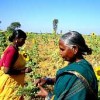
ENVIRONMENT-INDIA: Women Farmers Ready to Beat Climate Change
A collective of 5,000 women spread across 75 villages in this arid, interior part of southern India is now offering a chemical-free, non-irrigated, organic agriculture as one method of combating global warming.CLIMATE CHANGE: In Search of a Green Economic Stimulus
The high-level scientific climate conference that concluded last week in Copenhagen warned that humanity is rapidly approaching an irreversible, 1,000-year-long climate catastrophe.
MEXICO: Cradle of Maize Rocked by Transgenics
Mexico has lifted the ban on experimental cultivation of transgenic maize imposed in 1999 in this country where the crop was first domesticated and shaped human culture. Biotech giants have put forward two dozen projects for approval and have announced investments of 382 million dollars up to 2012.NICARAGUA: Cleaning Up ‘World’s Biggest Toilet’
After dumping its untreated wastewater into lake Managua for more than 80 years, the capital of Nicaragua has started to clean up the huge source of water in this country, where 80 percent of fresh water sources are polluted.ISRAEL: Green Group Resists Oil Exploration
A group of Israeli environmentalists is campaigning to prevent oil exploration inside a nature reserve by the Dead Sea.
Making Eco-History in a Brazilian Beach Town
Waste composting has opened a new path for a southern Brazilian beach destination towards its goal of becoming a "sustainable city".
Nobody Is Predicting Cleaner Air for Santiago
Santiago prepares for a winter predicted to be at least as harsh as last year in terms of air pollution.« Previous Page — Next Page »


Through our global network of local writers, we are continuing our award-winning coverage of global and local environmental challenges, with a focus on the people for whom the ecosphere matters in a direct way: rural dwellers who have little means to protect themselves against adverse conditions; communities that need to switch to sustainable development in order to survive; poor women and children, who are the most vulnerable in natural disasters. Sponsored by the United Nations Environment Program (UNEP), the United Nations Development Program (UNDP) and The World Bank (WB), IPS also maintains the award-winning Tierramérica, a specialised information service on environment and development.

The Week with IPS

Tracking global progress towards a sustainable world


