
Saturday, November 28, 2026



News and Views from the Global South
Environment
CHILE: Salmon Industry Workers Demand Subsidies
Workers in Chile’s salmon industry are demanding that the national government grant assistance to thousands of the sector’s workers who have been laid off due to the sanitary crisis affecting the sector. With the aim of pressuring socialist President Michelle Bachelet, the workers have announced that they will soon begin a hunger strike.ECONOMY: Companies Warned to Go Green or Go Under
If companies in the fast-moving consumer goods (FMCG) sector do not implement sustainable environmental strategies, their earnings could be cut in half by 2018, according to a future scenario analysis by the World Resources Institute (WRI) and global consulting firm A.T. Kearney released on Tuesday.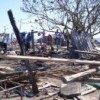
CUBA: Coastal Dwellers to Relocate Away from the Sea
She was born, grew up and lived all her life just a few steps from the sea, in the part of the city that everyone knows simply as La Playa (the beach). Although she was lucky enough to return to a home and belongings that withstood Hurricane Paloma’s mighty waves, Iramis Rodríguez has made up her mind to move inland.ARGENTINA-URUGUAY: Dispute Still Simmering Below the Surface
Although things have settled down, the dispute between Argentina and Uruguay over a paper pulp mill on a border river that has marred the fraternal relations between the two countries for the past four years continues to simmer.ENVIRONMENT: EU Bank ‘Financing Destruction’ in Africa
The European Union is financing ecologically and socially destructive projects in Africa, a Brussels conference has been told.ENVIRONMENT: Health – a Victim of Climate Change
More malaria, diarrhea, and asthma: these diseases are on the rise around the world because of environmental destruction and kill some three million children under five and two million adults a year.
DEVELOPMENT-SOUTHERN AFRICA: Harnessing the Zambezi
If the socio-economic development goals of the eight countries that share the Zambezi River basin are to be met, countries along the river should quickly implement plans towards managing water resources in an efficient, effective and sustainable manner.
LATIN AMERICA: Changes in Land Use, Changes in Climate
The countries of Latin America have failed to design integrated policies to control the processes of changes in land use, one of the causes of climate change. The region produces 12 percent of the world's emissions of greenhouse gases, which are driving up the planet’s average temperatures and changing the climate around the globe.ENVIRONMENT-US: Bush Quietly Passes Dozens of New Rules
As the world community meets in Poland this week to find solutions to the climate crisis, the George W. Bush White House is chaining the United States' tiller to prevent a change of course by President-elect Barack Obama by passing new anti-environmental rules and regulations at a furious pace.ENVIRONMENT-CUBA: ‘Forest Ranger’ Looks After Havana’s Trees
"It all began with the cutting of the ceiba," recalls Isbel Díaz, founder of the project "El Guardabosques" (The Forest Ranger), an environmental initiative that seeks to raise ecological awareness among residents of the Cuban capital and involve them in the protection of their natural surroundings, in particular the city’s trees.
Personal Crusades for Nature
Environmental misfortune moved these four people so much that they embraced protection of the natural world as their own personal crusades. Tierramérica shares their stories.
Changes in Land Use, Changes in Climate
The International Commission on Land Use Change and Ecosystems, launched in Mexico, will propose radical changes in the way we place value on natural resources, say its promoters.Ecobreves – MEXICO: Christmas Trees and Plagues from the North
With Christmas trees imported from Canada and Mexico, pests are arriving in Mexico, but the authorities are doing little or nothing about it, complain Mexican forestry producers.Ecobreves – ARGENTINA: Jaguars Victims of Ranchers
One of the main causes of the decline of the jaguar population in Argentina is hunting -- reprisal for the big cats' attacks on livestock --, according to the report "Identification of Jaguar-Human Conflicts in Northern Salta, Argentina," published this month by the Red Yaguareté (Jaguar Network).Ecobreves – HONDURAS: Mining Companies Putting On the Pressure — Again
The mining industry in Honduras has once again demanded that the government approve a legal framework for the sector, citing financial losses and reduction of jobs resulting from a lack of investment.Ecobreves – BRAZIL: Irrigation Project Wins International Prize
The Pintadas Solar project, which foments farming on small family-owned plots, has won the Seed Award, granted by the United Nations and the World Conservation Union (IUCN).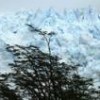
ARGENTINA: Frustration Over Veto of Glacier Protection Law
The decision by the administration of Cristina Fernández to veto a law to protect Argentina's glaciers - important reserves of freshwater - has caused deep concern among scientists and environmentalists who participated in writing the legislation.CLIMATE CHANGE-AFRICA: Trade Carbon for Food Security
Forget the view of climate change as impending catastrophe for a moment: if negotiators can recognise sustainable agriculture by African smallholders and forests as mitigating factors in climate change, carbon trading could become an important support for Africa's food security.PARAGUAY: Uncontacted Ayoreo Threatened by Deforestation
Large swathes of native forest have been turned into pasture land in the northern part of Paraguay’s semi-arid Chaco region, as large Brazilian cattle ranchers expand their property in this country.ENVIRONMENT: Europe Eases the Way for Cars
José Manuel Barroso, the European Commission's president, has a penchant for large cars. At the same time as he was publicly encouraging citizens to be more sparing in their use of energy, it emerged in 2006 that his vehicle of choice was a Volkswagen Touareg.CLIMATE CHANGE: EU Saying, Not Doing, the Right Things
Senior European Union figures are portraying themselves as champions of sound ecological policies ahead of the international climate change negotiations that begin in Poznan, Poland Dec. 1. Stavros Dimas, Europe's environment commissioner, this week described a series of measures being considered by the bloc's 27 governments as "easily the most far-reaching legislative package on fighting climate change anywhere in the world."« Previous Page — Next Page »


Through our global network of local writers, we are continuing our award-winning coverage of global and local environmental challenges, with a focus on the people for whom the ecosphere matters in a direct way: rural dwellers who have little means to protect themselves against adverse conditions; communities that need to switch to sustainable development in order to survive; poor women and children, who are the most vulnerable in natural disasters. Sponsored by the United Nations Environment Program (UNEP), the United Nations Development Program (UNDP) and The World Bank (WB), IPS also maintains the award-winning Tierramérica, a specialised information service on environment and development.

The Week with IPS

Tracking global progress towards a sustainable world


