
Saturday, November 28, 2026



News and Views from the Global South
Environment
SRI LANKA: Trading Debts Against Carbon Credits?
Little Sri Lanka wants developing countries to be able to trade their debts against the environment destruction and climate change attributed to the developed nations.ENVIRONMENT: Twisted As Unnaturally as the Banks
The financial meltdown in most of the industrialised world presents an opportunity for a new economic model that would end short-sighted search for high returns, according to leading economists attending the IUCN World Conservation Congress here.MIDEAST: Where Water Leaves a Bitter Taste
Palestinian villagers drink unsafe agricultural water rather than trusting water provided by an Israeli company, says Buthaina Mizyed, who has worked in Arraneh village near the conflict-laden West Bank city of Jenin.ENVIRONMENT: EU Stepping Back from Cleaning Up
Most of the European Union's promised cuts in greenhouse emissions could be undertaken outside the bloc under a proposal to be considered by law-makers this week.Ecobreves – BRAZIL: Sawdust to Remove Metals from Water
Lumber waste is helping to clean up rivers and industrial effluents, removing heavy metals like chromium and lead, according to a study by the University of Brasilia.Ecobreves – ARGENTINA: Protests Against Cereal Pollution
Based in a tent in the eastern Argentine city of Rosario, civil society groups are demanding action on a court order to shut down a cereal storage and production site that they say is polluting the environment with pesticides.Ecobreves – MEXICO: A Highway Challenge
Mexican authorities approved the construction of 62 kilometers of highway in a forested area outside the capital, but environmentalists are preparing legal action and mobilizations, charging that the road would destroy a biodiverse area that is also essential for water production.Ecobreves – CENTRAL AMERICA: Regional Lacks Environmental Policies
In Central America "there are no uniform public policies to ensure that polluting our quality of life is also a matter of corruption and lack of transparency," said Roxana Salazar, environmentalist and interim judge in Costa Rica's Constitutional Court.
Garífunas Confront Their Own Decline
The Garífuna culture, a "masterpiece" of human heritage according to UNESCO, could disappear as the result of the privatization of Central America's beaches.
Pedaling Against Pollution
Citizens from around the world are rediscovering the bicycle, an efficient, cheap and clean form of urban transportation.BOLIVIA: Water, Energy Everywhere – But Not for Locals
Peasant farmers in 42 villages along the Zongo valley in western Bolivia stand by and watch as the flourishing electricity industry harnesses the swift-flowing river while, paradoxically, their own farms are languishing from lack of water and energy.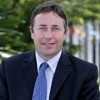
Q&A: "Future Prosperity Is in Green Technologies"
Achim Steiner, the eloquent executive director of the United Nations Environment Programme (UNEP), believes that Mexico could take a leadership role in the new "green" economy.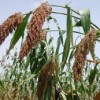
AGRICULTURE-SOUTH AFRICA: GM Sorghum Test Approved
As Africa grapples with the question of food insecurity, biotechnology buffs seem to have an answer: genetically modified crops that could feed a continent vulnerable to famine and food deficits. But environmentalists warn of new dangers.
Q&A: When Intelligence Is Used Unintelligently
All eyes were on Hans Blix, the seemingly unflappable Swede, on TV screens around the world before the U.S.-led invasion of Iraq in 2003.PERU: Mobilising to Hold President to His Promises
Social movements, trade unions, peasant farmer and indigenous organisations are holding strikes and demonstrations to demand that Peruvian President Alan García fulfil the social commitments he has made, in writing and at negotiating tables.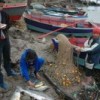
ARGENTINA: Guardians of the River
"There is no water...there are no fish," says Olga Ledesma, her skin weathered from 40 years of small-scale fishing, as the boat slowly winds its way along a branch of the Paraná river, South America’s second-longest river.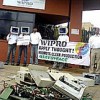
ENVIRONMENT-INDIA: In Sore Need of E-Waste Regulation
India’s lack of safe electronic waste-disposal is growing to a crisis situation, needing strong laws to control the situation, say experts.
ENVIRONMENT-AUSTRALIA: Discoveries Highlight Danger to Reefs
Efforts to create an inventory of life on Australia’s major coral reefs - to be used as part of a baseline to determine the impacts of global warming and overfishing upon reefs - have turned up hundreds of previously unknown and rare species.HEALTH: Dengue Threatens Asia Pacific Region
Over the past three decades, dengue fever has affected more and more countries in the Asia-Pacific region and is now regarded as the fastest of emerging mosquito-borne diseases.
ARGENTINA: Women Create Food and Jobs in Wetlands
Wearing a cap and a white apron, Melina Lucero cuts the heads and tails off fish caught in the Paraná River, before skilfully filleting them. Her co-workers will process and package the fish to sell as traditional, small-scale fish preserves at food fairs along the banks of the river in Argentina.ENVIRONMENT: Companies Scramble for Ever-Scarcer Resources
As humanity runs out of oil and minerals, the extraction of previously untouched deposits suddenly pays off - financially. But experts warn that it will likely further accelerate climate change and seriously damage the environment.« Previous Page — Next Page »


Through our global network of local writers, we are continuing our award-winning coverage of global and local environmental challenges, with a focus on the people for whom the ecosphere matters in a direct way: rural dwellers who have little means to protect themselves against adverse conditions; communities that need to switch to sustainable development in order to survive; poor women and children, who are the most vulnerable in natural disasters. Sponsored by the United Nations Environment Program (UNEP), the United Nations Development Program (UNDP) and The World Bank (WB), IPS also maintains the award-winning Tierramérica, a specialised information service on environment and development.

The Week with IPS

Tracking global progress towards a sustainable world


