Languages
Friday, November 13, 2026



News and Views from the Global South
Featured

Caring for Poorest and Most Underserved Children Vital for Creating a Better World
Kerry Kennedy has a clear mission – along with Nobel laureates and leading international figures – she wishes to ensure that hard-won gains in children’s rights are not destroyed by the economic fallout from the COVID-19 pandemic.
Failing Africa’s Farmers, Starving the Continent
African organizations are demanding answers after a recent report found that Alliance for a Green Revolution in Africa (AGRA) strategies have failed spectacularly to meet its goals of increasing productivity and incomes for millions of small-scale farming households by 2020 while reducing food insecurity on the continent.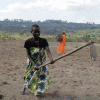
UN’s First-Ever Food Systems Summit to Fight Impending Emergency
Food systems involve all the stages that lead up to the point when we consume food, including the way it is produced, transported, and sold. Launching a policy brief on food security in June, UN chief António Guterres warned of an “impending food emergency”, unless immediate action is taken.
Regressive Taxation Must Be Reversed
With many in the world experiencing declining living standards, there has been growing frustration. Many hope that progressive taxation will improve things. While some economies once had progressive tax systems, recent decades have seen regression.
Nobel Laureate Kailash Satyarthi on Where to Find the $1 trillion Needed for Marginalised Children
 Nobel Laureate Kailash Satyarthi says that $1 trillion can solve many of the problems the world's most marginalised communities are facing.

Exclusive: Kailash Satyarthi Warns over a Million Children Could Die Because of COVID-19 Economic Crisis
Nobel Laureate Kailash Satyarthi warns of the danger that over one million children could die, not because of the COVID-19 pandemic, but because of the economic crisis facing their families. In an exclusive interview with IPS, Satyarthi said that without prioritising children we could lose an entire generation as evidence mounts that the number of child labourers, child marriages, school dropouts and child slaves has increased as the COVID-19 pandemic spread across the globe.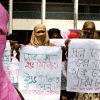
UN Women Calls for Accelerating its Unfinished Business
Twenty-five years ago, the Fourth World Conference on Women in Beijing set a path-breaking agenda for women’s rights. As a result of the two-week gathering with more than 30,000 activists, representatives from 189 nations unanimously adopted the Beijing Declaration and Platform for Action.
World Risks Losing Entire Generation of Children, Nobel Laureates Warn
The COVID-19 pandemic has upended the lives of millions of people worldwide, accounted for over 869,000 deaths, destabilised the global economy and triggered a marked rise in poverty and hunger in the developing world. But the fallout from one of the most devastating consequences of the spreading virus is on the lives of a growing new generation: children.
Mozambique Reels from Repeated Attacks on Press Freedom
While Mozambique was recently rattled by an arson attack on a local media organisation, experts say that it’s only a part of a worrying pattern of continuous attacks on the media in the country.

Nobel Laureates and Global Leaders Call for Urgent Action to Prevent COVID-19 Child Rights Disaster
Regina Njagi’s four children, aged between 11 and 17, have not benefitted from online learning since the COVID-19 led to the closure of all schools in Kenya, earlier in March. With the closure, Njagi lost her job as a teacher at a local private school.
Not Guilty Verdict in Kuciak Killing – a Chilling Message for Journalists
A Slovak businessman with alleged links to organised crime has been found not guilty of ordering the murder of journalist Jan Kuciak in a ruling that has left press freedom campaigners and politicians shocked.
The First “Virtual” Post-Pandemic UN General Assembly Meeting
Although we have not convened in this Hall since March, New York-based delegations have worked tirelessly to uphold the values and principles set out in the Charter of the United Nations, whilst contending with the COVID-19 pandemic.
Qatar Accuses UAE of Racial Discrimination in UN’s Highest Court
Qatar officials reiterated their claim on Wednesday that the United Arab Emirates (UAE) be held responsible for their “discrimination” against Qatari citizens, as the third day of public hearings proceeded at the International Court of Justice (ICJ), the United Nation’s highest court. But foreign policy experts caution that the case is not good for stability in the Persian Gulf region.
“Hidden” Costs of Our Food Systems
Five years after the adoption of the 2030 Agenda we are far from achieving the Sustainable Development Goals (SDGs). According to the recently launched SOFI Report (The State of Food Security and Nutrition in the World 2020), we are not on track to eradicate poverty, hunger and malnutrition. On the contrary, with the current trends, the global number of undernourished people in 2030 would exceed 840 million. Moreover, WHO has reported alarming rates of overweight and obesity, globally affecting 39% and 13% of the adult population, respectively.
Trinidad and Tobago – Protecting the iconic Three Sisters
Trinity Hills in Trinidad and Tobago’s southeast region, also affectionately known as the Three Sisters, is home to a wildlife sanctuary that serves as a sort of incubator for fauna to reproduce and replenish the surrounding forest reserves of the Victoria-Mayaro region that includes the communities of Guayaguayare and Moruga. But a draft management plan for the Trinity Hills environment project and reports from surrounding communities suggest that urgent action is needed to prevent losses to the sanctuary and forest reserve.
A Pandemic Cannot Justify Child Labour
For the past five months, our screens have been flooded with distressing imagery of one catastrophe after another: From the impact of the COVID-19 pandemic on vulnerable communities, to cyclones in West Bengal, Odisha, and Maharashtra.
It Is Time to End the Controversial World Bank’s Doing Business Report
On 27 August the World Bank announced that it will suspend the Doing Business Report over data irregularities, until it conducts a review and audit. The halting of the report was welcomed by trade unions, academics and human rights groups.
Women’s access to stimulus packages and post Covid-19 gender equality
All crises—natural disasters, wars, pandemics—affect different sections of people in different ways. Like any other crisis, Covid-19 has differing impacts on society. It has affected men and women, rich and poor, and adults and children differently. Since the ramifications of the coronavirus pandemic vary across people, measures towards the recovery from this crisis should also be focused towards each section of society distinctively.
South Sudan – COVID-19 and Ongoing Violence has Catastrophic Impact on Civilians
Large-scale intercommunal violence on civilians in the Jonglei and greater Pibor regions in South Sudan has led to the mass displacement of thousands of people who are living in the open without health care, adequate food, shelter, water or sanitation in the middle of the rainy season.
Trump Undermines WHO, UN System
After accusing the World Health Organization (WHO) of pro-China bias, President Donald Trump announced US withdrawal from the UN agency. Although the US created the UN system for the post-Second World War new international order, Washington has often had to struggle in recent decades to ensure that it continues to serve changing US interests.
Energy Cooperatives Swim Against the Tide in Mexico
A Mexican solar energy cooperative, Onergia, seeks to promote decent employment, apply technological knowledge and promote alternatives that are less polluting than fossil fuels, in one of the alternative initiatives with which Mexico is seeking to move towards an energy transition.« Previous Page — Next Page »


The Week with IPS

NEXT STOP - SDGs
Tracking global progress towards a sustainable world
Tracking global progress towards a sustainable world
