Languages
Friday, November 13, 2026



News and Views from the Global South
Featured

Neo Colonialism vs. Sovereignty in Sri Lanka
On August 5, 2020, a new government was elected in Sri Lanka, bringing down the previous regime associated with the Central Bank bond scam, the Easter Sunday bomb attacks and controversial international agreements.
Racism at the UN: Practice What You Preach
When two recent staff surveys, one in Geneva and the other in New York, revealed widespread racism at the United Nations, it triggered the obvious question: why shouldn’t the UN Human Rights Council (HRC) probe these charges?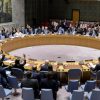
It is Time for a Democratic Global Revolution
The people of the world need to seize the moment and bring about a democratic global revolution. It is time for a global parliament and real representation. More than 21 million people got infected with the novel coronavirus and over 770,000 have died. Never before did the world witness similar collective lockdowns of social and economic activity that had to be enforced to contain the pandemic.
Madagascar – Jails Hold more Pre-trial Prisoners than Convicted Criminals
The recent killing of 22 prisoners in Madagascar during a prison escape on Sunday, Aug. 23 has brought the extraordinary situation of the country’s prisons under a spotlight. Human rights watchdog Amnesty International has condemned the killings, criticising the current judicial system that has led to Madagascar’s prisons holding more people awaiting trial than convicted criminals.
Semiarid Regions of Latin America Cooperate to Adapt to Climate
After centuries of poverty, marginalisation from national development policies and a lack of support for positive local practices and projects, the semiarid regions of Latin America are preparing to forge their own agricultural paths by sharing knowledge, in a new and unprecedented initiative.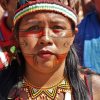
Amazon ‘Women Warriors’ Show Gender Equality, Forest Conservation Go Hand in Hand
On an early December morning last year in the state of Maranhão, Brazil, half a dozen members of the Indigenous Guajajara people packed their bags with food, maps and drone equipment to get ready for a patrol. They said goodbye to their children, uncertain when, or whether, they would see them again. Then, they hoisted their bags over their shoulders and set out to patrol a section of the 173,000 hectares (428,000 acres) of the primary rainforest they call home.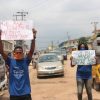
Standing Up to Myths and Misinformation in Nigeria During the Pandemic
‘An apple a day keeps the doctor away’ is a common and seemingly harmless saying. But what happens when commonly eaten foods like pepper, garlic and ginger are wrongfully said to prevent COVID-19? What can we do to fight harmful misinformation?
Covid is a Great Unequaliser, But the Crisis Could Enable us to Build a More Equal Future
Any of the first names that the media reported as having Covid were those of the rich and powerful, from movie stars to political leaders. Be ye ever so high, the virus is above thee – or so it seemed.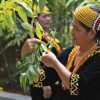
Covid-19 Pandemic Another Threat to Indigenous Communities
The voices of indigenous people worldwide are being silenced and their lives made invisible. Stewards of the earth, they are left at the fringes of public discourse in countries around the globe. Indigenous people are not “extinct”, they exist, and they are building innovative networks and solutions, that could be the key to many of our world’s problems.
Mayan Train Threatens to Alter the Environment and Communities in Mexico
Mayan anthropologist Ezer May fears that the tourism development and real estate construction boom that will be unleashed by the Mayan Train, the main infrastructure project of Mexican President Andrés Manuel López Obrador, will disrupt his community.
How Women-led Agribusinesses are Boosting Nutrition in Africa
Oluwaseun Sangoleye’s son developed rickets after rejecting baby formula. So she started a business to make natural baby cereal from locally-sourced ingredients in Nigeria.
The Abraham Accord: Will it Bring Peace or Perpetuate Pain in Palestine?
There is not much good news for President Donald Trump of the United States these days. If electoral polls have any credibility, he is staring at the face of almost certain defeat in the elections come November. So, when the so-called Abraham Accord between Israel and the United Arab Emirates (UAE) was sealed in a telephone call between him and the leaders of Israel and the UAE, signalling a sliver of silver lining in the otherwise hovering dark clouds over him, Trump was ecstatic. A Trump twitter called it a “HUGE breakthrough among “three GREAT friends!”.
Transforming the Global Economy or Parachuting Cats into Borneo?
The COVID 19 Pandemic continues relentlessly. Deaths approaching a million globally, 22 million infected and growing. Brazil, India, the US and Russia accounting for almost 50% of the total cases in the world.
Q&A: Ageing Africa Left out of COVID-19 Policies
Nearly three quarters of respondents in a survey across 18 African countries have claimed that their countries’ COVID-19 responses are gravely lacking in addressing the ageing population.

To Understand the ”Other”: How Disabilities Define Us
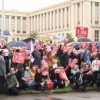
Staff Surveys Reveal Widespread Racism at the United Nations
As it continues to vociferously preach the virtues of equality—advocating equal rights for all, irrespective of race, sex, language or religion-- the United Nations has been quick to condemn racism and racial discrimination worldwide.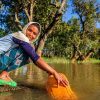
How Women & Girls are Forced to Trade Sex for Water
There is an intimate connection between corruption and COVID-19. This pandemic is making everyday life more desperate, especially in poorer communities, and that means more opportunities for those preying on vulnerable people.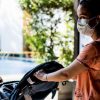
Put Gender Equality at the Heart of the Post-COVID-19 Economic Recovery
The pandemic is disproportionately affecting women workers. Governments should prioritize policies that offset the effects the COVID-19 crisis is having on their jobs.
Indigenous Best Amazon Stewards, but Only When Property Rights Assured: Study
“The xapiri [shamanic spirits] have defended the forest since it first came into being. Our ancestors have never devastated it because they kept the spirits by their side,” declares Davi Kopenawa Yanomami, who belongs to the 27,000-strong Yanomami people living in the very north of Brazil.
Report Shows Sri Lanka has Escalation of Violence During COVID-19 Lockdown
The coronavirus pandemic has resulted in the escalation of violence against women and children in Sri Lanka.
Future of Education Is Here
There are moments when the world has no choice but to come together. Those moments become historic turning points. This is one of them. We are now faced with the greatest education emergency of our time. Over one billion children are out of school. The COVID-19 pandemic has created an unprecedented crisis of such magnitude and depth that the next generation might neither have the capacity and tools, nor the will, to rebuild - let alone build back better.« Previous Page — Next Page »


The Week with IPS

NEXT STOP - SDGs
Tracking global progress towards a sustainable world
Tracking global progress towards a sustainable world
