Languages
Sunday, November 15, 2026



News and Views from the Global South
Featured
A Humanitarian Response to the Crisis in Zimbabwe
In November 2019, the UN’s Special Rapporteur on the Right to Food described Zimbabwe – a country once hailed as the bread basket of Africa – as a state on the brink of man-made starvation.
World’s Young Activists at War: First, Occupy Wall Street, Next Un-Occupy Palestine
The world’s young activists, numbering over 3.8 billion, are on the war path. The rising new socialist movements—which included “Black Lives Matter,” “Occupy Wall Street” “Un-Occupy Palestine” and "the #Me Too Movement" triggering women's marches— were aimed at battling racism, institutionalized inequalities, political repression and sexual harassment.
India’s Outdoor Workers on the Frontlines of Climate Change
Last June when more than half of India was reeling under daily temperatures topping 40 degrees Celsius, Nursing Behera’s 11-month-old son burned both his legs when a pot of boiling water fell on him.
World Drains Away Valuable Energy, Nutrients & Water in Fast-Growing Wastewater Streams
Vast amounts of valuable energy, agricultural nutrients, and water could be recovered from the world’s fast-growing volume of municipal wastewater.
Children are Bearing the Bitter Brunt of Counter-Terrorism Efforts: Report
Counter-terrorism efforts adopted by governments around the world in response to threats of terrorism are affecting children negatively in numerous ways, a report by Watchlist on Children and Armed Conflict (Watchlist) claimed last week.
Africa Must Prioritise Upskilling its Unemployed Youth, Development Bank Urges
Africa’s inability to produce adequate skills is negatively impacting its economic growth.
Coping with Australia’s Surfeit of Natural Disasters & Lessons to be Learned
I love visiting Canberra in the summer. The air is clean. The water in lake Burley Griffin is crystal clear and the "go boats" merrily bob up and down with their wine sipping occupants while black swans frolic in peace.
Financialization Increases Inequality
Financialization has worsened inequality through various channels, including macroeconomic policies. For example, quantitative easing and low, if not negative interest rates have fuelled credit and asset price bubbles, while fiscal spending cuts have adversely affected those depending on government assistance.
Women & Girls Up Front — the Humanitarian Response in Democratic Republic of Congo
Eleven-year-old “Anne” went to a health facility with her mother in the conflict-affected province of Ituri, in northeastern Democratic Republic of the Congo. At first, she could barely tell her story.
US Mideast Peace Plan: from a Paper Pharaoh & a Fake Moses
Israeli Prime Minister Benjamin (Bibi) Netanyahu was slapped corruption charges last week while he was hobnobbing with US President Donald Trump in Washington. Bibi has, apparently, done his homework in psychology. He knew the quickest way to get around Trump was to flatter him.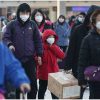
UN Staffers Rattled by Deadly Coronavirus Pandemic
With over 37,500 staffers in its global Secretariat payroll, the United Nations has gone high alert as the deadly coronavirus continues to take a heavy toll worldwide.
WHO Declares Coronavirus a Public Health Emergency, Highlights Need to Support Countries ‘Weaker Health Systems’
Weeks into widespread panic about the “Coronavirus” that has so far killed at least 170 people in China, the World Health Organisation (WHO) on Thursday declared it a public health emergency. As of Friday, the disease had spread to all the regions in Mainland China, with more than 7,500 cases in the country alone, according to the BBC.
India’s Unique Water Purification Wetland Could Soon Become Extinct
Ramkumar Mondal’s farm is awash in a brilliant yellow mustard bloom. A flock of grey cranes peck for food amidst the shallow watergrass. But Mondal’s fishpond digs in there like a do-or-die last sentinel as nearby high-rise buildings, a symbol of development and encroachment, menacingly tower over the fishpond, permanently blocking the eastern sun so essential for the pondwater to convert sewage into fish-feed.
The Role of Sherpas in Nature Conservation as Guardians of the Himalayas
 Since I was a kid, I grew up with adventures and stories of famous characters of the books of Jack London: White Fang, Make a Fire… and the incredible ode to perseverance of Martin Eden.

Our Message at Davos: Water & Sanitation Are a Critical Line of Defence Against Climate Change
There was only one topic on everyone’s lips at Davos this year – climate change. The headlines focused on the cold war between Greta Thunberg and Donald Trump, but there was much greater consensus among those gathered for the annual meeting of the World Economic Forum (WEF).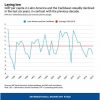
New Challenges to Growth in Latin America & the Caribbean
Economic activity in Latin America and the Caribbean stagnated in 2019, continuing with the weak growth momentum of the previous five years and adding more urgency and new challenges to reignite growth.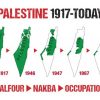
US Mideast Peace Plan: Israelis Offered the Cheese & Palestinians the Holes
The Israeli human rights organization B’Tselem has described the much-ballyhooed US Middle East peace plan as “more like Swiss cheese-- with the cheese being offered to the Israelis and the holes to the Palestinians”.
Coronavirus: Why China’s Strategy to Contain the Virus Might Work
On January 23, the authorities of Wuhan City, China, sealed off the motorways and shut down all public transport to stop the coronavirus outbreak from spreading. Shortly afterwards, at least ten other cities in China were under quarantine orders, most of them located in the areas surrounding Wuhan.
‘Organic is the Future’
Vandana Shiva, a pioneer of organic farming in India, is incensed by the 2019 draft law to compulsorily register all seeds used by farmers. On a wintry afternoon, at her farm Navdanya in the Himalayan foothills, the noted ecologist spoke on the future of the organic farming movement in India. Excerpts:
Inclusive Education Still Evades People with Disabilities
Neema Namdamu, 42, grew up in the village of Bukavu in eastern Democratic Republic of Congo where children with disabilities were considered a curse. As a child Namdamu contracted polio, leaving her paralysed from the waist down. Her neighbours advised her mother to do what they felt was the "right thing": to leave the child alone in a hut until she died of starvation.
Urbanization as a Path to Prosperity
Growing up in New York City in the 1970s, Edward Glaeser saw a great metropolis in decline. Crime was soaring. Garbage piled up on sidewalks as striking sanitation workers walked off the job. The city teetered on the edge of bankruptcy.« Previous Page — Next Page »


The Week with IPS

NEXT STOP - SDGs
Tracking global progress towards a sustainable world
Tracking global progress towards a sustainable world
