Languages
Wednesday, November 18, 2026



News and Views from the Global South
Featured

Gender Quotas Help Women Parliamentarians to Rise in Numbers
When the Inter Parliamentary Union (IPU), based in Switzerland, released its annual report on the representation of women legislators worldwide, four of the top five countries were from the developing world. Rwanda led the way with 61.3 percent of the seats held by women in its lower or single house of parliament followed by Cuba (53.2 percent), Bolivia (53.1 percent) and Mexico (48.2 percent).
Promoting Privatization
Privatization has been central to the ‘neo-liberal’ counter-revolution from the 1970s against government economic interventions associated with Roosevelt and Keynes as well as post-colonial state-led economic development. Many developing countries were forced to accept privatization policies as a condition for credit or loan support from the World Bank and other international financial institutions, especially after the fiscal and debt crises of the early 1980s. Other countries voluntarily embraced privatization, often on the pretext of fiscal and debt constraints, in their efforts to mimic new Anglo-American criteria of economic progress.
UN Pays Homage to Staffers Who Died in Plane Crash
The United Nations headquarters is in mourning – and the UN flag is at half mast. The deaths of 21 UN staffers March 10, on board an Ethiopian Airlines flight in Addis Ababa, is one of the biggest tragedies in the extended UN family—with a flashback to the deaths of 22 people, mostly UN staffers, who lost their lives in the Canal Hotel bombing in the Iraqi capital of Baghdad in August 2003.
The Crisis in Venezuela
My mission to Venezuela in November/December 2017 was the first by a UN rapporteur in 21 years. It was intended to open the door to the visit of other rapporteurs and to explore ways how to help the Venezuelan people overcome the protracted economic and institutional crisis.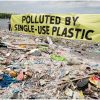
The Rising Trend of Zero Waste Lifestyles
Not too long ago, the term “zero waste” was just one of those boring policy directives or catchphrases thrown around by governments. But in the last few years, ‘going zero waste’ has taken on a new direction as a lifestyle trend of the insta-famous, who are helping to make zero waste a movement that anyone can get involved in.
Access to Water Is a Daily Battle in Poor Neighborhoods in Buenos Aires
"Look at this water. Would you drink it?" asks José Pablo Zubieta, as he shows a glass he has just filled from a faucet, where yellow and brown sediment float, in his home in Villa La Cava, a shantytown on the outskirts of Argentina's capital.
Q&A: Inventor from a Small Fishing Village in Saint Lucia Provides Hope for Water Woes
Karlis Noel spends his days in his lab in the small, picturesque community of Laborie in St. Lucia. The former fisherman’s story might sound like an overnight success, but his present accolades in the field of engineering are the result of years of hard work and an unceasing drive to make life easier for communities in the throes of a water crisis.
Birds of a Feather: Kim Jong-un and Donald J Trump
After his first meeting with Kim Jong-un Donald Trump declared: "And then we fell in love, okay? No, really – he wrote me beautiful letters, and they're great letters." Maybe it was a joke, maybe not. At least Trump indicated that he and Kim Jong-un were friends. In his book De Amicitia, written 44 BCE, Marcus Tullius Cicero wrote "A friend is, as it were, a second self." Are Trump and Kim Jong-un really friends? At least they seem to have many personal traits in common.
Preaching World Peace by Day, Peddling Lethal Weapons By Night
The Middle East, one of the world’s most politically-volatile and war-ravaged regions, has doubled its arms imports during the past five years, according to the Stockholm International Peace Research Institute (SIPRI).
Nigeria Mourns the Loss of Leading African Academic Who Was in Ethiopian Airlines Crash
Nigeria is mourning along with the rest of the world after the downing of Ethiopian Airlines Flight, which claimed all of the 157 lives onboard. The fatalities included people from 35 countries, 19 United Nations officials and two Nigerians, one of whom was regarded as Africa's leading academic and labelled a genius by many.
Millions of Venezuelans in Need of Protection
The international community must extend protections for Venezuelans in light of a growing humanitarian crisis with no end in sight. Human Rights Watch has urged governments in the Americas to provide temporary protection to the millions of Venezuelans fleeing a severe humanitarian crisis.
Environmental Funding For Guyana Must Cater for Mangroves Too
For several decades, Guyana has been using mangroves to protect its coasts against natural hazards, and the country believes its mangrove forests should be included in programmes like the REDD+ of United Nations, in order to access financing to continue their restoration and maintenance, as they complement miles of seawalls that help to prevent flooding.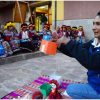
Women as Forerunners of Change: When Financial Inclusion Meets Digital Transformation
Imagine a world where women fully participate in society, and enjoy equal access to resources and opportunities. Most probably, the 2030 Agenda would be nearing its fulfillment and we would be closer to achieving the better planet we wish to build.
Break the Menstrual Taboo
It is time to rise up and fight a long neglected taboo: menstruation. Marking International Women’s Day, United Nations human rights experts called on the international community to break taboos around menstruation, noting its impacts on women and girls’ human rights.
Island Women Take the Lead in Peatland Restoration
Eluminada Roca has lived all her life next to the Leyte Sab-a Basin peatlands. The grandmother from of San Isidro village in Philippines’ Leyte island grew up looking at the green hills that feed water to the peatland, she harvested tikog—a peatland grass to weave mats—and ate the delicious fish that was once in abundant in the waters. But today, the land is losing its water, the grass is disappearing and the fish stock has drastically decreased.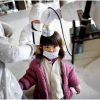
Eight Years on, Fukushima Still Poses Health Risks for Children
On March 11, we commemorate the 8th anniversary of the Fukushima nuclear disaster. To an outside observer, this anniversary passes as a technical progress report, a look at new robot, or a short story on how lives there are slowly returning to normal.
Smart Tech Will Only Work for Women When the Fundamentals for Its Uptake Are in Place
Science and technology offer exciting pathways for rural women to tackle the challenges they face daily. Innovative solutions for rural women can, for example, reduce their workload, raise food production and increase their participation in the paid labour market. But even the very best innovative, gender-appropriate technology makes no sense without access to other critical resources, especially secure land rights, which women in rural areas need to flourish.
Was Slavery the World’s First Human Rights Violation?
The United Nations, which diligently monitors human rights violations worldwide, believes that centuries-old slavery still exists worldwide.
International Women’s Day in Cameroon: A Day for All Women?
On March 8, women all over Cameroon will don custom-made dresses sewn of pagne, specially printed for International Women’s Day. They will parade through cities and towns, joining women around the world in celebration of the day.
How Cultural & Creative Industries Can Power Human Development in 21st Century
Cultural and creative industries, which include arts and crafts, advertising, design, entertainment, architecture, books, media and software, have become a vital force in accelerating human development. They empower people to take ownership of their own development and stimulate the innovation that can drive inclusive sustainable growth.
Veteran Diplomat Challenges Security Council’s Imbalance of Power, Offers Solutions for Reforms
A reexamination of the role of the United Nations and a tallying of its successes and failure get underway as it prepares for the 75th anniversary next year in the world of the 21st century while its core entity, the Security Council, is trapped in the time warp of 1945, its founding year.« Previous Page — Next Page »


The Week with IPS

NEXT STOP - SDGs
Tracking global progress towards a sustainable world
Tracking global progress towards a sustainable world
