Languages
Friday, November 20, 2026



News and Views from the Global South
Featured

Working Toward a World Without Parkinson’s Disease
As one expert recently noted, if Parkinson’s were an infectious disease, we would call it an epidemic. Worldwide, 10 million people live with Parkinson’s disease, a number expected to double in the next 20 years. While there is no cure for Parkinson’s and no proven way to slow its progression, there is new reason to hope for a world without Parkinson’s.
Why Is International Human Rights Law Such an Easy Target?
"Earlier this month, Britain’s Prime Minister called for human rights laws to be overturned if they were to "get in the way" in the fight against terrorism. Specifically, Theresa May said there was a need "to restrict the freedom and movement of terrorist suspects when we have enough evidence to know they are a threat, but not evidence to prosecute them in full in court."
Any Way to Help Slow Down Climate Change… Individually?
 It is no secret that the biggest responsible for climate change is greed. The greed of the world’s largest private corporations, which blindly seek unlimited high financial benefits. And the greed of those politicians who are also blindly keen about holding their temporary power at any cost, thus not daring to challenge big business. Ordinary people can meanwhile help slow down such a hellish race.

Europe Stands by Caribbean on Climate Funding
A senior European Union (EU) official in the Caribbean said Europe is ready to continue the global leadership on the fight against climate change, including helping the poor and vulnerable countries in the region.
Rural Poverty? Cooperatives!
Humanity has had and has big projects. Mastery of nature is one, still going on. Middle range phenomena have been mastered, but not the micro level of viri–HIV is a current case–nor the macro level of climate–to the contrary, humanity is making it worse.
Global Devaluation of Work Drives Up Unemployment in Brazil
In addition to driving up the number of unemployed people to 14.2 million, the severe recession of the last two years led Brazil to join the global trend of flexibilisation of labour laws in order to further reduce labour costs.
“Torture Works” — in All the Wrong Ways
“Torture works” might rank among the most sweeping generalisations ever uttered, one brutal in its disregard of the pain and suffering created by this abhorrent practice. Indeed, torture works, but to all the wrong ends.
“Black Soils” – Excessive Use of Arsenic, Cadmium, Lead, Mercury…
Soils are polluted due mostly to human activities that leave excess chemicals in soils used to grow food, the United Nations reports.
The World Is Burning
Record high temperatures are gripping much of the globe and more hot weather are to come. This implies more drought, more food insecurity, more famine and more massive human displacements.
UN Response Teams Underfunded as Costs Hit Staggering $23.5 Billion
UN response teams that help the most vulnerable people in the world are still largely underfunded, a new status report has revealed. The funding available to the teams is no match for the record number of people—141 million—who need assistance today.
“Big Reflection” Needed on Opioid Crisis
Opioids are among the most devastating drugs and are creating a crisis of epidemic proportions, said the UN drug agency.
No Wall for Ethiopia, Rather an Open Door—Even for Its Enemy
It’s one thing to read about the exodus of souls flowing out of Eritrea, it’s quite another to look into the tired eyes, surrounded by dust and grime, of a 14-year-old Eritrean girl who’s just arrived on the Ethiopian side of the shared border.
East Asia’s Real Lessons
International recognition of East Asia’s rapid economic growth, structural change and industrialization grew from the 1980s. In Western media and academia, this was seen as a regional phenomenon, associated with some commonality, real or imagined, such as a supposed ‘yen bloc’.
Sexual Violence Fuels Vicious Recruitment Cycle in Congolese Militia
In the Democratic Republic of Congo (DRC), the active recruitment of young girls by armed militias has produced disastrous effects—facing social stigma when they’re freed, many girls find their way back to these violent groups and rejoin them.
Children Now More Than Half of the 65 Million Displaced
Around 20 people are newly displaced every minute of the day, according to a new report. In its annual Global Trends report, the UN’s refugee agency UNHCR has recorded unprecedented and concerning levels of displacement around the world.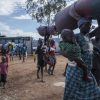
New Inhumane Record: One Person Displaced Every Three Second
Nearly 66 million people were forcibly displaced from their homes last year, the United Nation refugee agency has reported.
Asia-Pacific: Farming Rice and Fish Together to Reduce Poverty
Rice is a major food commodity and staple food for many, and adding fish to flooded rice paddies has been a farming tradition practiced in a number of Asian countries for many centuries—even for more than 1000 years in some Chinese areas, the United Nations reports.
UN Work Stoppage in Geneva Halts Human Rights Meeting
As UN staffers in Geneva threaten a strike, protesting a proposed salary cut of over 7.5 percent, a token two-hour “work stoppage” last week forced the Human Rights Council to suspend its meeting.
Achieving Universal Health Coverage (UHC) in Kenya through Innovative Financing
Every year, one million Kenyans are driven below the poverty line by healthcare-related expenditures. Poverty predisposes them to disease and slows all aspects of growth in the economy.
Africa: Drought and Jobless, Hopeless Youth, Fertile Grounds for Extremism
Ignoring the plight of jobless young people in sub-Saharan Africa is a recipe for political instability and global insecurity, warned a high-level symposium of Africa’s interior, environment and foreign affairs ministers in Ouagadougou, Burkina Faso.
Safeguarding Precious Crop Genes in Trust for Humanity
A genetic resource centre run by the Nigeria-based International Institute for Tropical Agriculture (IITA) has banked thousands of crop varieties for disaster relief and research, holds the world’s largest and most diverse collection of cowpeas, and contains some of Africa’s rarest insect species.« Previous Page — Next Page »


The Week with IPS

NEXT STOP - SDGs
Tracking global progress towards a sustainable world
Tracking global progress towards a sustainable world
