Languages
Friday, November 20, 2026



News and Views from the Global South
Featured

World Bank fudges on inequality
The 17 Sustainable Development Goals (SDGs) – collectively drafted and then officially agreed to, at the highest level, by all Member States of the United Nations in September 2015 – involves specific targets to be achieved mainly by 2030. The Agenda seeks to “leave no-one behind” and claims roots in universal human rights. Thus, addressing inequalities and discrimination is central to the SDGs. Poverty and Shared Prosperity 2016: Taking on Inequality is the World Bank’s first annual report tracking progress towards the two key SDGs on poverty and inequality.
African Migrants Bought and Sold Openly in ‘Slave Markets’ in Libya
Hundreds of migrants along North African migration routes are being bought and sold openly in modern day ‘slave markets’ in Libya, survivors have told the United Nations migration agency, which warned that these reports “can be added to a long list of outrages” in the country. The International Criminal Court is now considering investigating.
When It Comes to Fracking, Argentina Dreams Big
Since a US Energy Information Administration (EIA) report announced in 2011 that Argentina had some of the world’s biggest shale oil and gas reserves, the dream of prosperity has been on the minds of many people in this South American nation where nearly a third of the population lives in poverty.
Time to Find ‘Magic Formula’ to Stop Hatreds – Baku Forum
It is time to find that “magic formula” that will encourage people to stop conflicts, the rise of violent extremism and hatreds, and live together in peace, urged a United Nations senior official at the end of a UN-backed conference on intercultural dialogue in Baku, Azerbaijan.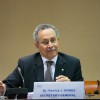
Towards a Global Role for ACP?
The African, Caribbean and Pacific Group of States (ACP) met this week in Brussels for the 105th Session of its Council of Ministers to discuss the key question of how these 79 countries could play a more effective role for their own citizens and in the international arena.
In France, ‘Us and Them’ Amid Elections
Launched in the run-up to the French presidential elections, a daring exhibition in Paris is sparking dialogue about the origins and nature of racism, both in Europe and elsewhere.
Mega-Projects Have Magnified Corruption in Brazil
It cannot be categorically stated that corruption has increased in the country in recent years, because there is no objective information from earlier periods to compare with, according to Manoel Galdino, executive director of Transparency Brazil.
How to Counter Violent Extremism, Youth Radicalisation – Baku Forum
The integration of migrants in cities, countering the rise of violent extremism, as well as youth radicalisation on the Internet have been some of the key issues discussed at a United Nations forum in Baku, Azerbaijan.
Mob Killing Sparks Fresh Outrage Over Pakistan’s Blasphemy Laws
Aimal Khan, 27, an airman in Pakistan's Air Force, warns the country will end up in the throes of mayhem if the state does not do something about the abuse of the blasphemy laws. "People will use it to settle personal scores," he said.
Growing Inequality under Global Capitalism
Income and wealth inequality has increased in recent decades, but recognition of the role of economic liberalization and globalization in exacerbating inequality has never been so widespread. The guardians of global capitalism are nervous, yet little has been done to check, let alone reverse the underlying forces.
Collective Amnesia in Famine Response and Resilience-Building
The emerging drought-induced humanitarian crisis—prevailing in countries from Niger in West Africa to Somalia in East Africa—and conflict-driven famine conditions in South Sudan, Somalia, and Northeast Nigeria, have become a regular phenomenon.
Flying Green in Bangladesh
New technology could be the answer to reducing negative climate impacts of aviation - one of the fastest-growing sources of greenhouse gases. And a recent quantitative research at North South University (NSU) of Bangladesh has found that upgrading the existing navigation system will reduce fuel use, hence decreasing carbon emissions as well as costs.
Social Forum Calls for Fight Against Corruption, to Defend the Amazon
Corruption has penetrated the Amazon rainforest like an illness that infects everything, said Ruben Siqueira, coordinator of the Pastoral Land Commission (CPT), during the VIII Panamazonic Social Forum (FOSPA), which brought together in the Peruvian Amazon jungle representatives of civil society from eight Amazon basin countries.
Reflections on World Press Freedom Day
This year’s theme for the 2017 World Press Freedom Day “Critical Minds for Critical Times: Media’s role in advancing peaceful, just and inclusive societies” is one of the most important days honouring press freedom.
The Very Survival of Africa’s Indigenous Peoples ‘Seriously Threatened’
The cultures and very survival of indigenous peoples in Africa are seriously threatened. They are ignored, neglected and fall victims of land grabbing and land dispossession caused by extractive industries, agribusiness and other forms of business operations.
Journalist Killings in Sri Lanka Predicated on a Deadly Irony
The widespread belief in the politically-motivated killings of journalists in Sri Lanka is predicated on a deadly irony: the hidden hand has always been visible, but the fingerprints have gone missing.
A Free and Diverse Media is Essential to Protecting Democracy in the 21st Century
Images of protestors flooding the streets – whether in Caracas, Bucharest, Istanbul or Washington DC – send a powerful message to those in power, especially when they are plastered across newspaper front pages.
Repression 2.0: An Updated Global Censorship
Censorship tactics have become more complex, posing new challenges for journalists and non-journalists alike, a new report finds.
Trolling of Women Journalists Threatens Free Press
“It’s not what you say that prompts it—it’s the fact that you are saying it,” says Mary Beard, a Cambridge University classics professor about online trolling. “If you venture into traditional male territory, the abuse comes anyway. It is the many ways that men have silenced outspoken women since the days of the ancients.”
‘Fake News’ is not Journalism…
Would you trust your news from any source? How are we able to ensure that ‘fake’(d) news does not overtake the flow of information?
Caribbean Rolls Out Plans to Reduce Climate Change Hazards
Climate change remains inextricably linked to the challenges of disaster risk reduction (DRR). And according to the head of the United Nations Office for Disaster Risk Reduction (UNISDR), Robert Glasser, the reduction of greenhouse gases is “the single most urgent global disaster risk treatment”.« Previous Page — Next Page »


The Week with IPS

NEXT STOP - SDGs
Tracking global progress towards a sustainable world
Tracking global progress towards a sustainable world
