Languages
Sunday, November 8, 2026



News and Views from the Global South
Featured

60 Years After Lyndon Johnson’s “Daisy Ad,” the Silence on Nuclear War Is Dangerous
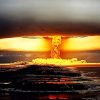
One evening in early September 1964, a frightening commercial jolted 50 million Americans who were partway through watching “Monday Night at the Movies” on NBC. The ad began with an adorable three-year-old girl counting petals as she pulled them from a daisy. Then came a man’s somber voiceover, counting down from ten to zero. Then an ominous roar and a mushroom cloud from a nuclear bomb explosion.
Small Glacial Lakes’ Mass Destruction in the Himalayan Community
Small glacial lakes can cause destruction, which may impact the livelihoods of entire communities. Now this is the harsh reality that the community of Thame village in the Mt. Everest region of Nepal now faces as they rebuild after the August 16 disaster.
A Cuban Town Improves Water Quality Through Desalination
Overnight, hundreds of people in the rural community of Las Mangas, located in Granma province in eastern Cuba, realised something they had already suspected: that the water they had been drinking for decades was not exactly crystal clear, but rather “salty”, as they say.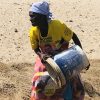
El Niño-Induced Water Crisis Drubbing Villagers in Zimbabwe
Side-by-side with fellow male villagers, Enia Tambo uses a white 25-liter plastic bucket to dig out mounds of sand in the Vhombozi River, in Mudzi district located in Zimbabwe’s Mashonaland East Province. The woman, in her late 50s, is digging to reach the water that is lying deep beneath the soil.
Nigeria: Protecting the Vulnerable on the Path to Progress
Returning to Nigeria after five years, I was struck by the changes - both the challenges and the opportunities. To better understand these dynamics, I have been undertaking visits to states across Nigeria.
Africa’s Strong Case for Reforms of UN Security Council Led by Sierra Leone Presidency
At most international forums, including the annual UN General Assembly high-level debate, Sierra Leonean President Julius Maada Bio consistently highlights the injustices of the global system, particularly Africa’s absence in the permanent category and underrepresentation in the non-permanent category of the United Nations Security Council (UNSC).
Knowledge is Power. Gaza War Supporters Don’t Want Students to Have Both
With nearly 18 million students on U.S. college campuses this fall, defenders of the war on Gaza don’t want to hear any backtalk. Silence is complicity, and that’s the way Israel’s allies like it.
Rural Survival: Guardians of Mother Earth Saving Mau, Revitalizing Native Lands
The Great Rift Valley is part of an intra-continental ridge system that runs through Kenya from north to south. A breathtaking, diverse mix of natural beauty that includes dramatic escarpments, highland mountains, cliffs and gorges, lakes and savannas. It is also home to one of Africa’s greatest wildlife reserves—the Maasai Mara National Reserve.
At 76, India’s ‘Super Granny’ to Run Marathon in Australian Masters Event
Kmoin Wahlang, a 76-year-old woman, starts her running training every morning at 4 a.m. Dressed in track pants, a jacket, and running shoes, she sets out to navigate the hilly terrain of the small village of Shngimawlein in the southwest Khasi Hills district of Meghalaya, a state in northeastern India.
Climate Action Greatest Economic Opportunity of this Century, Says UN Climate Chief
With fewer than 100 days to go to COP29, the highest decision-making body on climate issues under the United Nations Framework Convention on Climate Change (UNFCCC), the need for creative and innovative solutions to protect lives and livelihoods is now extremely urgent.
INDIA: ‘Civil Society Organisations Are at the Forefront of the Fight Against Gender-based Violence’
CIVICUS discusses the recent wave of protests against gender-based violence (GBV) in India with Dr Kavitha Ravi, a member of the Indian Medical Association (IMA).
The Time to End Nuclear Tests is Now
Today, the General Assembly convenes – for the fifteenth consecutive occasion – to observe the International Day Against Nuclear Tests, which is commemorated annually on 29 August.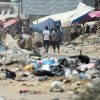
UN Expert Says Impunity for Israel Must End as ‘Genocidal Violence’ Spreads to West Bank
An independent United Nations expert has warned that "Israel's genocidal violence risks leaking out of Gaza and into the occupied Palestinian territory as a whole" as Western governments, corporations, and other institutions keep up their support for the Israeli military, which stands accused of grave war crimes in the Gaza Strip and West Bank.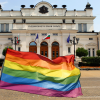
New Bulgarian LGBT+ Law Marginalizes Communities, Rights Groups Warn
A law banning the portrayal of LGBT+ identities in Bulgarian educational institutions is just the latest piece of repressive legislation in a wider assault on minorities and marginalized communities across parts of Europe and Central Asia, rights groups have warned.
Israel’s Goal: Smashing Palestinian Legitimacy
Most people think that Israel’s main goal in Gaza is to recover the hostages seized by HAMAS on October 7, 2023 with an announced follow-up mission to eliminate HAMAS as a threat. If you thought that, you would be wrong. Substantial evidence reveals a different strategic aim—destroying every shred of Palestinian legitimacy as a nation.
World Leaders Who Opted to Skip the United Nations
When the high-level segment of the UN General Assembly took place last September, there were several key world leaders missing in action (MIAs)—including, most importantly, leaders of the four of the five permanent members of the Security Council, the most powerful political body at the United Nations.
New Zealand: Māori Rights in the Firing Line
A New Zealand bill that would roll back Indigenous rights is unlikely to pass – but it’s emblematic of a growing climate of hostility from governing politicians. A recent survey shows that almost half of New Zealanders believe racial tensions have worsened under the right-wing government in power since December 2023.
Kenya’s Unanswered Questions About Enforced Disappearances
As the world marked International Day of the Disappeared, Kenya grapples with a shadowy and persistent crisis—enforced disappearances. This harrowing violation of human rights has left countless families in anguish, searching for their loved ones while battling a wall of government denial and indifference.
US Support of UN Organizations Must Remain Unabated
During Donald Trump's presidency, the United States withdrew from several international organizations. These include the United Nations Relief and Works Agency for Palestine Refugees (UNRWA), the World Health Organization (WHO), the United Nations Educational, Scientific and Cultural Organization (UNESCO), and the United Nations Human Rights Council (UNHRC).
In Tonga the UN Secretary-General Declares a Global Climate Emergency
Three months ahead of the COP29 United Nations (UN) Climate Change Conference, the United Nations Secretary-General, António Guterres, has called for an emergency response from the international community as new data from the World Meteorological Organization (WMO) reveals a critical deterioration in the state of the climate.
Enough is Enough: End Nuclear Testing Once and For All
In 2009 the United Nations General Assembly proclaimed 29 August the International Day Against Nuclear Tests. This date recalled the official closing of the Semipalatinsk nuclear weapons testing site in today’s Kazakhstan on 29 August 1991; that one site alone having seen 456 nuclear test explosions between 1949 and 1989.« Previous Page — Next Page »





The Week with IPS

NEXT STOP - SDGs
Tracking global progress towards a sustainable world
Tracking global progress towards a sustainable world
