Languages
Sunday, November 8, 2026



News and Views from the Global South
Featured
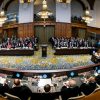
South Africa’s Genocide Case Flawed, Premature, Inaccurate, says Israel
Israel disputed both South Africa’s jurisdiction and the provisional measures that it demanded the International Court of Justice impose on the State of Israel to prevent genocide. Israel’s co-agent, Tal Becker, said in his opening address that Jewish people’s experience of the Holocaust meant that it was among “among the first states to ratify the Genocide Convention, without reservation, and to incorporate its provisions in its domestic legislation. For some, the promise of ‘never again for all people’ is a slogan. For Israel, it is the highest moral obligation.”
Bangladesh: Election with a Foregone Conclusion
Bangladesh just held an election. But it was far from an exercise in democracy. Sheikh Hasina won her fourth consecutive term, and fifth overall, as prime minister in the general election held on 7 January. The result was never in doubt, with the main opposition party, the Bangladesh National Party (BNP), boycotting the vote over the ruling Awami League’s refusal to let a caretaker government oversee the election. This practice, abolished by the Awami League government in 2011, was, the BNP asserted, the only way to ensure a free and fair vote.
Advanced Economies Must Let the IMF Play a Productive Role on Climate
The world faces the existential threat of a climate change crisis, and it is becoming increasingly clear that the outcome of the latest UN climate summit, COP28 — hosted as it was by the CEO of one of the world’s largest oil companies, and filled with a record number of fossil fuel lobbyists — is not going to do much to change that.
Palestine: Nothing Can Justify Genocide, It’s Not the Time for Silence
Far from the mayhem, destruction, and humanitarian crisis in Gaza, the South African government argued in the International Court of Justice in the Hague that it had an obligation and a right to bring a case to halt a genocide by the Israeli government and its military.
South Africa’s Genocide Case Against Israel at the International Court of Justice
The Institute for Middle East Understanding (IMEU) published the following Q&A with human rights attorney and political analyst Diana Buttu on South Africa’s genocide case against Israel at the International Court of Justice ICJ). The court is scheduled to hold hearings on the petition January 11-12.
Where Does the International Criminal Court Stand on Charges of Mass Killings in Gaza?
The continued devastation of Gaza by Israel has triggered widespread charges of war crimes, genocide, forced displacement, ethnic cleansing, starvation as a weapon of war and mass killings of civilians – over 22,000 at last count—compared to 1,200 killings by Hamas. These accusations have prompted growing demands for intervention by the International Criminal Court (ICC) in The Hague, which has remained silent while its Prosecutor Karim Khan is accused of double standards and playing politics.
Assessing Public Debt Sustainability with a Long-Term View
When students from poor families in developing countries are offered places at prestigious universities, they are often faced with a tough choice. One option is to accept the offer and create more debt, likely through borrowing from a loan shark, to pay for tuition fees. Another option is to forgo this opportunity, which could be the first in family generations, and start working as low-wage workers.
Cooperative Farming Makes Bangladesh’s Coastal Women Farmers Climate-Resilient
In the past, Salma Begum, 40, lost her crops every year due to natural disasters. She lives with her five-member family in Ashabaria village under Rangabali upazila, a remote coastal island in Patuakhali district. “We did not have enough livelihood options in the coastal area where we live. Cyclones, coastal floods, and tidal surges have been having adverse impacts on agriculture, making it difficult for my wage-laborer husband to find work regularly,” she said.
From Chemical Engineer to Climate Justice Avenger: A Journey with Yamide Dagnet
As a child on the French-Caribbean island of Guadeloupe, Yamide Dagnet dreamed of launching rockets into space. She stuck to science, discovering her path in chemical engineering. She became a scientist focused on critical reactions to solving real-world problems like improving water quality in the United Kingdom.
Martin Luther King’s Message Shook the Powerful: Vital People can Hear it Today
All through this week, leading up to January 15th, the world will commemorate Martin Luther King. In a world as wounded as ours is today, the lessons of his life’s work offer a vital opportunity for healing.
Technology Transfer Critical to Revolutionizing Africa’s Pharma Industry
An agreement signed between the Rwandan government and the Africa Pharmaceutical Technology Foundation (APTF) gives impetus to Africa’s domestic industry with the hope of helping the continent tackle vaccine inequity and fill the critical gap in vaccine manufacturing.
Time to End the Israeli-Palestinian Conflict with a Two State-One Nation Solution
Since October 9 2023, Israel’s war on Gaza has displaced over 1.8 million, according to UN estimates and killed almost 22,000 people in Gaza as of 2 January 2024, most of them women and children, according to the Hamas-run territory’s health ministry. Hamas' October 7 surprise attacks on Israel killed 1,200 people.
2024 Demands Swift Action to Stem Sudan’s Ruinous Conflict
Nearly nine months of war have tipped Sudan into a downward spiral that only grows more ruinous by the day. As the conflict spreads, human suffering is deepening, humanitarian access is shrinking, and hope is dwindling. This cannot continue.
Is it Time for Palestine to be Voted UN Member State?
The atrocities against Palestinians in a ruthlessly devastated Gaza — with over 21,000 mostly civilian deaths in retaliation to the killings of 1,200 inside Israel —have resurrected a longstanding question: is it time for Palestine to be recognized as a full-fledged UN member state? The question has also been triggered by a statement by China, a veto-wielding permanent member of the UN Security Council (UNSC).
Homeless Families Now a Growing Issue in Zimbabwe
It is do or die on the streets of Zimbabwe as homeless families battle for survival solely depending on begging. Such is the life of 69-year-old Gladys Mugabe, who lives with her disabled son in Harare Gardens, a well-known recreational park in the Zimbabwean capital, Harare. Over the decades, Zimbabwe’s economy has underperformed. It started in 2000 with the departure of white commercial farmers, and the country has experienced subsequent periods of hyperinflation, which the International Monetary Fund estimated reached 172% in July last year.
There Is No Democracy Without Gender Equality
Violence against women and girls is one of the most widespread and persistent abuses of fundamental rights at a global level that, to a certain extent, derives from what we consider "normal" in our societies. In addition to firmly condemning that every three women in the world suffer from physical or sexual violence, we must question what we are normalizing as a society for this to happen.
Will the Human Rights Movement Survive the Gaza War?
In its military campaign in Gaza, Israel faces a seemingly endless list of alleged human rights violations. International monitors argue the Israel Defense Forces have starved Gazans, targeted journalists attempting to cover the carnage, tortured detainees, and attacked hospitals full of wounded civilians.
Fear as Russian Anti-LGBT Law Comes into Effect
“This is what you get after ten years of state propaganda and brainwashing,” says Anatolii*. The Moscow-based LGBT rights activist’s ire is directed at a recent ruling by Russia’s Supreme Court declaring the “international LGBT movement” an extremist organization.
US Hypocrisy Over Russian and Israeli Killings
When US President Joe Biden lambasted “the largest aerial assault,” which hit “a maternity hospital, a shopping mall and residential areas killing innocent people”, he was not talking of the devastating Israeli attacks on Gaza but criticizing the most recent Russian military assault on Ukraine.
Amidst a Horrendous 2023, Civil Society is Fighting Back Society
The year 2023 has brought so much tragedy, with incomprehensible loss of lives, whether from wars or devastating ‘natural’ disasters, while our planet has seen yet more records broken as our climate catastrophe worsens. And so as the clock ticks towards the (mostly western) New Year, readers are traditionally subjected by media outlets like ours to the 'yearender'—usually a roundup of main events over the previous 12 months, one horror often overshadowed by the next.
Regime Change in Israel
Benjamin Netanyahu must go. Under the guise of judicial reform, Netanyahu has undermined the rule of law and divided the country. He is toxic to Arab states, even those which have signed the Abraham Accords. Netanyahu has become an impediment to Israel’s democratic development and regional relations.« Previous Page — Next Page »





The Week with IPS

NEXT STOP - SDGs
Tracking global progress towards a sustainable world
Tracking global progress towards a sustainable world
