Languages
Sunday, November 8, 2026



News and Views from the Global South
Featured

Catastrophic Shortage of Food in Gaza—Starvation as a Weapon of War
As the killings of civilians in Gaza rose to over 20,000, the besieged city—which has been virtually reduced to rubble by Israeli bombardments—is also being ravaged by hunger and starvation. In new estimates released on December 21, the Integrated Food Security Phase Classification (IPC), a global partnership that includes the World Health Organization (WHO), said Gaza is facing “catastrophic levels of food insecurity,” with the risk of famine “increasing each day.”
South Asian Women, Girls Need Responsive Legal System to Gender Violence
Criminal justice systems in South Asia are failing women, despite stark statistics on the prevalence of violence. WHO estimates translate to one in every two women and girls in the region experiencing violence daily.
What’s in Store for Indian Farmers After Cop 28’s Conclusion in Dubai?
Durga Das*, a 59-year-old farmer from the Indian state of Maharashtra, committed suicide last year by ingesting a poisonous substance. He was unable to repay the loan he had taken from the bank for the renovation of his single-story house. This year, his 32-year-old son, Pradeep Das, a father of two children, is equally desperate. The family owns half an acre of cultivated land where they grow cotton. The harvest has been devastated due to intense heat waves, leaving farmers like Dass and his son Pradeep in dire straits. The loan the family had taken is yet to be paid, and the land they had mortgaged in the bank is about to be confiscated. This means no crops, no cultivation, no business, and no food.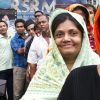
From Bureaucratic Labyrinths to Accessible Civil Registration
Have you ever tried to register a birth, a death or maybe your own marriage? Unfortunately, many of these vital events in Asia and the Pacific remain unregistered often with dire consequences for individuals, families and communities.
Saving Energy, Saving Forests: How Kindle Stoves Are Changing Women’s Lives
Five years ago, farmer Sehlisiwe Sibanda would walk into a nearby forested area to fill a scotch cart with huge wood logs for cooking and heating; a pile of firewood would last her a week during the summer. But now she does not need a cartful of huge logs. Small branches and twigs are enough to last for more than a month.
Latin America Can Boost Economic Growth by Reducing Crime
Crime and violence have long been a top-of-mind concern for households across Latin America and the Caribbean. The region accounts for nearly half of the world's intentional homicide victims, despite representing just over 8 percent of the global population, United Nations data show.
Construction of New Megaport in Peru Ignores Complaints from Local Residents
"We have always lived a very quiet life here, but everything has changed since the construction of the multi-purpose port began a few years ago," said Miriam Arce, a neighborhood leader in this municipality 80 kilometers north of the Peruvian capital, where the new port is projected to become the epicenter of trade between China and South American countries.
Watching the Arctic Melt, Meteorologist’s Experience on Icebreaker Oden
Conflicting emotions greet the outcomes of COP28. After 28 years of climate conferences, an agreement has, for the first time, proclaimed that fossil fuels are the biggest culprit behind the warming of our planet and stated that it would encourage all nations to “accelerating action in this critical decade so as to achieve net zero by 2050 in keeping with the science." The agreement calls for, among other things, a tripling of renewable energy by 2030, but also an increased pace in the work to develop technical solutions for the separation and storage of carbon dioxide, an extremely expensive and, so far, limited effort.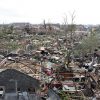
Weathering the Storm: Navigating Climate-Care Nexus in the Philippines
In a coastal community in Tacloban City in Leyte, Philippines, Maria's life was intricately woven with the ebb and flow of the sea. Her days were filled with caring for her two young children and selling fish caught by her husband at the market. Little did she know that winds of change were brewing far beyond the horizon.
Caribbean Confidence High Post COP28, But Vigilant Follow-Through on Key Deals Needed
Buoyed by USD 800 million in pledges to the Loss and Damage Fund and an unprecedented agreement to transition away from fossil fuels, but grounded in the reality of the work ahead to meet key climate targets, the Caribbean will need to maintain its focus on sustainable agriculture, renewable energy, and climate resilience.
UN and Humanitarian Partners Seek USD 46 Billion for Humanitarian Assistance
Funding humanitarian programs will continue into the new year, but the funding cuts of the previous year may impact the prioritization of the most immediate and most life-threatening needs. The Office for the Coordination of Humanitarian Affairs (OCHA) released the Global Humanitarian Overview (GHO) for 2024. This annual assessment of the global humanitarian sector provides insight into the humanitarian action undertaken by the UN and its partners and reviews current and future trends in this sector.
Peru’s Andean Peoples ‘Revive’ Water that the Climate Crisis Is Taking From Them
"The rich world has caused the climate change that is drying up our water sources, and here we are doing everything we can to recover them because otherwise we will die," said Juan Hilario Quispe, president of the small farming community of Muñapata, just over 50 kilometers from the Peruvian city of Cuzco.
The United States, the United Nations, and Genocide in the Gaza Strip
The political significance of US-Israeli differences is easily exaggerated. It is certainly true that tensions in the relationship exist. Israel is currently committing genocide against the Palestinians in the Gaza Strip. The US would like Israel to reduce - not cease, but reduce – its slaughter Palestinian civilians,
A Desperate Plea from Palestinians: Drop Your Nuclear Bomb on Gaza–and Exterminate Us
The unrestrained destruction of Gaza and the disproportionate killings of over 17,000, mostly civilians-- in retaliation for 1,200 killings by Hamas and 120 hostages in captivity-- have left the Palestinians in a state of deep isolation and weighed down by a feeling of being deserted by the world at large.
IFAD’s Record-Breaking Pledges: Lifeline for Rural Communities Cornered by Climate, Hunger
The world is not on track to end hunger and poverty as a future of growing food insecurity and climate challenges beckon. Small-scale farmers are the backbone of food production, producing one-third of the world’s food and up to 70 percent of the food consumed in Africa and Asia, yet they are often cut off from the services they need to pull themselves out of poverty and food insecurity.
Sustainability, Human Wellbeing Depend on Rethinking, Redefining Value of Resources
While the COP28 presidency celebrated an “historic deal” to transition away from fossil fuels, we must remind ourselves that the future wellbeing of human societies in a livable planet depends on more than that.
UN Staffers Face Threat of Being Forced Out of the US– at Retirement
Going back to the 1970s, thousands of UN staffers were given legal status opting for permanent residency in the US-- after their retirement. But that longstanding privilege now seems to be in jeopardy forcing retirees to return to their home countries uprooting their lives in the US.
Sudan’s Conflict Needs Civil Society Solutions
It’s recently been reported that the two main protagonists of Sudan’s current conflict – leaders of the armed forces and militia at war since April – have agreed to face-to-face talks. The Intergovernmental Authority on Development (IGAD), an East African body, announced the potential breakthrough – although Sudan’s foreign ministry has since claimed IGAD’s statement is inaccurate, creating further uncertainty.
‘Imperfect COP28’ Gives Direction For Managed, Equitable Move From Fossil Fuels
While the outcomes of COP28 are being hotly debated in both the scientific and social justice arenas, the climate conference has taken an unprecedented step forward toward a just transition, says Yamide Dagnet, Director for Climate Justice at the Open Society Foundations.
EBRD Provides Footing for Youth-led Businesses in Central Asia
The European Bank for Reconstruction and Development (EBRD) is addressing the issue of youth entrepreneurship and employment in Central Asia by launching a seven-year €200 million (US$ 218 million) Youth in Business (YiB) programme.
COP28: Deal to ‘Transition Away’ From Fossil Fuels Agreed
It was an extraordinary COP Summit in a year characterized by record-breaking temperatures combined with El Niño, producing a climatic carnage in Africa—deaths from fatal floods in the Democratic Republic of the Congo, Kenya, and Libya, where floods wiped out a quarter of a city. Deadly cyclones in Malawi, Madagascar, Mauritius, Mozambique, and Zimbabwe; a severe drought in Kenya, Niger, Somalia, Ethiopia, Mauritania, and Djibouti; and a months-long winter heatwave in southern African countries—the need for COP28 to deliver the highest ambition on all items.« Previous Page — Next Page »





The Week with IPS

NEXT STOP - SDGs
Tracking global progress towards a sustainable world
Tracking global progress towards a sustainable world
