Languages
Saturday, November 28, 2026



News and Views from the Global South
Food and Agriculture

Q&A: ‘Farmers Can Gain From Crisis’
The financial crisis could actually boost agriculture in Latin America, Josefina Stubbs, director of the International Fund for Agricultural Development (IFAD) division for Latin America and the Caribbean tells IPS in an interview.WORLD-TRADE: "Make Doha Round About Development Again"
The present global economic crisis and the need to reform the international financial architecture should encourage a return to the original focus on development in the international negotiations on agriculture, trade and development, also known as the Doha Round, according to two economists studying the issue.
ECONOMY-ZIMBABWE: Government in Two Minds About the Rule of Law
The Zimbabwean government’s international investment conference at the end of last week did little to assuage fears that the country remains far away from re-establishing the rule of law and stopping land invasions.G8: Some Aid Can be Hard to Stomach
As numbers go, and as expectations went, 20 billion dollars would be a fair bit for the G8 to produce to fight the food crisis and bring down hunger. Certainly, it was more than most expected.AFRICA: FAO Paper On Land Grab Is "Wishy-Washy"
The boom in the acquisition of arable land in Africa by foreign companies and governments has stirred an international debate between international institutions such as the United Nations’ Food and Agriculture Organisation (FAO) and non-governmental groups and independent experts.
Q&A: “Massive Transfer of Power to the Poor” Needed In Crisis
Innovative solutions at a time of crisis, extending services and technology to the poor and building democracy around the initiatives of ordinary citizens are the prescription to combat poverty that Roberto Haudry, head of IFAD for the Andean subregion, would suggest to Latin American governments.
FILM: Shattering the Myth of “Agrarian America”
"How is it that you can buy a 99-cent cheeseburger but not even a head of broccoli?" wonders Michael Pollan, author and co-narrator of the new documentary "Food, Inc.".G8: Financial Crisis Or No, Rich Can Help Fight Hunger
The World Food Programme (WFP) is urging G8 leaders to turn words into action and meet urgent hunger needs in Africa and other developing nations as they gather in Italy for the 2009 G8 Summit.
BRAZIL: Seasonal Widows
Maria Vieira dos Santos has raised her six children practically on her own. For more than a decade, her husband would be away from home nearly eight months out of the year, travelling 1,500 kilometres down south to cut sugarcane in the state of São Paulo.
TRADE: Crisis Pushing Emerging Markets to Move Beyond the Dollar
The global economic crisis is pushing countries in regions with emerging markets, such as Russia and South Africa, to together move beyond the dollar-based economic model. Given their politico-economic similarities, these two countries should build on opportunities to share expertise and technology.G8: It Will Be a Tale of Two Summits
There is a reason that eight and five do not add up to 13 when it comes to the G8. And it is not just that the five developing countries that now attend the summit of the eight mighty ones as a matter of course are less rich. It's because they have their own way to go, and parallel with the G8 meet, their own summit to attend.
Q&A: "It’s Wrong to Burn Food of the Poor to Drive Cars of the Rich"
The world needs to overcome "the bizarre irony that rural areas, where food is grown, is home to cruel poverty and hunger," says Ismail Serageldin, former chair of the Consultative Group on International Agricultural Research (CGIAR).DEVELOPMENT: MDG Goals Face ‘Triple Crisis’
The developing world faces a "triple crisis" as global economics, food prices and the impact of climate change affect the world's most vulnerable people, a new UN report warns.
AGRICULTURE: A Stormy Time for Indigenous Wisdom
Indigenous peoples risk losing control over their traditional knowledge if the World Intellectual Property Organisation (WIPO) insists on strict standards for managing access to information.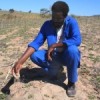
SWAZILAND: Add Water and Stir
What is the first step towards transforming life in a hardscrabble rural community? Address issues of water.DEVELOPMENT-AFRICA: Song and Dance to Empower Women Farmers
Community theatre will be the main thrust of an innovative pilot project that aims to give women farmers stronger influence in agricultural policy-making in Southern Africa.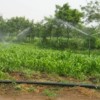
AGRICULTURE-AFRICA: Calls for Sustainable Green Revolution
Africa needs a Green Revolution, but one that will increase agricultural productivity by using practices that build soil fertility while minimising harm to the environment.
DEVELOPMENT-KENYA: Fears Over New Land Deal
Concern is mounting in Kenya that the government has leased a big slice of agricultural land to Qatari foreign investors to produce food for export.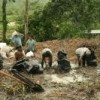
PERU: Petroleum Sullies the Amazon
"Now the fish are going to disappear," said Luis Umpunchi, an Awajún Indian, one of about 20 people gathered around a broken oil pipeline in the Jayais community, in the northern Peruvian province of Amazonas.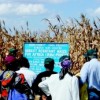
AGRICULTURE: Biotechnology: Africa Must Not Be Left Behind
Africa must embrace agricultural biotechnology or risk being excluded from a major technological revolution that has had increased food production in the Europe, North America and Asia.
AFRICA: Civil Society to AU: Investment Must Address Marginalisation
No gathering hosted by Libyan leader Moammar Gaddafi is ever dull, and the Thirteenth Ordinary Session of the African Union, concluding in Sirte, Libya today has not disappointed.« Previous Page — Next Page »


 Farming on the Outskirts of Juba. Credit: UN Photo/JC McIlwaine
Promoting human and planetary health is a central focus of the United Nations, as laid out in the 2030 Sustainable Development Goals (SDGs). World hunger and unsustainable farming practices continue to be pressing concerns for the world. According to the 2025 State of Food Security and Nutrition in the World report by the Food and Agriculture Organization (FAO), 673 million people faced hunger in 2024. There are stark regional disparities, with the FAO projecting that 60% of the world population facing hunger will reside in Africa by 2030. Globally, the prevalence of food insecurity has remained consistently higher for women than men.
Sustainable and efficient national food systems are essential in preserving health, education, environmental well-being, peace, economy, and security. However, creating sustainable food systems can be a challenging endeavor, as food production takes a heavy toll on the environment. The agricultural sector accounts for a significant portion of greenhouse gases. Finding safe, sustainable, and ethical strategies to feed the world is crucial in ensuring planetary longevity. A recent initiative from 2023, the EU Regulation on Deforestation-free Products (EUDR), seeks to advocate for sustainable food systems. The main driver of deforestation is the expansion of agricultural land used to produce commodities like cattle, wood, cocoa, coffee, etc. The EUDR is part of the 2020 European Green New Deal and the EU Biodiversity Strategy for 2030 and aims to limit Europe’s consumption of products linked with deforestation by requiring that companies prove that their products are deforestation-free. Despite aiming to achieve major strides in sustainability, policies such as EUDR also raise socioeconomic concerns for targeted countries. Many emerging Latin American economies are impacted by the policy, and have raised the question of how developing countries can grapple with the tensions between economic development and advancing sustainability.
IPS has been at the forefront of providing compelling and insightful stories on communities facing hunger as well as the cost of food production. IPS uses statistics from FAO, the World Food Programme (WFP) and the International Fund for Agricultural Development (IFAD) to bring relevant and hard-hitting facts to readers. This gathering of information and data from such organizations helps bring the best stories from IPS journalists working in the different regions in consultation with experts on the ground.

The Week with IPS

NEXT STOP - SDGs
Tracking global progress towards a sustainable world

