Languages
Saturday, November 28, 2026



News and Views from the Global South
Food and Agriculture
WORLD: Fishy Fishing Practices Threaten the Environment
For years, fishing communities along Africa’s 30,000 km-long coastline have been raising the alarm on the depletion of their fish stocks, to no avail. Over- fishing by foreign vessels has been wiping out the livelihood of West African fishers, contributing to desperate migration attempts into Europe.
AGRICULTURE: Cultivating Rural Prosperity in Cameroon
Emilie Nyate has a two million CFA smile on her face these days. She's one of the beneficiaries of the Roots and Tubers Market- Oriented Programme, known better by its French acronym of PNDRT, which is transforming the lives of small-scale farmers in Cameroon.HAITI: Aid Flowing, But Food Crisis Drags On
Though beleaguered with their own financial problems, donor countries say they are not planning to withdraw financial support for cash-strapped Haiti.
PARAGUAY: Indigenous Squatter Communities Organise Self-Help
Indigenous families living in a squatter settlement on the outskirts of the Paraguayan capital are organising themselves, and now have a community soup kitchen and are producing and selling handicrafts. They don't want to return to panhandling on the streets of Asunción, so far from their home villages.
Q&A: About Peas in a Pod
Slow Food, obviously, is the opposite of fast food. And it's a movement now with more than 100,000 members in 132 countries. But what does "slow food" mean in practical terms?
MOROCCO: Farmers Overcome Water Scarcity
Researchers in the central Moroccan region Beni Mellal are introducing new agricultural techniques that increase production while reducing water usage.AGRICULTURE: Disease Threatens Afghan Wheat Crop
Agronomists and crop experts fear that an aggressive disease that attacks wheat crops could soon reach Afghanistan, potentially threatening food security and initiatives to curb the cultivation of illicit crops.ENVIRONMENT: Monsanto, Dow Stacking the Deck, Critics Say
The most complex genetically engineered corn (maize) yet has been approved for use next year in Canada and the United States without its potential health and environmental risks being investigated, anti-biotech activists charged Wednesday.
Q&A: Brazil’s Lesson to the World: Invest in Family Farming
Kanayo F. Nwanze chose Brazil for his first official visit as the recently elected president of the International Fund for Agricultural Development (IFAD), and was pleased to personally attest to President Luiz Inácio Lula da Silva’s commitment to family farming.
Q&A: Agriculture Can Lead Poverty Reduction
Agriculture is vital to the economies of West and Central African countries, but poverty remains a reality in the region's rural areas.ENVIRONMENT: Rich Nations Vulnerable to Water Disasters
The growing shortage of water - a perennial problem in the world's poorer nations - is expected to eventually reach the rich nations in the Western world.
URUGUAY: Eight-Hour Day for Rural Workers
Seventy years old now, Mr. Arrúa lives a comfortable enough life in Durazno, a town in central Uruguay. But he still remembers when his father took him to work as a farmhand when he was only nine.
ECONOMY-CUBA: New Budget Cuts in Store
The impact of the global financial crisis on the economy in Cuba was a major focus of a speech Sunday by President Raúl Castro, who confirmed that further "adjustments" will be made to this year's budget.
BRAZIL: Agricultural School Cultivates Pride in Family Farming
"Here you get an education for the country and not for the city, which is not where I live, and that’s why I can relate to this school," says Israel Santos, 16, currently enrolled in the second year of secondary school studies at an agricultural school in the municipality of Independencia, in northeastern Brazil.TRADE: African Producers Press Rich Nations on Cotton Subsidies
Representatives from four major cotton-producing African countries came to Washington this week to engage in a dialogue about what they consider to be unfair U.S. trade practices.
BRAZIL: When the Arid Northeast Turns Green
The rain - usually much desired because it is so scarce - has come in excess this year, destroying many crops. But in this farming district in far north-eastern Brazil, the impact of the heavy rainfall was less marked than in the past, thanks to the diversification of crops and productive activities.
Q&A: The South Can Also Be Consumers of Fair Trade Products
Fair trade is moving into a different era as developing countries become consumers and not just producers of fair trade products. South Africa is the first country from the South to initiate this shift.Q&A: Burkina Faso Moving Towards Food Security
Burkina Faso was one of several countries that where a rapid rise in food prices led to rioting in the streets in 2008. Policy-makers had sensed a crisis developing, but the country was not able to build up sufficient reserves of imported commodities such as rice, wheat and oil to avoid it. There is now an emphasis on achieving food security.AFRICA: Organic Farming Could be Answer to Food Insecurity
Commercial farmers sometimes fail at organic farming because they switch over too quickly, ditching all chemicals, which is as traumatic for the soil as "a drug addict going cold turkey".ECONOMY-AFRICA: The State Is Back, Announces UNCTAD
The state is back; neo-liberal policies have failed; and the liberalisation of trade should be halted. These are some of the findings and recommendations from the United Nations Conference on Trade and Development (UNCTAD) for the poorest countries, most of which are in Africa.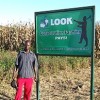
ZAMBIA: Conservation Agriculture Gaining Ground
Not even the least alert of drivers can miss the sign along the busy road 30 kilometres south of Lusaka: "Look, Conservation Farming Pays!"« Previous Page — Next Page »


 Farming on the Outskirts of Juba. Credit: UN Photo/JC McIlwaine
Promoting human and planetary health is a central focus of the United Nations, as laid out in the 2030 Sustainable Development Goals (SDGs). World hunger and unsustainable farming practices continue to be pressing concerns for the world. According to the 2025 State of Food Security and Nutrition in the World report by the Food and Agriculture Organization (FAO), 673 million people faced hunger in 2024. There are stark regional disparities, with the FAO projecting that 60% of the world population facing hunger will reside in Africa by 2030. Globally, the prevalence of food insecurity has remained consistently higher for women than men.
Sustainable and efficient national food systems are essential in preserving health, education, environmental well-being, peace, economy, and security. However, creating sustainable food systems can be a challenging endeavor, as food production takes a heavy toll on the environment. The agricultural sector accounts for a significant portion of greenhouse gases. Finding safe, sustainable, and ethical strategies to feed the world is crucial in ensuring planetary longevity. A recent initiative from 2023, the EU Regulation on Deforestation-free Products (EUDR), seeks to advocate for sustainable food systems. The main driver of deforestation is the expansion of agricultural land used to produce commodities like cattle, wood, cocoa, coffee, etc. The EUDR is part of the 2020 European Green New Deal and the EU Biodiversity Strategy for 2030 and aims to limit Europe’s consumption of products linked with deforestation by requiring that companies prove that their products are deforestation-free. Despite aiming to achieve major strides in sustainability, policies such as EUDR also raise socioeconomic concerns for targeted countries. Many emerging Latin American economies are impacted by the policy, and have raised the question of how developing countries can grapple with the tensions between economic development and advancing sustainability.
IPS has been at the forefront of providing compelling and insightful stories on communities facing hunger as well as the cost of food production. IPS uses statistics from FAO, the World Food Programme (WFP) and the International Fund for Agricultural Development (IFAD) to bring relevant and hard-hitting facts to readers. This gathering of information and data from such organizations helps bring the best stories from IPS journalists working in the different regions in consultation with experts on the ground.

The Week with IPS

NEXT STOP - SDGs
Tracking global progress towards a sustainable world

