
Monday, September 28, 2026



News and Views from the Global South
Food Security and Nutrition

Africa’s Youth Scholars Harvest Ideas on the Business of Agriculture
In Rwanda, Benimana Uwera Gilberthe, a scholar and pepper producer, experienced first-hand the challenges of breaking into agribusiness. While in Nigeria, Ayoola Adewale is trying to understand if poultry egg farming will prove a profitable and viable business opportunity to the youth of the continent’s most populous nation. Also in Nigeria, Esther Alleluyanatha is understanding the link between young people leaving their villages for larger cities, the remittances they send home, and the implications on rural livelihoods and agriculture productivity.
COVID-19 – How Eswatini’s Garden Farmers are Keeping the Vegetable Supply Flowing
Nobukhosi Cebekhulu (68) and Khetsiwe Tofile (64) are small-scale vegetable farmers who are producing from their permaculture home gardens in Malkerns, Eswatini.
COVID-19: India’s Harvests also Locked Down
Heartbreaking images of Indian farmers standing amidst swathes of rotting vegetables, fruits and grain have been flooding newspapers and TV screens lately. Crashing prices and transport bottlenecks due to the 40-day coronavirus lockdown in India, on till May 3, have driven some to set their unsold produce ablaze.
Creating Opportunities to Nurture Agripreneurship among Africa’s Youth
“It is not easy to be in agriculture but you must have the perseverance and you must have the passion for it,” Ngozi Okeke (30), the director of operations at Frotchery Farms, tells IPS during a tour of the company’s factory in Ibadan, Nigeria. For Okeke, passion and patience are pivotal to business success. But she also recognises the need to create opportunities to nurture agripreneurship among Africa’s growing ranks of unemployed youth.
Brazil: Low on FSI but Much to Offer the South
Brazil is one of the world’s largest producers and exporters of coffee, sugar, beef, soya, cotton, and ethanol but due to its environmental and water footprint it ranks low on sustainability. Brazilian agriculture’s contribution to the loss of rainforest is a case in point – the Amazon lost as much as 3,465 square miles of forest due to fires last year – triggering widespread international outrage over the lax environment policies that allowed all of this to happen. Its large commercial cattle herd is also a source of greenhouse gas emissions. Brazil’s challenge is to make its model of agricultural development more environment-friendly.
Mexico’s Battle with Obesity
Paradoxically, when the number of people suffering from undernourishment or hunger has risen in the world, so, too, have those afflicted by overweight and obesity. Latin America’s second largest economy, Mexico, for instance, is currently battling one of the world’s largest epidemics of obesity and its success is bound to be emulated by countries of the South. The numbers involved are staggering. The director-general of the National Institute of Public Health, Dr Juan Rivera told the Financial Times that “seventy five percent of adults and 35 percent of children and adolescents are overweight or obese… The State has a duty to protect public health.”
Biofortified Crop Project Reaches Refugees in Zambia
The Mutwales farm a small plot of land in the camp, growing primarily cassava and maize for food. They are also one of the 105 refugee farming families participating in an initiative during the 2019/2020 growing season to help them cultivate nutritious, vitamin A-biofortified orange maize, which was developed by the International Maize and Wheat Improvement Center (CIMMYT) in partnership with HarvestPlus.
India’s Orange Farmers Search for Sustainable Agriculture
Hillol Datta, 26, travelled for two days from Kolkata to Jampui Hills – a picturesque hill station in the north eastern province of India – to see its fruit-laden orange orchards. However, after driving for several hours, all the young traveller saw were bald patches along the hill slopes and scattered rows of areca (nut) palm trees.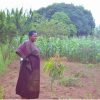
Ugandan Farmer Ends Food Insecurity for Family & Community
In Aboke, Uganda, a modest restaurant serves locals breakfast, lunch and dinner. Carol Agoa isn’t just the owner and cook, she also supplies all of the food for her restaurant.
Q&A: Africa Must Innovate its Food Systems in Order to Beat Hunger and Poverty
Africa needs to invest in agriculture by putting more resources into innovative research and development that can boost food and nutritional security, according to leading scientist, Nteranya Sanginga.
Vegetables Rot in Food Markets across Zimbabwe While Half the Population Faces Food Insecurity
Piles and piles of rotting vegetables at food markets situated right in Zimbabwe's central business district would elsewhere be viewed as a sign of plenty. But this Southern African nation has not been spared the irony of food wastage at a time of food shortages.
‘Organic is the Future’
Vandana Shiva, a pioneer of organic farming in India, is incensed by the 2019 draft law to compulsorily register all seeds used by farmers. On a wintry afternoon, at her farm Navdanya in the Himalayan foothills, the noted ecologist spoke on the future of the organic farming movement in India. Excerpts:
Climate Change: A Tale of Weather Extremes with Mixed Fortunes for Zambia
It is early Saturday morning and Planeta Hatuleke, a small scale farmer of Pemba District in Southern Zambia, awakens to the comforting sound of rainfall. As the locals say, the “heavens have opened” and it is raining heavily after a prolonged dry spell.
Does Africa’s Food Future Really Lie with Young Farmers?
Africa will starve or survive on expensive food imports because it is not growing new farmers, research shows. And the challenge remains among researchers, policy makers, public and private sector actors to get African youth interested in agriculture on a continent where a growing number of people go to bed hungry every night.
Sustainable Fisheries are Key in Addressing Food Security — and Women can Play an Important Role
Experts gathered in November to discuss the importance of sustainable fisheries and its role in eradicating world hunger at a fisheries symposium in Rome.
Running from the Storm – How Bangladesh’s Climate Migrants are Becoming Food Secure
It was almost a decade ago when Ruma Begum and her family left their home in Bangladesh’s coastal Tazumuddin upazila or sub-district and travelled some 50 km away to start a new life. They had been driven out of their home by an extreme and changing climate that has continued to ravage the district of Bhola.
Net Food Importer Turkey Grapples with Challenges of Food Self-sufficiency
Despite latest research showing Turkey lagging in overall food sustainability, progress in sustainable agriculture appears to be a bright spot in the country’s troubled agriculture industry.
Will Artificial Intelligence Help Resolve the Food Crisis?
When UN Secretary-General Antonio Guterres made a global appeal for “zero hunger” on World Food Day last month, he provided some grim statistics rich in irony: more than 820 million people do not have enough to eat, he said, while two billion people are overweight or obese.
Burkina Faso: Climate Change Triggers Rural Exodus
Ibrahim Harouna and his neighbours sit under a tree at his uncle’s house, playing chess and chatting amid the simmering heat of Ouagadougou, the capital of Burkina Faso.
Mother Earth’s Café Dares Climate Crises in India
The sun has barely risen when Phlida Kharshala shakes her 8-year-old grandson awake. He hoists an empty cone-shaped bamboo basket on his back, sets the woven strap flat across his forehead and off they go into the wilderness.
Nutrition – the Best Investment for a Developing Africa
There is evident correlation between countries with high levels of children under five years of age who are stunted or wasted and the existence of political instability and/or frequent exposure to natural calamities, experts say. But current food systems in Africa are not addressing nutrition because of the combination of poor investment in the agriculture value chain, inadequate policies and lack of accountability in addressing malnutrition.« Previous Page — Next Page »


More than 820 million people in the world are still hungry today, underscoring the immense challenge of achieving the Zero Hunger target by 2030. Hunger is rising in almost all subregions of Africa and, to a lesser extent, in Latin America and Western Asia. There is great progress seen in Southern Asia in the last five years, but the prevalence of undernourishment in this subregion is still the highest in Asia. A disturbing fact is that about 2 billion people in the world experience moderate or severe food insecurity. The lack of regular access to nutritious and sufficient food that these people experience puts them at greater risk of malnutrition and poor health. Although primarily concentrated in low- and middle-income countries, moderate or severe food insecurity also affects 8 percent of the population in Northern America and Europe.
In every continent, the prevalence rate is slightly higher among women than men.
With regard to nutrition indicators, if current trends continue, the 2030 SDG Target to halve the number of stunted children will not be met nor the 2025 World Health Assembly target to reduce the prevalence of low birthweight by 30 percent. The trends of overweight and obesity are additional reason for concern, as they continue to rise in all regions, particularly among school-age children and adults. The most recent data show that obesity is contributing to 4 million deaths globally and is increasing the risk of morbidity for people in all age groups.
The State of Food Security and Nutrition in the World, a joint report by the United Nations agencies, FAO, IFAD, WFP, UNICEF and WHO reaffirms their commitment to working together to overcome emerging challenges and free the world from hunger, food insecurity and malnutrition. The report shows that the global level of the prevalence of undernourishment has stabilised; however, the absolute number of undernourished people continues to increase, albeit slowly.


The Week with IPS

Tracking global progress towards a sustainable world
