
Friday, October 9, 2026



News and Views from the Global South
Gender Violence

Cost of Being ’Honour Bearers’ Sexual Violence During Communal Riots in India
Delayed, or no, justice and perpetrators’ impunity effectively silence rape and sexual assault survivors of communal violence in India. Activists and human rights lawyers have been speaking out about how rape and sexual violence, especially during communal conflicts, aims to humiliate religious and other minorities by turning the women into symbols of dishonour.
Getting to Better than Normal in a Post-COVID-19 World
Girls in Asia don't want to go back to normal – they want to go "back to better than normal", says Zara Rapoport, a delegate during an online seminar on the impact of the COVID-19 pandemic on gender.
Generation Equality: Women’s Leadership as a Catalyst for Change, Say 49 UN Women Envoys
March, women’s history month, closes with the Generation Equality Forum in Mexico and against the background of significant setbacks on the empowerment of women caused by the COVID-19 pandemic.
Arab Region Counts Cost of Devastating COVID-19 Pandemic
More than eight million people moved onto the poverty line in the Arab region, a conference of Arab and Asian parliamentarians heard. The hybrid conference, held simultaneously in Beirut, Lebanon, and via video conferencing to delegates in Asia and the Arab region, was a follow up on earlier discussions on the regions' ICPD25 Commitments.
A Country with too Many Victims and Few Shelters
In March 2014, Noemi N. took her own life inside a refuge camp in Ciudad Juarez, Chihuahua, where up until now there are no specialized shelters for victims of human trafficking.
How Technology Reproduces & Amplifies Harassment & Abuse of Women Journalists
“Email and social media access attempts, extremely aggressive comments, photo montages, massive defamation and intimidation campaigns on WhatsApp. This is what women journalists are facing for doing our job,” said Brazilian journalist Bianca Santana.
Five Steps to Combat Gender-Based Violence Globally
The 410 Legal Aid Centers that I manage in Bangladesh for BRAC’s Human Rights and Legal Aid Services received approximately 35,900 requests for assistance in 2020. Almost all of them involve gender-based violence against women and girls.
International Women’s Day, 2021
More Women Leaders Make Better Societies
This year it will be 128 years since the right of women to vote was first recognized, with New Zealand becoming the first nation to allow the participation of women in its general election in 1893.
From the suffragettes - to today’s feminists, both men and women have fought to increase women’s political participation and representation. It has been a slow, sometimes bitter and occasionally even dangerous struggle. Yet global progress remains slow and uneven – as it does in Samoa. As we approach the 2021 General Election on 9 April, it is important to remember that women’s full and effective participation in all areas of life drives progress for everyone.

The Ongoing Fight for Gender Parity in Lebanon
The fight for equality around the globe has taken a few steps forward in some countries which provides a glimmer of hope for future generations for increased female participation and representation. However, that particular fight is taking new shapes and forms in multiple corners of the world, where women are still persecuted, silenced, threatened, killed, harassed, and stripped off their basic human rights on a daily basis. The question today is, when will the world become a safer place for women and girls?Unregistered Marriage and Violence Against Women
Bokul (pseudonym) is a 23-year-old married woman from Teknaf, Cox's Bazar. She shared her troubling story in an interview for a recent study by Brac Institute of Governance and Development (BIGD). She is the fifth wife of her husband and has two daughters: a four-year-old and an eight-month-old. Recently, her husband decided to marry again. He wants to leave Bokul and is not willing to provide her with alimony. His actions are not unusual, as polygamy is a common practice among the local, as well as the Rohingya community in Teknaf. Bokul said that her husband kidnapped their eight-month-old daughter to intimidate her and stop her from claiming her rights as his wife.
Extent of Violence Against Women During Pandemic Exposed
COVID-19 restrictions exposed women and girls to heightened abuse – revealing the conditions in which gender-based violence became the shadow pandemic on the continent, a recent webinar attended by parliamentarians from Africa and Asia heard.
Death of an Ambassador and the Congolese Slaughter
On the morning of 22nd February a jeep from the World Food Programme (WFP), followed by another one with the Italian ambassador, Luca Anastasio, was driving along Route Nationale 2 passing by The Virunga National Park, an UNESCO Congolese World Heritage Site famous for its dwindling population of unique mountain gorillas.
International Women’s Day, 2021
Every Girl Has a Right to An Education
Access to an inclusive quality education is a universal human right. When the inherent right to a good education is ignored or denied, the consequences are severe. For a girl in country of conflict or forced displacement, the impact is brutally multiplied.

International Women’s Day, 2021
Women Must Continue To Claim Power & Challenge The Unseen Barriers
Power is an intriguing concept and it means different things to different people. In simple words, power is the ability to influence the behavior of others to get what you want. Power distribution is usually visible in most societies when there is a clear and obvious division between the roles of the men and expectations from women. One can’t talk about power without talking about patriarchy - in which men always hold the power and women are largely excluded from it. Women are almost always taught power and ambition are two dirty words, and should not be linked to their personalities.
International Women’s Day, 2021
Women’s Leadership in the Global Recovery from COVID-19 Pandemic
Today is International Women’s Day (IWD), and the theme for this year’s celebration is "Women in leadership: Achieving an equal future in a COVID-19 world." We recognize the tremendous contribution and leadership demonstrated by women and girls around the world in shaping our recovery from the COVID-19 pandemic and a more sustainable future.

International Women’s Day, 2021
Recognizing Rural Women as Central to Cost-COVID Recovery: An Imperative for International Women’s Day
In times of crisis, policymakers have a tendency to prioritize economic recovery while leaving “social issues” like women’s empowerment on the backburner. During the COVID-19 pandemic, however, women’s leadership is as essential to full and meaningful recovery as it is to basic human rights. As the world mobilizes to design and build a post-COVID landscape, women’s rights, interests and priorities must not only be included in international recovery agendas but pushed to the forefront. To achieve this, women themselves must not simply be included in the discussion, but equitably represented in leadership roles.

International Women’s Day, 2021
A Just COVID-19 Recovery – Not Without Women’s Leadership
Almost exactly a year ago today, I packed my computer and a couple of necessities in the office in New York, hugged the colleagues, and headed home to what most people thought would be a couple of week’s Covid-19 lockdown. Little did we know.

International Women’s Day, 2021
International Women’s Day: To Change the World, Women Must Choose to Challenge
Among the greatest gifts with which I have been blessed were parents who instilled in me a deep-rooted sense of identity, and the unequivocal belief that there was no difference between what a boy and a girl could achieve.
This assurance sustained me while growing up, as the tenth child out of twelve wonderful siblings, and through the numerous times when it was suggested by others that I would never succeed, simply because I was black, poor and female.

International Women’s Day, 2021
Women in Leadership: Achieving an Equal Future in a COVID-19 World
International Women’s day 2021 heralds a particularly challenging time for women and girls. The Covid pandemic has battered our world to such an extent that we know that our lives have been irrevocably changed and has rolled back some of the gains we made in the human rights and gender equality field.

International Women’s Day, 2021
#MarchWithUs: 5 Activists on Dismantling “Gender Lies”
Today, despite centuries of activism and mobilisations, women and non-binary people continue to remain disadvantaged in almost every sphere – from “public life” to the “shadow pandemic” of gender-based violence.

International Women’s Day, 2021
Women’s Leadership Must Drive the Global Recovery from COVID-19
International Women’s Day is always an occasion to celebrate strong women and an important day in the global calendar to highlight the gender injustices still lingering in every part of the world.
« Previous Page — Next Page »





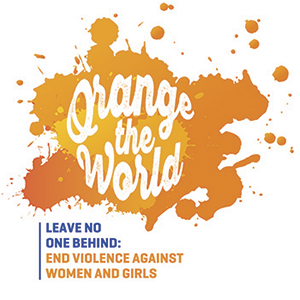
One in three women around the world have been subject to violence. Women face physical, sexual, and psychological violence in both public and private. Taking forms such as violence in the intimacy of a relationship, human trafficking, and sexual exploitation, gender violence is an issue that affects women in all countries. Only two-thirds of countries have outlawed domestic violence, leaving millions of women unprotected from abuse including from marital and de facto partners in many cases. Additionally, through human trafficking countless women are subjected to sexual exploitation and sexual violence, including horrific acts such as genital mutilation. Today many actors from individuals, to multinational organizations work to address these issues. These articles help to shed light on the violence that women experience every day and how its is being addressed.

The Week with IPS

Tracking global progress towards a sustainable world
