Languages
Wednesday, November 11, 2026



News and Views from the Global South
Gender

Anti-Gay ‘Therapy’ Offered at Uganda Health Centres Run by Aid-Funded Groups
At Mulago, Uganda’s biggest public hospital, a receptionist at an HIV clinic for marginalised and ‘most at risk’ populations, including LGBT people, said that an undercover reporter’s 17-year-old gay brother could “quit” his same-sex attraction.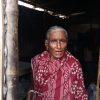
COVID-19 Pandemic Exacerbates Domestic Workers’ Plight in Bangladesh
Rani Akter, a mother of five, usually works as a domestic helper in Dhaka’s Zikatola area. When the coronavirus pandemic broke out in Bangladesh last March, her employers asked her not to come to their homes for fear of infection. “I lost my work in three houses one after the other, which became a nightmare for me. My rich employers did not allow me in their homes as they thought that I might carry the invisible virus,” Akter told IPS.
Acceleration Rights Plan for Gender Equality Mooted at Equality Forum
As the global gathering for gender equality, the Generation Equality Forum, kicks off in Paris on June 30, 2020, IPS conducted an exclusive interview with Katja Iversen.
Towards an Equal Future in Parliaments
In elections last October in Georgia, women’s share of seats in parliament went up by nearly seven percent, following the enforcement of a 25 percent quota for women candidates.
Ivanancy Vunikura: Navigating the Waves of Change
In April 2021, the Pacific Community (SPC) coordinated the 14th Triennial Conference of Pacific Women and the 7th Meeting of the Pacific Ministers for Women, hosted by the Government of French Polynesia. The conference brought together decision-makers, development partners, research institutions and civil society organisations. Following this landmark event, SPC will continue to publish portraits of inspiring gender champions who are at the heart of Pacific development programmes.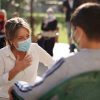
Education Cannot Wait for Refugee Children in Crisis, says Yasmine Sherif
With financing, the number of out-of-school refugees could be reduced to zero, Yasmine Sherif, Director of Education Cannot Wait (ECW) says, as the world commemorates World Refugee Day.
Central Sahel: Ground Zero in Tackling Climate Change Through Education
The climate crisis is amplifying the effects of instability and violence in the world’s poorest countries. Nowhere is this more visible than in Africa’s Central Sahel region, where increasing temperature, floods, droughts and other climate change-induced disasters are triggering conflicts, displacement, and pushing girls and boys into the shadows.
Britain Must Fix Its Anti-Muslim Sentiment Problem
In 2015, When Rabina Khan was running as an independent candidate in the Tower Hamlets’ mayoral elections in London, a male voter asked her what colour her hair was under her veil. Rabina replied and said, it was pink. This small interaction is what got Rabina inspired to write her book, My Hair is Pink Under This Veil.
The Real Price of Marriage in South Sudan
August of this year will mark the one-year anniversary of the end of South Sudan’s civil war, yet recent surges of violence suggest that peace is far from being realized. These attacks by armed groups include instances of sexual violence against women and girls.
Investing in Lives & Livelihoods of India’s Women Crucial to Nation’s Full Recovery
Thousands of Indians have been affected by the latest COVID-19 outbreak. Not only those suffering from the disease, but also those who care for them.
From Climate Change to Covid, Are We Ready to Deal with Disasters?
In the last 20 years, disasters affected over 4 billion people. At global level we witness on average one sweeping disaster a day, the majority of which are floods and storms. From the Covid-19 pandemic to climate change, calamities are taking new shapes and sizes, infiltrating every dimension of society. From the emotional to the political, how do we deal with disasters? How can we create a whole-of-society approach to disaster risk reduction?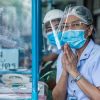
G7 Summit: Time to put Women Front & Centre of the Global Economic Recovery
The leaders of the G7 group of nations will soon gather in Cornwall, United Kingdom, (June 11-13) to devise plans to ‘build back better’ from the COVID-19 pandemic. The summit takes place in the wake of a crisis that has both revealed and further exacerbated existing economic and social inequalities, including gender inequalities.
Why We Need More Women in Power
What is the first thing that comes to your mind when you read the words, women and power? The accepted wisdom is that women can be powerful, but not without the constant reference to their gender - which is often based on a set of unconscious biases towards them. Is she competent enough, effective, articulate without being too assertive or too aggressive. Is she a straightjacket, is she too emotional, will her family life impact her work or vice versa. Is she smart enough to camouflage her intelligence, is she ready for a key position, is it worth making her powerful?
‘Let’s Talk About Sex’ Discussion Highlights Risks to Women
Every two minutes, a girl or woman dies from pregnancy or childbirth-related complications, including unsafe abortions. Every year, around 12 million girls are married while in their childhoods. An additional 10 million are now at risk of child marriage due to the Covid-19 pandemic.
Child Marriage and Domestic Violence: What We Found in 16 African Countries
The number of girls who marry before their 15th birthday has remained unchanged for 20 years in most countries in sub-Saharan Africa. The region has the highest rate of child marriage, with nearly four in 10 girls married before age 18. In Niger, for example, over 77% of girls are married before the age of 18.
Why Investing in Women Is Key to Achieving the Sustainable Development Goals
Last year, the Asia-Pacific region recorded its worst economic performance in decades. With the pandemic far from over, the region’s recovery is slow, fragile and highly uneven both across and within countries. As the region struggles to recover, how can countries rebuild their economies and revive their development?
Africa’s Forgotten Crisis
A few weeks ago, I traveled with the UN High Commissioner for Refugees Filippo Grandi to the Modale refugee site in the Nord-Ubangi province of the Democratic Republic of the Congo (DRC). What we witnessed there was a profound humanitarian crisis that has left 4.7 million children and youth in need of urgent, life-saving, life-changing educational support.
Motorcycle Diaries with a Twist
Four women, two motorbikes, 64 districts and a journey of a lifetime, this is the story of Dr. Sakia Haque from Bangladesh. In November 2016, Dr Haque co-founded “Travelettes of Bangladesh - Bhromon Konya,” a women's only group, with the motto of “empowering women through travelling.” This platform is not just an ordinary online travel group, but it is a platform of connection, sisterhood and networking of almost 60,000 girls and women in Bangladesh that empowers them by teaching them to raise their voices and encourages them to step out of their comfort zones and to “go see the world”.
COVID-19 Widens Learning Gap For Girls In Rural Ghana
Seventeen-year-old Muniratu Adams, a form two student of the Jeyiri D/A Junior High School at Funsi in the Wa East District of the Upper West Region of Ghana, is fortunate to have returned to school this January after the long COVID-19 shutdown.
Not Without My Hijab: Why Representation in Sports Matter
In 2016, when Bosnian-American professional basketball player, Indira Kaljo got in touch with Asma Elbadawi because she had been forced to give up playing basketball after she started wearing the hijab, they decided to take it up with the International Federation of Basketball (FIBA), the sports governing body to change its rules on headgear.
Five Ways to Measure the Effects of a Crisis Like COVID-19 on Women
Social issues and crises tend to affect women more severely than men. This is why terms like “gender mainstreaming policies”, “gender-responsive interventions” and “gender-based budgeting” have become more popular in public policy discussions in recent years.« Previous Page — Next Page »





Women make up half the world's population, but don't nearly share half of the world's wealth, well-being and opportunity. Two-thirds of the world poor are women, disproportionally exposing women to precarious living conditions, disease and unmitigated natural disasters. The media, meanwhile, remains a male-dominated sector in much of the world, contributing to women's voices lacking a crucial amplifier to put their concerns on political agendas and unleash the development potential of their ingenuity. Rather than then stereotypical victims of local and global forces, women are also organizer, innovators, conservators and community builders. These are some of their stories.

The Week with IPS

NEXT STOP - SDGs
Tracking global progress towards a sustainable world
Tracking global progress towards a sustainable world
