Languages
Friday, November 13, 2026



News and Views from the Global South
Gender

Monsoon Season Threatens More Misery for Rohingyas
More than half a million Rohingya refugees crammed into over 30 makeshift camps in Cox’s Bazar in southeast Bangladesh face a critical situation as the cyclone and monsoon season begins in a few weeks’ time.
UN Relies on DNA for Paternity Claims Against Sexually Abusive Peacekeepers
As sexual abuse and paternity claims continue to rise against UN peacekeepers overseas, the United Nations is actively collaborating with troop contributing countries (TCC) in collecting DNA samples: a protocol introduced back in 2014.
Migration Should Not be Politicized, Warns General Assembly President
This week, we began intergovernmental negotiations on the Global Compact on Migration. Therefore, it has never been more important to have a fact-based discussion on this issue. To start us off, I want to make main three points. First, I want to stress that migration is a fact. It is not an idea. It is not a theory. It is not a trend. It is a fact.
Crowd-Sourced Data and a Mobile Phone Application Are Making Cities Safer for Women
When Shiba Kurian alighted from Chennai’s city train, the evening office-returning crowd was thick and jostling. Having booked a ride-hail cab she walked out to the entrance. Instead of the cab for which she had to wait an hour, ribald comments and derisive laughter came her way from a group of roadside Romeos.
A Step Towards the Light: Ending Human Trafficking
A new initiative aims to use data to shed light on a pervasive multi-billion dollar criminal industry: human trafficking. Created by the International Organization for Migration and Polaris, the Counter-Trafficking Data Collaborative (CTDC) is the world’s first human trafficking data portal.
African Brain Drain: Is There an Alternative?
“Brain drain is particularly acute in sub-Saharan Africa,” says the World Economic Outlook (October 2016), a report published by the International Monetary Fund (IMF). “The migration of young and educated workers takes a large toll on a region whose human capital is already scarce. The concentration of migrants among those who are educated is higher than in other developing economies.
Oxfam’s Sexual Abuse Episode Must Inspire a Culture Shift
Sexual abuse allegations against Oxfam staff, and failings in the charity’s response to them, delivered a body blow to an organisation renowned for years of humanitarian and development work. At the very least the accusations will leave a stain on the reputation of a charity that works in some of the toughest environments in the world, and has made a positive difference in the lives of the most vulnerable.
Till Her Last Breath- Remembering Asma Jahangir
I first met Asma Jahangir, the champion of human rights in Pakistan, who died Sunday, as a teenager in Sri Lanka in the late 1980s. In a friendship that spanned political upheavals and turbulent transitions in Pakistan and in Sri Lanka, to the War on Terror in the US, Asma remained my mentor and muse.
Turning Promise into Action: Working Towards Gender Equality
Persistent and pervasive gender-based discrimination is undermining sustainable development and preventing communities and countries from reaching their full potential, said a UN agency.
Bangladesh’s Garment Industry Boom Leaving Workers Behind
Although Bangladesh has made remarkable recent strides like building green factories and meeting stringent safety standards, garment workers here are still paid one of the lowest minimum wages in the world.
Inequality also Relates to Education, Health & Illiteracy, not Wealth Alone
Antipoverty group Oxfam International got a lot of attention for claiming that there’s a global “inequality crisis,” but a far more important point is entirely neglected: globally, income distribution is less unequal than it has been for 100 years.
How It Feels to Survive Slavery: Ira’s story
“A client called at night and ordered a girl. I was sleeping when suddenly I was told to go to the client. He was already drunk and aggressive. I was scared to stay with him. He made me drink and I had to obey. You feel neither pain nor shame when you are drunk. Everything goes easier. I woke up in the morning and got ready to leave when he told me to stay. He told that he had paid for the whole day and I must work it off. The door was closed. He hid the door keys and my phone. He claimed that he had paid for my services and could do with me whatever he wanted… He fell asleep soon again. I didn’t find the keys. I thought I could exit through the window. It was the third floor and there was a fire escape ladder nearby. I decided to climb over the balcony to the ladder. And fell down… Everything happened very quickly. I felt no pain… I remember that I tried to stand up but couldn’t and saw my bones sticking out of my arms. I passed out. I came round in the ambulance. Later – only in the intensive care unit. There I told my name and where I came from. Doctors called my relatives. Later my family moved me back to Belarus. It was super expensive.”
“No Time to Waste” in Ending FGM
More than 200 million women around the world have experienced some kind of female genital mutilation (FGM) and more could be at risk, a UN agency said.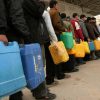
Gaza Health Sector on Verge of Collapse
UN agencies have sounded the alarm on the rapidly deteriorating humanitarian situation in Gaza, pointing to the devastating repercussions of the ongoing fuel shortages.
UN Refugee Agency Calls for Aid and Peace in South Sudan
As South Sudan quickly becomes Africa’s largest refugee and humanitarian crisis, the world must come to its aid, said the UN refugee agency. The UN Refugee Agency (UNHCR) has launched a global appeal to support displaced persons amid South Sudan’s rapidly deteriorating humanitarian situation.
Business Unusual will Drive Africa’s Quest to achieve Health Care for All
Africa’s quest for health continues to be held back by a combination of factors such as natural disasters and pandemics, prevailing high rates of communicable and rising incidence of non-communicable diseases, sedentary lifestyles, road accidents and greater population mobility.
Survival of Indigenous Tribes in Bangladesh Starts at School
Just before sundown on Jan. 30, a group of women day labourers from the Shantal indigenous community are in a rush to wind up their work harvesting potatoes in a field in the village of Boldipukur, some 15 km away from Rangpur district in northern Bangladesh.
Girls Taking up the Gauntlet
The commendable initiative of a group of girls combating early marriage in Trishal, as reported by The Daily Star on Thursday, shows how social problems like child marriage are best handled: through greater community involvement. The girls are working to raise awareness of the consequences of early marriage among local people and girls/women themselves so that they can resist any such attempts on their own, without recourse to administrative measures and other such interventions. In the last two months alone, encouraged by the local UNO and community leaders, they prevented 10 early marriages.
Iraq’s Toxic Conflict
In Iraq, thirty years of armed conflict has killed hundreds of thousands of people, wounded countless more, displaced millions and laid cities and towns to waste.
Sexual Harassment: At Least 2 Billion Women
Most of the world’s women have experienced sexual harassment. Based on available country surveys, it is estimated that no less than 75 percent of the world’s 2.7 billion women aged 18 years and older, or at least 2 billion women, have been sexually harassed (Figure 1).
Gender Empowerment: What Will You Do in 2018 to make a Change?
In the last year, a women’s rights tidal wave flooded the world: over 4 million people marched in the first “Women’s March” in January 2017, and over a million marched a year later, from Washington DC to New York, from Sydney to Osaka, and from Rome to Nairobi.« Previous Page — Next Page »


Women make up half the world's population, but don't nearly share half of the world's wealth, well-being and opportunity. Two-thirds of the world poor are women, disproportionally exposing women to precarious living conditions, disease and unmitigated natural disasters. The media, meanwhile, remains a male-dominated sector in much of the world, contributing to women's voices lacking a crucial amplifier to put their concerns on political agendas and unleash the development potential of their ingenuity. Rather than then stereotypical victims of local and global forces, women are also organizer, innovators, conservators and community builders. These are some of their stories.

The Week with IPS

NEXT STOP - SDGs
Tracking global progress towards a sustainable world
Tracking global progress towards a sustainable world
