Languages
Friday, November 13, 2026



News and Views from the Global South
Gender

Women on the Front Lines of Halting Deforestation
In Zimbabwe, the bulk of rural communities and urban poor still get their energy supplies from the forests, leading to deforestation and land degradation.
For Millions of Indian Women, Marriage Means Migration
Rekha Rajagopalan, a 26-year-old schoolteacher, migrated to the Indian capital city of New Delhi from southern Chennai in 2015 after her marriage. The reason was simple. Rekha's husband and his family were based in Delhi, so like millions of other married Indian women, she left her maternal home to relocate to a new city with her new family.Thoughts on the Alcohol Ban for Women
“A majority of the country has criticised the decision to lift the ban arguing it would destroy family culture by getting more women addicted to alcohol”Thoughts on the Alcohol Ban for Women
“A majority of the country has criticised the decision to lift the ban arguing it would destroy family culture by getting more women addicted to alcohol”
Breaking Barriers in Bangladesh
It’s nearing 4:30 p.m. on a foggy day, but there seems to be no great hurry amongst the workers to wind up their day in a factory producing high-end designer bags. Located in the Export Processing Zone (EPZ) of Nilphamari, a northern district 40 kilometers from the divisional headquarters of Rangpur in Bangladesh, the area is known for creating job opportunities for the local population.
Migrants Without Shoes
Addis Ababa, Ethiopia, 2013. It is past midnight. The aircraft come in from Saudi Arabia carrying workers who had been hastily ejected. They had gone from Ethiopia to work in a variety of jobs in a Kingdom flush with oil wealth.
Chance for Kenya to Make Amends for Post-Election Sexual Violence
I had already heard many disturbing stories of violence by the time I interviewed Mercy Maina, whose name I have changed to protect her privacy. Even so, what Mercy told me was truly disturbing. She said she was raped during the post-election violence in August alongside her sister by two men wearing uniforms and helmets, and carrying guns and walkie-talkies.
Breaking the Silence: Why We Should All Take a Zero-tolerance Approach to Sexual Harassment and Abuse
Around the world, brave women have broken their silence on the sexual harassment and abuse suffered at the hands of those with power. Their courage is paving the way for others to speak out about their own experiences.
Fate of the Rohingyas – Part Two
With discussions underway between Bangladesh and Myanmar about the repatriation of more than a half a million Rohingya refugees, many critical questions remain, including how many people would be allowed back, who would monitor their safety, and whether the refugees even want to return to violence-scorched Rakhine state.
Pardon of Former Peruvian President Fujimori Deals Blow to Fight Against Gender Violence
The political crisis triggered in Peru by the presidential pardon of former president Alberto Fujimori granted on Christmas Eve casts a shadow of doubt over what actions will be taken to curb violence against women in this country, where 116 femicides were registered in 2017, and which ranks eighth with respect to gender-related murders in Latin America and the Caribbean.
Thousands Still Dying at Sea En Route to Europe
Amid concerns that 160 people may have drowned while attempting to cross the Mediterranean this week alone, the UN refugee agency have urged countries to offer more resettlement places.
Fate of the Rohingyas – Part One
The repatriation of Rohingya refugees driven from their villages through violence and terror appears uncertain, with critics saying the agreement legalising the process of their return is both controversial and impractical.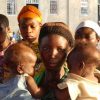
Women Displaced by Brutal Violence in the DR Congo Tell Their Harrowing Stories
Women have borne and continue to bear a disproportionate amount of the suffering caused by two decades of conflict in North Kivu in the Democratic Republic of the Congo (DRC).UN Urges Comprehensive Approach to Sexuality Education
Close to 10 years after its first edition, a fully updated International Technical Guidance on Sexuality Education published today by UNESCO advocates quality comprehensive sexuality education to promote health and well-being, respect for human rights and gender equality, and empowers children and young people to lead healthy, safe and productive lives.
The Data Revolution Should Not Leave Women and Girls Behind
If there is one political principle that has been constant throughout the history of human civilization it is the fact that land is power. This is something that is particularly true, and often painfully so, for women who farm in Africa.
Why the #MeToo Movement Disrupts the Creeping Commodification of Feminism
As the 62nd Session of the Commission on the Status of Women (CSW) at the United Nations in New York draws near, women from every corner of the world will convene to deliberate on the theme of CSW 2018: Challenges and Opportunities in achieving gender equality and the empowerment of rural women and girls. This year, the theme of empowerment has added significance. The #MeToo movement has shocked our collective conscience and made it impossible to ignore that empowerment goes far beyond economic agency.
Disasters Bring Upheaval to Sri Lanka’s Rural Economy
Last year was an annus horribilis for 52-year-old Newton Gunathileka. A paddy smallholder from Sri Lanka’s northwestern Puttalam District, 2017 saw Gunathileka abandon his two acres of paddy for the first time in over three and half decades, leaving his family almost destitute.
Liberal and Female
If Gen Ziaul Haq hijacked Islam to justify his military rule, then Gen Musharraf did the worst injustice to liberalism by using it as camouflage for his praetorian rule. Both generals benefited personally but have confounded Pakistanis about religion and liberties alike, pitting citizens into an unresolved search for a core national identity and a stable political model of governance.
Marooned in Bangladesh, Rohingya Face Uncertain Future
Hundreds of thousands of Rohingya refugee women from Myanmar are currently living in the cramped camps along Bangladesh Myanmar border. Victims of sexual and physical violence in the Rakhine state, women have been disproportionately affected by this crisis and these women’s perils are far from over in the host country as they continue to face multifaceted challenges.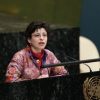
Religion: Between ‘Power’ and ‘Force’
In 1994, Dr. David R. Hawkins wrote a book positing the difference between power and force (Power vs. Force: The Hidden Determinants of Human Behavior - the latest revised version came out in 2014).
Perpetrators of Crimes against Humanity Must be Brought to Justice
On the occasion of the 2017 International Day of Human Solidarity observed on 20 December, the Chairman of the Geneva Centre for Human Rights Advancement and Global Dialogue Dr. Hanif Hassan Ali Al Qassim calls for peace for and human solidarity with, the Rohingya minority in Myanmar.« Previous Page — Next Page »


Women make up half the world's population, but don't nearly share half of the world's wealth, well-being and opportunity. Two-thirds of the world poor are women, disproportionally exposing women to precarious living conditions, disease and unmitigated natural disasters. The media, meanwhile, remains a male-dominated sector in much of the world, contributing to women's voices lacking a crucial amplifier to put their concerns on political agendas and unleash the development potential of their ingenuity. Rather than then stereotypical victims of local and global forces, women are also organizer, innovators, conservators and community builders. These are some of their stories.

The Week with IPS

NEXT STOP - SDGs
Tracking global progress towards a sustainable world
Tracking global progress towards a sustainable world
