Languages
Thursday, September 24, 2026



News and Views from the Global South
Global Geopolitics

Biden: the Task of a Good Loser
What for Donald Trump was an insult, for Joe Biden is an acknowledgment: the new president of the United States is the establishment in its purest form. No other similar case is remembered of having reached the presidency with a better preparation. For almost half a century he has been "inside the beltway." It is the sector occupied by the District of Columbia, which claims to be recognized as a state, surrounded by a huge highway. Biden would be perfectly accepted as a traffic guard, without passing the exam.
Capitol Hill ‘Insurrection’
According to the mainstream narrative, President Trump’s incitement of his supporters during the certification of Joe Biden’s electoral victory led to the ‘insurrection’ at the US Capitol on January 6, resulting in the banning of Trump’s social media accounts and his second impeachment by Congress.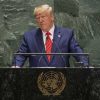
America’s Descent into Depths of Disastrous Trumpism
Democracy is fragile. It is more fragile that the window panes of the Congress that were smashed by the mob unleashed by President Donald Trump. It is the ultimate symbol of the desecration of American democracy.
Will a Second Term for Guterres Undermine Campaign for First Female UN Chief in 76 Years?
The United Nations has been one of the most vociferous advocates of gender empowerment and a persistent critic of gender discrimination worldwide.
Unhinged with 5,800 Nuclear Warheads at his Fingertips
Between now and January 20,2021, the President of the United States has almost run out of arenas in which to impose his will. His reelection has soured in infamy. His concern for the COVID-19 pandemic faded long ago. There is only one last pursuit available to him to demonstrate that he is the most powerful man on earth, i.e. using the nuclear weapons at his disposal.
Storming of Capitol Hill Reminiscent of a Banana Republic
The storming of Capitol Hill in Washington DC by an unruly mob is reminiscent of an insurrection in a “banana republic” --as hilariously portrayed in the 1971 Woody Allen comedy “Bananas” spoofing a revolt in a fictional Latin American country.
Sir Brian Urquhart: Embodiment of the UN
Sir Brian Urquhart, who died on January 2 at the age of 101, served the United Nations in high posts for four decades, beginning in the organization’s earliest days.
The Night Arafat, Facing Death Threats, Slept in the UN Chief’s Office
The United Nations, which is commemorating its 75th anniversary, continues to remain bogged down in one of the world’s most politically and militarily volatile regions: the Middle East.
A UN Power Monopoly That Cries Out for a Break
Will four strong contenders for permanent seats in the UN Security Council (UNSC)-- Germany, India, Japan and Brazil—help break the monopoly now being held by the big five, namely the US, UK, France, China and Russia?
Biden’s Opportunity To End Israeli-Palestinian Conflict
Recently I had an opportunity to brief a group of European diplomats and journalists on a variety of conflicts, with a focus on the Middle East. During the Q&A I was asked which of the region’s conflicts Biden should tackle first.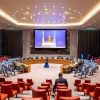
When Big Powers Clash, the UN’s Most Powerful Body Disappears
At the height of the Cold War back in the 1960s, a Peruvian diplomat, Dr. Victor Andres Belaunde, characterized the United Nations as a politically wobbly institution that survives only at the will-- and pleasure-- of the five big powers.
US Presidential Election Part 3: President Trump’s Legacy of Mismanagement of the Pandemic
Covid-19 is on track to be the deadliest and one of the most catastrophic epidemics since the 1918-1919 flu pandemic, which infected about 500 million people or one-third of the world’s population at the time. The number of deaths was estimated somewhere between 17 and 50 million, and possibly as high as 100 million worldwide.
Not all 74 million Trump Voters Can be Racists
Donald Trump will have to leave the White House in January. Although there will be a few skirmishes in the US courts in the coming weeks to sort out whether some votes were legitimate or not, the outcome won’t change.
A Potential Weapon Kills Over 1.5 Million Worldwide –Without a Single Shot Being Fired
The world’s major military powers exercise their dominance largely because of their massive weapons arsenals, including sophisticated fighter planes, drones, ballistic missiles, warships, battle tanks, heavy artillery—and nuclear weapons of mass destruction (WMDs).
The Unprecedented US Presidential Election and its Consequences
American democracy has survived a dangerous virus, and it has even come off the ventilator, but whether it will be restored to full health or will suffer for a long time (like a long Covid) from the negative effects of the virus of personality cult, chauvinism, populism, racism, militarism and, yes let’s say it, fascism, remains to be seen.
On the Back of the Pandemic, the Militarisation of Latin America is Gathering Momentum, Analysts Warn
During the Covid-19 pandemic, armed forces in Latin America have been taking on essential tasks: manufacturing protective equipment, delivering food and treating civilians in hospitals. In at least a dozen countries, soldiers have been deployed to enforce containment measures, often using brute force, on populations made up of largely poor informal workers.
The Silence of the International Community on Western Sahara
For my entire life, I have been forgotten. I am a Sahrawi refugee, born and raised in the Algerian desert, where my people have remained displaced for 45 years, awaiting the moment when we can finally return to our homeland, Western Sahara.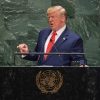
US Republican Party’s Soul in Danger as Trump Hijacks the GOP
What has happened to the Republican Party? Picking Donald Trump in 2016 as the Republican candidate, giving him victory in primary after primary and later tolerating his idiosyncrasies and unpredictably dangerous behaviour and policy decisions were bad enough however much one tries to digest them as vagaries of the democratic tradition.
The Armored Divisions of the European Union
An anecdote tells, never sufficiently confirmed, that in the hardest moments of the Second World War when Stalin was dictating his orders of battle to his subordinates, he was told that perhaps it would be advisable to consult with the Pope. The Soviet dictator replied: "And how many armored divisions does the Pope have?"
Trump’s “America First” Foreign Policy Faces an Unceremonious Burial
The ouster of Donald Trump from the US presidency last week may well be the dawn of a new era for multilateralism – and perhaps for a besieged United Nations— after nearly four years of misguided political rhetoric emerging from the White House.
How Did Trump Get this Far?
To believe that Biden's triumph is the end of the drama that has unfolded since January 2016 is an example of a mirage with fatal consequences. Pretending that those more than 70 million voters who have followed Trump to the end will disappear from the map on January 20 with the inauguration of Biden and Harris reveals a blindness to how much America has changed in recent generations.« Previous Page — Next Page »


Is the world dominated by three great empires -- the U.S.A, China and the European Union? How much power do the great behemoths of the south -- India, Brazil, and South Africa -- wield? And where does Russia fit in that equation? Are we in the middle of a new Cold War? What are the implications of the armed conflict with Georgia? What about the new axis: Venezuela-Russia? And what role does Turkey play? What about issues like Climate Change and other global forces like the food crisis and the high energy prices? How is all this reshaping the world's forces? IPS looks for some answers.

The Week with IPS

NEXT STOP - SDGs
Tracking global progress towards a sustainable world
Tracking global progress towards a sustainable world
