Languages
Saturday, September 19, 2026



News and Views from the Global South
Global Geopolitics

On Nuclear Weapons, Actions Belie Reassuring Words
On Jan. 3, the leaders of the five nuclear-armed members of the nuclear Nonproliferation Treaty (NPT) issued a rare joint statement on preventing nuclear war in which they affirmed, for the first time, the 1985 Reagan-Gorbachev maxim that “a nuclear war cannot be won and must never be fought.”
When the Glass House by the East River Exploded in Laughter….
Created in 1945 following the devastation caused by World War II, the United Nations was mandated with the task of maintaining international peace and security as one of its primary political missions. But the seriousness of its far-reaching mandate has been tempered by occasional moments of levity which have rocked the “glass house by the east river” with laughter -- as recounted in a newly-released book on the United Nations titled “No Comment –and Don’t Quote me on That”.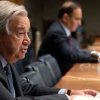
A Nuclear-Weapons-Free-Zone in the Middle East— & the Elephant in the Room
Israel’s nuclear presence in the Middle East is best characterized as “the elephant in the room” -– an obvious fact intentionally ignored with deafening silence.
Global Arms Industry Thrives Amid Worldwide Pandemic Devastation
The 21-month long pandemic, which began with the outbreak of the deadly corona virus back in March 2020, ravaged hundreds and thousands of businesses and industries resulting either in widespread losses, closures or bankruptcies.
Mother of Summits: Sweet and Sour Diplomacy, but Nothing Cooked!
It has been said that when Greek meets Greek, then comes the tug of war. The summit of the leaders of world’s two strongest powers, the United States and China, came face to face at long last. Albeit virtually. Still, this was undoubtedly the “mother of summits” this year. There were two telephone conversations earlier, but according to US officials this nearly four hours of summitry was far more “candid intense, and deeper interaction”. If there was one single take-away from this meeting, it was the establishment beyond all reasonable doubt of the incontrovertible fact that the US and China were indeed the two most influential global state actors. The decisions between the two, represented by their leaders, would profoundly impact the rest of humanity far into the future.
Asian Staffers at UN Launch Network to Protect Rights & Fight Racism
The United Nations, which consists of 193 member states, has long been accused of discrimination against staffers who number over 315,000 and spread across 56 UN agencies and entities worldwide. But most of these are deeply rooted system-wide. A wide-ranging staff survey, both in New York and Geneva last year, revealed that discrimination was based either on race, religion, gender or nationality.
COP26: Climate Emergency Includes Threat of ‘Nuclear Winter’
When world leaders gather in Scotland next week for the COP26 climate change conference, activists will be pushing for drastic action to end the world’s catastrophic reliance on fossil fuels.
Biden’s Nuclear Posture Review Must Reduce the Role of Nuclear Weapons
Most successful U.S. presidents have actively led efforts to advance arms control agreements and reduce the risk of nuclear war. Although much has been achieved over the years, there are still 14,000 nuclear weapons and nine nuclear-armed states; progress on disarmament has stalled; and tensions between the United States and its main nuclear adversaries—Russia and China—are rising.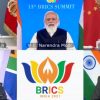
BRICS Puts on Annual Show of Unity
Amid scepticism and a lack of public interest, domestic crises and the backdrop of Covid-19, last week the BRICS countries delivered on their commitment to hold an annual summit without showing the signs of disunity that has beset the group in recent years.
Venezuela’s Glimmer of Hope
This is the third serious attempt to inject some momentum in the negotiations between the Venezuelan government and opposition. Negotiations have been taking place in Mexico since last Friday, with Norway acting as mediator.
The Main Contradiction of the Modern Era
The main contradiction of the modern era, and indeed of all human history, is not between capitalism and socialism, and not even between authoritarianism and democracy, but between individualism and collectivism, between public and personal interests. Countries that are getting ahead in the economic race allow themselves the luxury of individualism, prioritizing human rights, which ultimately undermines their political and economic power and causes their decline and the rise of more collectivist civilizations. It is literally the story that is as old, as the world itself…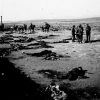
The Centenary of the Disaster of Annual
It would seem that those responsible for the recent immigration crisis in Ceuta and Melilla have coordinated their strategy to commemorate the centenary of one of the most serious defeats that Spain has suffered in its foreign relations. One hundred years ago, the Spanish armies suffered one of the most painful losses in its history.
US Holds UNICEF Monopoly for 74 Years – in a World Body Where Money Talks
With Henrietta Fore's decision last week to step down as UNICEF Executive Director, her successor is most likely to be another American since that post has been held-- uninterruptedly -- by US nationals for almost 74 years, an unprecedented all-time record for a high-ranking job in the UN system.
Can We Make the Planet Earth a Utopia? Yes: Why Not?
The only Planet in the Universe with living beings, including animal and plant life is the Planet Earth. Can we transform it to a Utopia, more or less, a Paradise. Yes, we can. Why not? If all Nations of the Planet have a genuine desire to have eternal peace and harmony, without recourse to a course that will lead to the destruction of the Planet to smithereens.
UN Ready for Breakaway Nations but the Pace Remains Slow
When the United Nations renovated its building at a cost of over $2.1 billion, as part of a seven-year refurbishing project back in 2014, the seating in the cavernous General Assembly hall was increased from 193 to 204—primarily in anticipation of at least 11 new member states joining the world body sooner or later.
If “A Nuclear War Must Never Be Fought,” Then …
After more than a decade of rising tensions and growing nuclear competition between the two largest nuclear-weapon states, U.S. President Joe Biden and Russian President Vladimir Putin agreed at their June 16 summit to engage in a robust “strategic stability” dialogue to “lay the groundwork for future arms control and risk reduction measures.”
UN’s Double Standard on Human Rights Abusers Protects Big Powers
When the UN’s annual report on Children and Armed Conflict was released last week, it was expected to “name and shame” some of the world’s worst human rights violators – particularly the abusers of children.
Setting the Stage for Wars During a Global Pandemic
Looking through my emails for the last year, I was struck by how often the adjective “unprecedented” occurred. The term, of course, referred to the global Covid-19 pandemic. One would imagine that this unprecedented year would result in unprecedented trends in other aspects of life.
World’s Nuclear Arms on High Operational Alert — & Ready to Strike
The world’s nine nuclear armed states have downsized their military arsenals, but made up for their loss by increasing the number of weapons on high operational alert, according to a new report from the Stockholm International Peace Research Institute (SIPRI).
The 21st Century Nuclear Arms Race
A new report by the International Campaign to Abolish Nuclear Weapons (ICAN)—focusing on nuclear weapons spending-- following on the Bulletin of the Atomic Scientists recent decision that their Doomsday Clock, should be set as close as it has ever been to nuclear catastrophe. should serve as a wake up calls for humanity.
From Non-aligned to One Aligned
June 4, 2021 marks 30 years since the killings of an undisclosed number of Chinese protestors at Beijing’s Tiananmen Square. For many years, the Chinese government and its ruling Chinese Communist Party (CCP), with characteristic understatement, called it the ‘June Fourth incident’.« Previous Page — Next Page »


Is the world dominated by three great empires -- the U.S.A, China and the European Union? How much power do the great behemoths of the south -- India, Brazil, and South Africa -- wield? And where does Russia fit in that equation? Are we in the middle of a new Cold War? What are the implications of the armed conflict with Georgia? What about the new axis: Venezuela-Russia? And what role does Turkey play? What about issues like Climate Change and other global forces like the food crisis and the high energy prices? How is all this reshaping the world's forces? IPS looks for some answers.

The Week with IPS

NEXT STOP - SDGs
Tracking global progress towards a sustainable world
Tracking global progress towards a sustainable world
