Languages
Friday, November 13, 2026



News and Views from the Global South
Global

When Battling Covid-19 Becomes a National Policy Disaster
We went to the Kanatte cemetery, Sri Lanka’s largest, where most of us, residents of the capital city, would end up sooner or later. But it was deserted, and so we had time for a leisurely chat with some of the helpful staff there, albeit after admiring some of the grave sites and remaining beautiful trees.
Climate Crisis: Elephants in the Room are Getting Nastier
The year 2020 will forever be notorious for the COVID-19 pandemic but it might also be known by historians for a precipitous rise in second order climate change consequences -- a new elephant in the room.
Put People Before Profits for Progress
Millions of people are expected to die due to delayed and unaffordable access to COVID-19 tests, treatment, personal protective equipment and vaccines. Urgent cooperation is desperately needed to save lives and livelihoods for all.
COVID-19 Vaccination: The Barriers to Achieving Global Herd Immunity
The global community is conducting a rapid vaccination program against the SARS.Cov-2 virus, using several vaccines, authorised for emergency use. To date, the percentages of adults vaccinated vary between less than 2% to over 90% in different countries.
Where are the Women? How Pandemic Decisions are Ingraining Global Gender Bias
There are teams of experts around the world right now tackling the coronavirus pandemic, providing pathways to put an end to this deadly global scourge and charting the course for recovery.
Russia’s Sputnik Diplomacy
While Western countries were busy with their own vaccination campaigns, Russia has filled the leadership vacuum in developing countries. Amid the West’s scramble for vaccines, a trickle of news flies under the radar. Argentina becomes the first country in South America to produce Russia’s Sputnik V vaccine. The first shipment of Sputnik V is promised to Peru by May.
Reimagining Education with Imagination
The month of May marks mental health awareness month or mental health awareness week in several countries around the world. Many people will be reading posts and blogs about the importance of getting more sunshine and exercise to avoid the blues, about ways to deal with the stress of the pandemic, about dealing with everyday challenges that disrupt our striving for happiness.
The UN’s Guterres, an Incumbent With Strong Backing by Europe, Is Bound to Win Another Term
It was all over in one crucial week. Barring an unforeseen hitch, António Guterres is the clear winner of a second, five-year term as secretary-general of the United Nations, beginning on Jan.1, 2022. This was not a surprise: he had no major competition and the process moved faster than expected.
US Support for Vaccine Waiver Welcome, but More Needed
Thanks to President Biden, the US now supports a suspension of intellectual property (IP) rights to increase vaccine supplies. However, without vaccine developers sharing tacit technical knowledge for safe vaccine mass production, it will be difficult to rapidly scale up vaccine output.
Equipped by US & Israeli Firms, Police in Botswana Search Phones for Sources
Oratile Dikologang was naked when police officers pulled black plastic over his head during his detention in April 2020. It was difficult to breathe, but the interrogation continued, he told CPJ in a recent phone interview.
Bridging the Digital Divide Will Save Our Planet
Data, analysis and information are essential building blocks in our race to save humanity from the clear and present risks posed by the climate crisis.
How to Assess the Willingness of US to Suspend Patent Protection on Vaccines?
The news of the Biden Administration's willingness to lift intellectual property rights protections in the case of the Covid-19 pandemic has sent the world into turmoil, even though in recent days this willingness had become increasingly airy.
CORRECTED VERSION: Struggle for the Future of Food
Producers and consumers seem helpless as food all over the world comes under fast growing corporate control. Such changes have also been worsening environmental collapse, social dislocation and the human condition.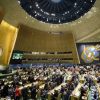
Is the Campaign for a Female UN Chief a Good Try in a Lost Cause?
As negotiations for the upcoming election—or re-election-- of a UN Secretary-General gather momentum, one undeniable fact looms heavily over the final decision: the choice of a UN chief is the intellectual birthright of the five big permanent members (P5) of the Security Council, namely, the US, UK, France, China and Russia.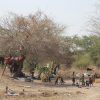
20 Million More People Face Food Crises, As Acute Hunger Rates Rise to a 5-Year High
The COVID-19 pandemic, protracted conflicts and climate change have created an untenable situation for the most vulnerable, with 155 million people across 55 territories suffering from severe food insecurity, sending acute hunger figures to a 5-year high.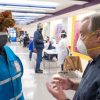
High-Dose Vitamin D Supplements Significantly Reduce ICU Admissions & COVID-19 Deaths
There is considerable evidence that vitamin D reduces the risk and severity of COVID-19 (Mercola 2020 ; Wimalawansa, 2020). More than 50 clinical studies have published confirming that high doses of vitamin D administered early in persons with COVID-19 significantly reduce complications and the need for ICU admissions.
Youth Voice and Action Critical to Reforming the World’s Food Systems
Global youth advocates have been told that they play a crucial role in ensuring that the world produces and consumes food with greater attention to nutrition, food security, equality and sustainability. As the United Nations prepares to host the inaugural Global Food Systems Summit in September, the organisation is hosting a series of dialogues to correct flaws in the way food is grown, processed, packaged and marketed, hoping to tackle growing world hunger, water scarcity and climate change.
UN Women Launches New Programme to Foster Economic Participation in Care Industry
The lockdowns and illnesses brought on by the COVID-19 pandemic have dramatically increased the need to care for children, the elderly and the sick. And in societies where gender inequality and biased norms persist, most of this burden has fallen on women, many of whom have had to leave their regular jobs with no idea of when they can return.
Is Press Freedom Incompatible with Gender Empowerment?
In the contemporary world of journalism, female reporters face a double jeopardy: they are increasingly targeted both as journalists and as women-- particularly in repressive regimes and misogynistic societies.
A Year Later, COVID-19 Continues to Show the Fragility of Food Security
More than a year after the start of the COVID-19 pandemic, food and nutrition security continues to show its fragility.
Online Violence: Weaponization of Deeply Rooted Misogyny, Sexism & Abuse of Power
Every time a woman journalist receives threats of physical and sexual violence, cyber attacks and surveillence, doxxing, public humiliation, damage to her professional & personal credibility, the driving forces behind these intents are deeply rooted misogyny, sexism and abuse of power.« Previous Page — Next Page »


The Week with IPS

NEXT STOP - SDGs
Tracking global progress towards a sustainable world
Tracking global progress towards a sustainable world
