Languages
Friday, October 9, 2026



News and Views from the Global South
Global

The Inter-American Development Bank Invest Talks Growth– but Ignores People Bearing the Cost
In Asunción, Paraguay last month, finance ministers, central bank presidents, and private sector leaders gathered for the Inter-American Development Bank’s (IDB) Annual Meetings to talk about growth.
WHO: Migrants and Refugees Face Rising Health Risks as Global Systems Fall Short
Global human migration is at record-high levels, as the World Health Organization (WHO) estimates that roughly 1 in 8 people—about one billion individuals—are on the move. Many of these migrants and refugees face harsh living conditions and heightened challenges, such as poverty, insecurity, and limited access to basic services. With the number of international migrants having doubled since 1990, new findings from WHO call for expanding health systems to meet the growing scale of needs.
UN80: UN General Assembly Adopts Resolution on Mandate Review
UN Member States made progress toward the UN80 initiative by adopting a resolution that would implement a mandate review, which is set to pave the way to strengthen the process of mandate creation and implementation.
MC14 Exposed US Heavy Hand at the WTO; Developing Countries Need Each Other
The WTO's 14th Ministerial Conference (MC14), which took place from 26 to 30 March 2026 in Cameroon, was reported as a collapse resulting from the stand-off between Brazil and the United States on the extension of the e-commerce moratorium. This is one screen shot of a bigger unfolding story where the US is attempting to enforce its will on the organization, while some are resisting.
The United Nations Needs a Secretary-General of Courage, Not Convenience
The United Nations was not founded to be comfortable; it was founded to be necessary. Created in the aftermath of catastrophe, its purpose was clear: to maintain international peace and security, to uphold international law, to defend human rights and to promote human dignity and development.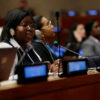
CSW70: Women’s Equality under Siege
On 19 March, the Commission on the Status of Women (CSW) did something unprecedented in its eight-decade history: it held a vote. The Trump administration, having spent two weeks attempting to defer, amend and ultimately block the session’s main outcome document, known as the agreed conclusions, cast the only vote against its adoption. That dissenting vote said a lot, as it came from the world’s most powerful government, backed by financial leverage, bilateral reach and a network of anti-rights states and organisations that are making inroads at many levels.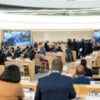
The “Extremely Dangerous and Unpredictable” situation in Middle East and Beyond
More than three weeks after the United States and Israel launched strikes on Iran, the conflict is spreading and intensifying in the region and beyond, with civilians bearing the brunt. Families across the region marked Eid and Nowruz under fire, in fear and uncertainty, and facing further hardship.
War in Iran, Middle East Threatens Global Agrifood Systems
The current conflict in Iran and the Middle East region threatens to disrupt the global energy and agri-food sectors, as the closure of the Strait of Hormuz affects oil and fertilizer exports for farmers during critical harvest seasons.
Torture and Physical Abuse of Children in Gaza Declared War Crimes
The ongoing Israeli-Palestinian conflict, which began October 2023, has claimed the lives of more than 73,600 Palestinians and about 1,195 Israelis. But there are widespread charges accusing Israel of war crimes, genocide, torture and the abuse of Palestinian detainees in Israeli jails.
EXCLUSIVE: Water Laureate Kaveh Madani on Arrest, Exile and Fight for Science
Professor Kaveh Madani of Iran has been named the 2026 Stockholm Water Prize laureate. The award will be formally presented by King Carl XVI Gustaf of Sweden in August during World Water Week in Stockholm.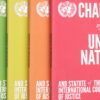
A World Order in Crisis: War, Power, and Resistance
Article 2(4) of the United Nations Charter prohibits member states from using threats or force against the territorial integrity or political independence of any state. Violating international law, the United States and Israel attacked Iran on February 28, 2026. The ostensible reason for this unprovoked aggression was to prevent Iran from developing a nuclear weapon.
As East Africa’s Migratory Fish Vanish, a Food Security Crisis Surfaces
By the time the auction begins at Nangurukuru fish market in Tanzania’s southern Lindi region, the crisis is already visible. Wooden canoes that once returned from the Rufiji River with heavy catches now bring only a fraction of what they used to. Traders scan for the long-whiskered catfish that once defined the market but find none.
What the US Really Wants from MC14 in Yaoundé
As trade ministers gather in Yaoundé, Cameroon, for the WTO’s 14th Ministerial Conference (MC14) on 26–29 March 2026, the preparatory process has produced a dense fog of competing reform proposals, draft ministerial statements, and work plans.
Central Bank Hedging Triggered Gold Fever
In mid-1971, US President Nixon ended the dollar’s gold peg at $35 per ounce, triggering de-dollarisation. The 2025 gold and silver rush followed private speculators trying to profit from central banks hedging against perceived new risks.
Planet Earth’s Increasing Population of 8 Billion
On planet Earth, world population in 2026 is 8.3 billion people, which is four times larger than it was a hundred years ago. Despite this record number of humans living on the planet, world population is expected to continue increasing throughout the 21st century, significantly impacting planetary sustainability.
Gender Equality: A Global Priority or a Global Consensus?
The 70th session of the Commission on the Status of Women (CSW70) (March 9-19), held at the United Nations headquarters, brought together governments, decision makers, civil society, and international organizations to address a central issue: access to justice for women and girls.
World Heating Faster Than Expected, Scientists Sound Alarm in latest UN Report
The global climate system continued its alarming trajectory in 2025, with multiple indicators reaching record or near-record extremes, underscoring the accelerating pace of climate change and its cascading impacts on ecosystems and human societies, according to the latest State of the Global Climate 2025 report released by the World Metereological Organisation (WMO).
TB Risk Should not Depend on Where We Are Born
In many high-income countries, even a small number of tuberculosis (TB) diagnoses can generate headlines and prompt a rapid public health response. Recent situations in U.S. cities such as Seattle and San Francisco illustrate this, where media coverage has focused on the number of children being tested after TB disease was identified in a school.
International Tensions Spark New Nuclear Threat
When German Chancellor Friedrich Merz opened the 62nd Munich Security Conference by declaring that the post-war rules-based order ‘no longer exists’, there was plenty of evidence to back his claim. Israel is committing genocide in Gaza in defiance of international law, Russia is four years into its illegal invasion of Ukraine, the last nuclear arms control treaty between Russia and the USA has just expired and the USA has withdrawn from 66 international bodies and commitments. Since the conference, Israel and the USA have launched another war on Iran, threatening to spark a broader regional conflict. Meanwhile the UN is undergoing a funding crisis, cutting staff and programmes, and civil society organisations that relied on US Agency for International Development funding are facing closure.
Geospatial Innovations Addressing Critical Water Data Gaps in Asia
Across Asia, new initiatives are showing how satellite Earth observation data and AI-powered technologies can turn fragmented water-related data into actionable insights for managers and policymakers in line ministries and local governments.
Where Water Doesn’t Flow, Equality Doesn’t Grow – Challenging Global Patriarchy this World Water Day
The 2026 campaign on World Water Day’s focuses on Water and Gender – ‘where water flows, equality grows’ . While substantial progress has been achieved across a range of gender indicators spanning education, health and public participation, the situation around WASH (water, sanitation and hygiene) is still marked by deep inequalities with women and girls disproportionately affected – and this reflects the persistence of global patriarchy.« Previous Page — Next Page »





The Week with IPS

NEXT STOP - SDGs
Tracking global progress towards a sustainable world
Tracking global progress towards a sustainable world
