Languages
Wednesday, November 18, 2026



News and Views from the Global South
Headlines

EXPLAINER — Maternal Mortality: Why Has Progress In Saving Women’s Lives Stalled?
A new report reveals that from 2000 to 2015, the global maternal mortality ratio (MMR) fell by 33%, and by more than 50% in 58 countries that had the highest rates of women dying during pregnancy or up to 42 days after delivery. But from 2016 to 2020, maternal mortality barely changed. In 2020, roughly 287,000 women globally died from a maternal cause, which is almost 800 maternal deaths daily, and about one every two minutes.
Parliamentarians Ask G7 Hiroshima Summit to Support Human Security and Vulnerable Communities
Parliamentarians from more than 30 countries agreed to send a strong message to the G7 Hiroshima Summit in Japan later this year, focusing on human security and support of vulnerable communities, including women, girls, youth, aging people, migrants, and indigenous people, among others.
Climate Change Threatens Kenya’s Historical Sites in Coastal Region
Along coastal Kenya, historical sites and monuments are threatened due to the impacts of climate change—structures along the Indian Ocean are falling to ruin or collapsing into the ocean because of high tides.
Race to Zero in Asia and Pacific: Our Hopes in the Climate Fight
The latest synthesis report from the Intergovernmental Panel on Climate Change makes for grim reading: Every fraction of a degree of warming comes with escalated threats, from deadly heatwaves to severe hurricanes and droughts, affecting all economies and communities.
The Privilege of Making a Choice
A civilian student named Saber was caught in the crossfire in Khartoum. He had two choices: either flee and lose everything; or die. But within a moment his option to choose was violently denied: he died.
Statement on the G7 Hiroshima Summit, the Ukraine Crisis and “No First Use” of Nuclear Weapons
The Ukraine crisis, which in addition to bringing devastation to the people of that country has had severe impacts on a global scale—even giving rise to the specter of nuclear weapons use—has entered its second year. Against this backdrop and amid urgent calls for its resolution, the G7 Summit of leading industrial nations will be held in Hiroshima, Japan, from May 19 to 21.
A “New” Saudi Arabia? Changes on the Screen and in Reality
The World changes, though prejudices and misconceptions remain. In 1996, political scientist Samuel Huntington published The Clash of Civilizations and the Remaking of World Order, in which he predicted that people’s cultural and religious identities would become the primary source of conflict in a Post–Cold War World. Huntington’s allegations have been contradicted by a number of critics, among them American Palestinian professor Edward Said, who lamented their extreme cultural determinism, which omitted the dynamic interdependency and interaction of cultures. Said’s own Orientalism depicted a generalised “Western view” of Arab cultures as “static and undeveloped”, while European culture was considered to be “developed, rational, flexible, and superior.” Literature and movies have depicted Arabs as exotic men riding camels and horses through the desert, and their women as dangerously seductive objects of male desire. Eventually, the exotic men turned in to being terrorists, and/or depraved oil-rich magnates, while Muslim women were presented as veiled, enigmatic, and oppressed.
Can African Farmers Still Feed the World?
Less than a decade ago, Africa was home to 60-65% of the world’s uncultivated arable land and 10% of renewable freshwater resources, as reported by the African Union in 2016, while concluding that African farmers could feed the world.
New Mosquito Species Could Derail Fight Against Malaria
‘Urban’ Kenya has been alerted because new mosquito species, Anopheles stephensi, threatens to derail decades of effort made in the fight against malaria.
Livestock Producers Seek to Integrate Biogas and Animal Protein Market in Brazil
It is the “best energy,” according to its producers, but biogas from livestock waste still lacks an organized market that would allow it to take off and realize its potential in Brazil, the world's largest meat exporter.
Can a Pledge to End TB Stick This Time Around?
This week, the United Nations will host two days (May 8-9) of preliminary talks to plan a larger conference on tuberculosis (TB) in September. These preliminary talks will be held in New York City, the epicenter of the last significant surge of TB cases in the United States (U.S.) thirty years ago.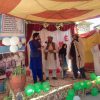
Theatre Used to Dispel Polio Immunisation Myths in Pakistan
Pakistan, one of two polio-endemic countries in the world, has started staging theatrical dramas to promote immunisation in an attempt to encourage parents who refuse to allow their children to be vaccinated.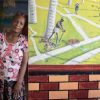
Charles Can Help Undo a Colonial Crime
In 2022, Charles III became king not just of the United Kingdom, but of 14 other states, and Head of the Commonwealth. He now heads a monarchy that is starting to face questions about its role in British imperial atrocities, such as slavery, and, as he has said, concerning which it is time to "acknowledge the wrongs that have shaped our past."
Uzbekistan: A President for Life?
Where will you be in 2040? For Uzbekistan’s President Shavkat Mirziyoyev, the answer is: in the Kuksaroy Presidential Palace. That’s the chief consequence of the referendum held in the Central Asian country on 30 April. With dissent tightly controlled in conditions of closed civic space, there was no prospect of genuine debate, a campaign against, or a no vote.
Reshaping Multilateralism in Times of Crises
The world is in permanent crisis mode. In addition to the consequences of the COVID-19 pandemic and the triple planetary crisis of climate change, biodiversity loss and pollution, the war in Ukraine and other violent conflicts, a worldwide cost of living crisis and an intensified debt crisis in more and more countries of the global South are affecting large parts of humanity.
Women’s Cooperatives Work to Sustain the Social Fabric in Argentina
Nearby is an agroecological garden and a plant nursery, further on there are pens for raising pigs and chickens, and close by, in an old one-story house with a tiled roof, twelve women sew pants and blouses. All of this is happening in a portion of a public park near Buenos Aires, where popular cooperatives are fighting the impact of Argentina's long-drawn-out socioeconomic crisis.
Of Africa and The Magic Formula of The Italian Taxi Driver
Some days ago in Rome, the Italian taxi driver switched on the radio during a longish ride through the usual traffic jam. Music, gossip, and the hourly news bulletin. All of a sudden, the man strongly hit the steering wheel. “They are stupid, those bastards…,” he shouted.
In Sudanese Conflict, Either You Lose Everything, or You Die
On the first day of the Muslim holiday of Eid al-Fitr, Saber Nasr, a young Egyptian man of 20, developed a fever.
The Workweek Is Still Long in Latin America
The reduction in the workweek recently approved by the Chilean Congress forms part of a trend of working fewer hours and days that is spreading in today’s modern economies, but also highlights how far behind other countries in Latin America are in this regard.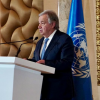
An Afghan Appeal to UN Leadership
We are a group of Afghans living in the country and working across sectors including peace, civil society, humanitarian aid, human rights, media, and the private sector, and are working to promote dialogue and seek long-term solutions for our country.
A Letter from Kabul
I am writing from Kabul where I have been living for this past 11 months. I consider myself a friend of Afghanistan, a country full of contrasts that I know since 1986; I have lived here for a little over 12 years.« Previous Page — Next Page »


