Languages
Tuesday, November 24, 2026



News and Views from the Global South
Headlines

Powerplay in Paradise: Sino-Indian Tussle in the Maldives
The Maldives is a picturesque country of merely 515,000 people located just beyond the southern tip of the South Asian land mass, in an idyllic Indian ocean setting. The nation is spread across 26 pretty atolls, comprising about 1192 islets, not all still inhabited. These are lapped by crystal blue waters containing flora and fauna of remarkable magnificence. Its scenic bounties attract droves of tourists who frolic in the sands, sun and the sea in salubrious languor. It has a thriving fishing, garment and tourism industry which have recently helped it graduate out of the United Nations list of Least Developed Countries (LDCs).It is so tiny that used to be said that the catch of a single large fish any day could cause a remarkable jump in its Gross National Product (GDP) numbers. It is not without reason that the archipelago has often been compared to a paradise.
Neo Colonialism vs. Sovereignty in Sri Lanka
On August 5, 2020, a new government was elected in Sri Lanka, bringing down the previous regime associated with the Central Bank bond scam, the Easter Sunday bomb attacks and controversial international agreements.
Fridays for Future: How the Young Climate Movement Has Grown Since Greta Thunberg’s Lone Protest
At the end of her first week on strike in August 2018, Greta Thunberg handed out flyers that said: “You grownups don’t give a shit about my future.” Her appearance at the 2019 UN Climate Summit capped a year in the spotlight for the teenage climate activist. Delegates at the summit gave her a standing ovation, but the sound of their applause couldn’t mask Greta Thunberg’s deep frustration.
Racism at the UN: Practice What You Preach
When two recent staff surveys, one in Geneva and the other in New York, revealed widespread racism at the United Nations, it triggered the obvious question: why shouldn’t the UN Human Rights Council (HRC) probe these charges?
It is Time for a Democratic Global Revolution
The people of the world need to seize the moment and bring about a democratic global revolution. It is time for a global parliament and real representation. More than 21 million people got infected with the novel coronavirus and over 770,000 have died. Never before did the world witness similar collective lockdowns of social and economic activity that had to be enforced to contain the pandemic.
Madagascar – Jails Hold more Pre-trial Prisoners than Convicted Criminals
The recent killing of 22 prisoners in Madagascar during a prison escape on Sunday, Aug. 23 has brought the extraordinary situation of the country’s prisons under a spotlight. Human rights watchdog Amnesty International has condemned the killings, criticising the current judicial system that has led to Madagascar’s prisons holding more people awaiting trial than convicted criminals.
Looking Back to Look Forward: What Does the Next Normal Look Like?
In the last 100 years there have been seven crises that have had a truly global impact. Two global wars (1914-18 & 1939-1945); two global health pandemics, the Spanish Flu (1918) and HIV/AIDS (1980s onwards); one major political crisis (1989 – the end of the cold war); and two financial crises (1929 and 2008).
Semiarid Regions of Latin America Cooperate to Adapt to Climate
After centuries of poverty, marginalisation from national development policies and a lack of support for positive local practices and projects, the semiarid regions of Latin America are preparing to forge their own agricultural paths by sharing knowledge, in a new and unprecedented initiative.
Amazon ‘Women Warriors’ Show Gender Equality, Forest Conservation Go Hand in Hand
On an early December morning last year in the state of Maranhão, Brazil, half a dozen members of the Indigenous Guajajara people packed their bags with food, maps and drone equipment to get ready for a patrol. They said goodbye to their children, uncertain when, or whether, they would see them again. Then, they hoisted their bags over their shoulders and set out to patrol a section of the 173,000 hectares (428,000 acres) of the primary rainforest they call home.
Firing Up India’s Clean Cooking Fuel Plan
Usage of liquefied petroleum gas (LPG) in rural Indian households has surged, partly due to India’s flagship clean cooking programme, but beneficiaries of the scheme consume less LPG than general customers per year, reports a new study.
What Will It Take to Prioritise Climate Change?
India ranks third in terms of absolute levels of carbon emissions after China and the United States. In a business as usual scenario, by 2030, emission levels are predicted to reach more than 4.4 gigatonnes of carbon dioxide (GTCO2) equivalent of greenhouse gas—up from 3 GTCO2 today—overtaking the United States as the second-largest emitting country.
Standing Up to Myths and Misinformation in Nigeria During the Pandemic
‘An apple a day keeps the doctor away’ is a common and seemingly harmless saying. But what happens when commonly eaten foods like pepper, garlic and ginger are wrongfully said to prevent COVID-19? What can we do to fight harmful misinformation?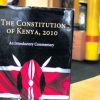
Katiba at 10: A Landmark Constitution and a Blueprint for Deepening Democracy
On 27 August 2020, we mark the tenth anniversary of the New Constitution of Kenya – a landmark social contract inspired by citizens’ desire for a country characterised by participatory governance, inclusive development, human rights and the rule of law.
The Recent Mauritius Oil Spill in Policy and Historical Context
On July 25 2020 the Japanese bulk carrier MV Wakashio with 3,894 tonnes of fuel aboard ran aground off the cost of Mauritius. By 9 August over 1000 tonnes of oil had seeped into the pristine waters off the coast of this beautiful island haven. This spill was so large that it was even visible from space https://www.livescience.com/mauritius-oil-spill-from-space.html
Covid is a Great Unequaliser, But the Crisis Could Enable us to Build a More Equal Future
Any of the first names that the media reported as having Covid were those of the rich and powerful, from movie stars to political leaders. Be ye ever so high, the virus is above thee – or so it seemed.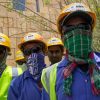
Defying Predictions, Nepal’s Remittances Still High
Despite dire predictions about a drastic drop in remittances that Nepal gets from its workers abroad due to the Covid-19 induced economic downturn, money transfers have hit Rs875 billion which is only 0.5% less than the preceding year.
Approval of a Coronavirus Vaccine Would Be Just the Beginning – Huge Production Challenges Could Cause Long Delays
The race for a SARS-CoV-2 vaccine is well underway. It’s tempting to assume that once the first vaccine is approved for human use, all the problems of this pandemic will be immediately solved. Unfortunately, that is not exactly the case.
Covid-19 Pandemic Another Threat to Indigenous Communities
The voices of indigenous people worldwide are being silenced and their lives made invisible. Stewards of the earth, they are left at the fringes of public discourse in countries around the globe. Indigenous people are not “extinct”, they exist, and they are building innovative networks and solutions, that could be the key to many of our world’s problems.
World Bank’s ‘Mobilizing Finance for Development’ Not Financing Development
The World Bank leadership must urgently abandon its ‘Maximizing Finance for Development’ (MFD) hoax. Instead, it should resume its traditional multilateral development bank role of mobilizing funds at minimal cost to finance developing countries.
Mayan Train Threatens to Alter the Environment and Communities in Mexico
Mayan anthropologist Ezer May fears that the tourism development and real estate construction boom that will be unleashed by the Mayan Train, the main infrastructure project of Mexican President Andrés Manuel López Obrador, will disrupt his community.
A Not-To-Do List for Guyana’s New Administration When It Comes to Oil
Just over five years ago, a major oil discovery occurred on the northeastern coast of South America. There have been a series of additional discoveries ever since. But this time it was not Venezuela. It was Guyana.« Previous Page — Next Page »


