Languages
Friday, November 27, 2026



News and Views from the Global South
Headlines
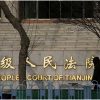
How Many Journalists are Jailed in China? Censorship Means We Don’t Know
Reporting on China's harassment of journalists has never been easy. Lately it's been getting much harder, which suggests that conditions for the press could be worsening.
Myanmar and China’s Bride Trafficking Problem
Women and girls from Myanmar are increasingly being trafficked as “brides” to China, a human rights group found.
The System, Youth and Democracy
If we ever needed proof of how the political system has become self-referential and unable to update itself, the latest student march in more than 1,000 towns is a very good example.
International Trade Unions Condemn Recognition of Guaidó
More than 60 countries have recognized Juan Guaidó as legitimate interim president. But among international trade unions, support for Venezuelan self-determination is resolute.
Call for Returnee Migrants to Join Forces to Fight Irregular Migration
Elhadj Mohamed Diallo wants to make sure that others won’t experience what he has lived through. The former irregular migrant who has returned home to Guinea from a jail in North Africa is calling on his fellow returnee migrants to establish associations in their respective countries, which will serve as powerful platforms to combat irregular migration across the continent.
9 of the 10 Worst Global Risks are Linked to Water
Every year, the World Economic Forum asks some 1,000 decision-makers from the public sector, business, academia and civil society across the globe to assess the risks facing the world over the decade to come.
Did a Backlash Against Trump Trigger Historic Highs for US Women in Politics?
The dramatic increase in women legislators voted into office last November and the historic high of women candidates for the 2020 presidential elections have visibly changed the male-dominated political landscape in the US.
How One Kenyan Teacher is Lifting His Students Out of Poverty With Science
Keriko Mixed Day Secondary School in Nakuru County, situated in a remote, semi-arid part of Kenya’s Rift Valley, could pass for an ordinary secondary school in any part of Africa. But ordinary it is not.
Dismantling Patriarchy Must Begin at Home: A Reflection on Gender Equality
This week, I joined thousands of activists, campaigners, thought-leaders, and change-makers in New York to advocate for women's rights and promote gender equality during the 63rd session of the UN's Commission on the Status of Women (CSW).
Depression Is More than a Stigma
Depression is often distinguished from other non-communicable diseases or NCDs (e.g., cancer, diabetes, cardio-vascular diseases, hypertension) because of the stigma attached to it. Among other consequences, those suffering from depression are often denied access to medical care. Indeed, the latter is an outcome of interaction between supply of and demand for medical care. On the provider side, stigmatizing attitudes by service providers are identified as a barrier to access. On the demand side, stigma and low mental health literacy by community members are just as emphatically reported as barriers to accessing care.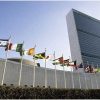
UN’s Plan to Offshore Back-Office Jobs is Probably a Waste of Money
A $64 million plan to move 750 back office jobs from the UN’s main duty stations to four new centralized service centres in Budapest, Montreal, Nairobi and Shenzhen, could end up being a waste of money.
VIDEO: World Autism Awareness Day 2019 – Assistive Technologies, Active Participation
 Awareness of Austism Spectrum Disorder (ASD) has continued to grow worldwide, in recent years. But the number of diagnoses have continued to increase unabated.

VIDEO: Water for All – World Water Day 2019
Water is a precondition for human existence, and for the sustainability of our planet. It is entwined with almost everything human, from climate change and global economy to gender issues and human rights. 
Climate Change Also Affects Mental Health in Mexico
Minerva Montes lost her home on Holbox Island in 2005 when Hurricane Wilma hit the Yucatan Peninsula in southeastern Mexico. Rebuilding her home was quicker and easier than overcoming the psychological aftermath of the catastrophe.
Belt and Road Initiative vs Washington Consensus
With the Washington Consensus from the 1980s being challenged, President Donald Trump withdrawing the United States from the Trans-Pacific Partnership (TPP), and China pursuing its Belt and Road Initiative (BRI), most notably with its own initiatives such as the multilateral Asian Infrastructure Investment Bank (AIIB), the political and economic landscape in East Asia continues to evolve. Jomo Kwame Sundaram was interviewed about likely implications for developing countries in the region and beyond.
Guinea’s Returnee Migrants Harness the Strength of Unity
Elhadj Mohamed Diallo was a prisoner in Libya between October and November 2017, but he was not helpless. Far from his home in Guinea he understood the power of an organised union.
Closing the Gender Gap: The Economic Benefits of Bringing more Women into the Labour Force
As girls, we were raised with the belief that we could accomplish anything, and that no barrier was insurmountable. Yet, for so many women, the reality doesn’t quite meet their aspirations. Things weren’t exactly equal in the relatively conservative middle-class society in India where we both grew up.
Climate Change: a Threat to Agriculture & UN’s Goal to Eradicate Hunger
The United Nations has vowed to eradicate extreme hunger and malnutrition on a self-imposed deadline of 2030. But it is facing a harsh realty where human-induced climate change – including flash floods, droughts, heatwaves, typhoons and landslides-- is increasingly threatening agriculture, which also provides livelihoods for over 40 per cent of the global population.
Fighting the World’s Largest Criminal Industry: Modern Slavery
Modern slavery and human trafficking is one of the fastest growing criminal industries and one of the biggest human rights crises today, United Nations and government officials said.
Q&A: Caribbean Losing Momentum on Climate Change and Concerted Action is Needed
In 2015, the Caribbean was “the region that could” on the climate change scene. Countries rallied under the ‘1.5 to Stay Alive’ banner, in the face of an existential threat. The now former Sustainable Development Minister of Saint Lucia Dr. James Fletcher emerged as a climate change champion at the time. But now, three years on, the scientist is giving regional climate action a C- in an assessment.
It’s Simple, but Requires Determination
I am drafting this on International Women’s Day - March 8 - with an eye towards World Water Day on March 22. On International Women’s Day we celebrate progress in gender equality. At the same time, we recognize how much remains to be done: how many women remain excluded from decision-making across many professions. Changing this is urgent. Water – clean and accessible – is getting scarcer at an alarming rate. While working to change this, we cannot afford to exclude women.« Previous Page — Next Page »


