Languages
Friday, November 27, 2026



News and Views from the Global South
Health
POPULATION-INDIA: Traditional Midwives Still Vital for Births
Although she lives within a stone's throw of some of the finest medical facilities in the world, Sumitra preferred to deliver her baby boy, now six months old, in the familiar surroundings of her own modest home at Okhla, an industrial suburb in the Indian capital.HEALTH-AUSTRALIA: The Phases of Polio – Past, Present and Future
As developing countries move closer to polio eradication, the developed world is battling with ageing polio survivors experiencing post polio syndrome (PPS).HEALTH-GABON: Not What the Doctor Ordered
Street vendors that ply their trade in African cities are routinely the target of criticism. Passersby grouse at being made to step over their wares, displayed on pavements. Local governments grumble that they’re nothing more than a public nuisance.RIGHTS-SIERRA LEONE: No End to Rape
During Sierra Leone's brutal civil conflict of the 1990s, rape was systematically used as a weapon of war. The conclusion of the conflict in January 2002 did not spell an end to this crime, however. In fact, some allege that rapes are becoming more frequent in Sierra Leone.HEALTH-BURKINA FASO: More ARVs, Please
The good news about AIDS in Burkina Faso is that HIV prevalence in the West African country is on the decline. The bad news is that people who have already contracted the virus appear to be having difficulties in getting drugs to treat themselves.IRAQ: U.S. Military Obstructing Medical Care
The U.S. military has been preventing delivery of medical care in several instances, medical staff say.WOMEN: In Bed with Bush for Four More Years
Four more years of President George W. Bush in the White House will pose a major obstacle for efforts to promote sexual and reproductive health in Latin America, according to Monty Eustace, the president of the International Planned Parenthood Federation/Western Hemisphere Region (IPPF/WHR).INDIA: Warn Consumers of Pesticides, Court Orders Coke and Pepsi
Coke and Pepsi manufacturers may brag that their colas look and taste the same around the world. But that's not the case in India.DEVELOPMENT: After Mines Conference, It’s Business as Usual at Lopiding
Rough bits of plastic, wood and metal become - instruments of new life" in Edward Wafula's hands.HEALTH-ZIMBABWE: Risky Sex and the Law – Incompatible Bedfellows?
For teenagers in the eastern Zimbabwean town of Mutare, a popular disc jockey who goes by the name of Kaiboni has long epitomized the glamorous life. But now, his future is anything but enviable.IRAQ: Healthcare Given A ‘New Look’
The Baghdad Medical City has begun to look nice in its new coat of paint.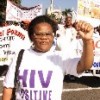
HEALTH-SOUTHERN AFRICA: AIDS Initiative Focuses on Women
"HIV is just a virus...If we change our attitudes, HIV will die. It will have no space and capacity to spread," says Musa Njoko, a young South African woman who has been living with the virus for the past decade.THAILAND: King’s Speech a Boost to Anti-Smoking Crusaders
Thailand's anti-smoking lobby was hardly prepared for the surprise that awaited them on Sunday courtesy of the most respected voice in the land, King Bhumipol Adulyadej.HEALTH: Healing the Invisible Wounds of Violence
One billion people in the world today are psychologically scarred by violence and armed conflicts, a problem that brought together health ministers from around the planet in the search for ways to help heal these invisible wounds.EQUATORIAL GUINEA: A Classroom for the Mentally Disabled
The only classroom for the mentally disabled in the tiny West African nation of Equatorial Guinea is run by two non-governmental organisations, because for the government, the mentally handicapped do not exist, an activist told IPS in Spain.INDIA: Bhopal Nightmare Lingers On With Few Lessons Learnt
Twenty years after the world's worst industrial disaster at a pesticides plant in the central Indian city of Bhopal, non-governmental organisations (NGOs) are in agreement that tragedies of such magnitude teach no lessons in a world driven by corporate profit.DISABLED PERSONS DAY-JAPAN: Fight to Get Thumbs Up for Down Syndrome
Kyoko Mita, 52, has never recovered from the shock she suffered when her newborn son tested positive for Down syndrome 23 years ago.WORLD AIDS DAY: Bank, IMF Blamed for Health Spending Cuts
Watchdog development groups accused the World Bank and the International Monetary Fund (IMF) Wednesday of doing too little to help the global battle against HIV/AIDS, but the two institutions responded that they are at the forefront of the struggle.RIGHTS: Fight for Justice in Bhopal Enters Third Decade
Twenty years after the disastrous leak of tonnes of poisonous gas at the Union Carbide plant in Bhopal, India, Dow Chemical, which bought Union Carbide two years ago, is coming under growing pressure to clean up the still highly toxic site and reimburse affected families for their medical and other costs.HEALTH: Vioxx Scandal Raises Global Doubts on U.S. Drug Safety
The scandal over a painkiller implicated in thousands of heart attacks is gaining international scope, as lawsuits against the drug's maker spread to other countries and the credibility of the industry and its Washington regulators nears an all-time low.WORLD AIDS DAY-VENEZUELA: Side Effects of Generic Drug Controversy
AIDS activists in Venezuela are keeping a close eye on the controversy that has emerged between the World Health Organisation (WHO) and the Indian pharmaceutical companies that produce the generic drugs used to treat roughly 12,000 Venezuelan AIDS patients.« Previous Page — Next Page »


 Bangladesh: Sarid, born one month early, receives specialized newborn care and grows stronger every day. Credit: UNICEF/UNI944397/Mojumder
Since the onset of the 2000s, global life expectancy has seen an overall rise, attributed to significant technological and scientific innovations in healthcare. Due to an increased understanding of different conditions as well as a rise in cooperation among healthcare experts around the world, there have been major strides made in ensuring that as few people die from chronic illnesses as possible. Despite the belief that healthcare is a fundamental human right, people from low- or middle-class backgrounds, marginalized groups, and underdeveloped countries have far more limited access to basic healthcare services.
The COVID-19 pandemic showed how marginalized communities are disproportionately affected by health crises, proving that we have much work to do in ensuring that no one dies of terminal conditions. While the global response to the coronavirus saw significant strides in immunization and vaccine development, the global outbreak of mpox in 2022 and its upsurge in parts of Africa in 2024 must remind us to remain vigilant.
Other major disease outbreaks in recent years have been linked to the destruction of infrastructure during warfare. Notably, in 2024, the Gaza Strip witnessed a return of the poliovirus since its eradication in the region 25 years ago. Israel’s blockade on Gaza has resulted in the collapse of the region’s sewage plants and desalination plants, and also destroyed healthcare capacities. The UN stated that this lack of clean water and sanitation would lead to an outbreak of cholera and other deadly infectious diseases. The 2026 OCHA Humanitarian Situation Report confirmed that the over two years of conflict in Gaza has produced a catastrophic health emergency, with millions remaining dependent on relief aid amid tight restrictions and no functioning public health system.
IPS is committed to providing full and comprehensive coverage on healthcare challenges around the world. IPS seeks to address the multifaceted causes of such challenges, including unprecedented pandemics, conflict-driven disease outbreaks, as well as socioeconomic barriers to equal healthcare access. IPS is also dedicated to reporting on innovations in the healthcare industry.

The Week with IPS

NEXT STOP - SDGs
Tracking global progress towards a sustainable world
