
Monday, October 5, 2026



News and Views from the Global South
Indigenous Rights

Why Incarceration further Disadvantages Australia’s Indigenous
Keenan Mundine grew up in the Aboriginal community social housing called The Block, infamous for poor living conditions, alcohol and drug use, and violence, in Sydney’s Redfern suburb. At the age of about seven, soon after losing his parents to drugs and suicide, he was separated from his siblings and placed in kinship care.
Learning From Indigenous Peoples: My Morocco Diary
Once a year, on 9 August, the International Day of the World’s Indigenous Peoples is commemorated, celebrating their unique culture and knowledge. This is done mostly from a distance, from our homes in (nominally) developed countries. But are we as developed as we pretend to be? On this question, I reflected for a while, still remembering a special and personal experience of having spent several days with an indigenous Berber family in Morocco.
Mining giant Rio Tinto Face Environmental, Human Rights Complaint in Papua New Guinea
Local communities in the vicinity of the abandoned Panguna copper mine, have taken decisive action to hold the global mining multinational, Rio Tinto, accountable for alleged environmental and human rights violations during the mine’s operations between 1972 and 1989.
Belo Monte Dam: Electricity or Life in Brazil’s Amazon Rainforest
"We are no longer familiar with the Xingú River," whose waters govern "our way of life, our income, our food and our navigation," lamented Bel Juruna, a young indigenous leader from Brazil´s Amazon rainforest.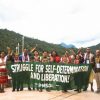
Reclaim Your Rights: Defend Indigenous People’s Lands
Rights are earned through hard-fought struggles. And for Indigenous Peoples (IP), its fulfillment comes from the collective and continuous defense of ancestral land and territory, and assertion of their ways of life and the right to self-determination.
Q&A: Mro Indigenous Community Plea for Halt of Construction of 5-Star Hotel
The construction of a five-star hotel in the Chittagong Hill Tracts, Bangladesh, could lead to the forced eviction of the Mro indigenous community from their ancestral lands and destroy “the social, economic, traditional and cultural fabric of the community”, warns Amnesty International.But local activist Reng Young Mro told IPS that the international community must rally behind the Mro indigenous community to halt the construction.

Could the Finance Sector Hold the Key to Ending Deforestation?
At the beginning of 2020, there were hopes that this would be a ’super year for nature’. It has not turned out that way. Tropical forests, so crucial for biodiversity, the climate and the indigenous communities who live in them, have continued to be destroyed at alarming rates. In fact, despite the shutdown of large parts of the global economy, rates of deforestation globally have increased since last year.
African Languages Matter: Is There Still Time to Prevent Cultural Genocide?
As a 10 year-old newly arrived in Lagos from England, I recall listening intently to how the Yoruba language - my father's language - was spoken. I would constantly repeat in my head or verbally repeat what I thought I had heard. I was not always successful. Many times, what would come out of my mouth would throw my friends into fits of laughter.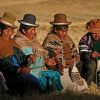
Global Summit of Development Banks Fails to Learn from Destructive Past
This week, 450 public development banks from around the world met for the Finance in Common Summit at the Paris Peace Forum. They gathered to discuss how they can direct their combined investments of over USD 2 trillion - 10% of total investments in the world - “to support the transformation or the global economy” and “build new forms of prosperity that take care of people and the planet.”
Indigenous Peoples & Local Communities Offer Best Hope for Our Planetary Emergency
Indigenous peoples and local communities offer the best hope for solutions to our planetary emergency. These solutions are grounded in traditional, time-tested practices and knowledge.
Can Colonialism be Reversed? The UN’s Declaration on the Rights of Indigenous Peoples Provides Some Answers
Can a state built upon the “taking of another people’s lands, lives and power” ever really be just? Colonialism can’t be reversed, so at a simple level the answer is no.
Covid-19 Pandemic Another Threat to Indigenous Communities
The voices of indigenous people worldwide are being silenced and their lives made invisible. Stewards of the earth, they are left at the fringes of public discourse in countries around the globe. Indigenous people are not “extinct”, they exist, and they are building innovative networks and solutions, that could be the key to many of our world’s problems.
Mayan Train Threatens to Alter the Environment and Communities in Mexico
Mayan anthropologist Ezer May fears that the tourism development and real estate construction boom that will be unleashed by the Mayan Train, the main infrastructure project of Mexican President Andrés Manuel López Obrador, will disrupt his community.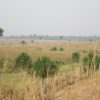
Indigenous Best Amazon Stewards, but Only When Property Rights Assured: Study
“The xapiri [shamanic spirits] have defended the forest since it first came into being. Our ancestors have never devastated it because they kept the spirits by their side,” declares Davi Kopenawa Yanomami, who belongs to the 27,000-strong Yanomami people living in the very north of Brazil.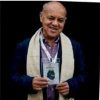
International Day of the World’s Indigenous Peoples 2020 – Statement of the Indigenous Partnership (TIP)/NESFAS
As we commemorate the International Day of the World’s Indigenous Peoples, let us not forget that supporting Indigenous Peoples is not only a social good; it is also a sound development policy. Defending the lands, languages and cultural practices of indigenous peoples and tackling the racism and injustices against them will lessen the outbreaks of future pandemics and manage climate change.
28 Organizations Promoting Indigenous Food Sovereignty
These 28 organizations are preserving Indigenous food systems and promoting Indigenous food sovereignty through the rematriation of Indigenous land, seeds, food and histories.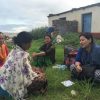
Include Indigenous People in COVID-19 Response
In Nepal the COVID-19 crisis has been especially hard on indigenous peoples. We had to learn a new vocabulary and use words like quarantine, self-isolation, hand sanitizers and social distancing.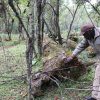
How Kenya’s Indigenous Ogiek are Using Modern Technology to Validate their Land Rights
The Ogiek community, indigenous peoples from Kenya’s Chepkitale National Reserve, are in the process of implementing a modern tool to inform and guide the conservation and management of the natural forest. The community has inhabited this area for many generations, long before Kenya was a republic. Through this process, they hope to get the government to formally recognise their customary tenure in line with the Community Land Act.
Beware the ‘Hunger’ to Access Indigenous Peoples’ Land and Resources for Post-COVID-19 Recovery
When governments and states begin their recovery journey from the economic downturn caused by the coronavirus pandemic, there might be a heightened threat to indigenous peoples, their land and resources. “The fear is [that] the economic recovery is based on access to land and natural resources,” Lola García-Alix, senior advisor on Global Governance at the International Work Group for Indigenous Affairs (IWGIA), told IPS.A look into the lives of Cambodia’s gentle giants
For generations, elephants have been inextricably tied to the lands of Mondulkiri in Cambodia. The people who call this place their home -- the indigenous Bunong community -- share a unique bond with the gentle giants of the land.
‘I Can’t Breathe!’ Australia Must Look in the Mirror to See our Own Deaths in Custody
I can’t breathe, please! Let me up, please! I can’t breathe! I can’t breathe! These words are not the words of George Floyd or Eric Garner. They weren’t uttered on the streets of Minneapolis or New York. These are the final words of a 26-year-old Dunghutti man who died in a prison in south-eastern Sydney.« Previous Page — Next Page »


The planet's roughly 350 million indigenous peoples took notable steps on the international stage in the last decade. They got the world's governments to agree to create a body to represent them at the United Nations, the Permanent Forum on Indigenous Issues, and to appoint a special rapporteur responsible for their human rights. In 2007 a Universal Declaration on the Rights of Indigenous Peoples was approved by the UN. Yet the living conditions of most "tribal", "aboriginal", "native" or "first" peoples remain precarious. IPS, with its network of contributors at the UN and linked to indigenous communities worldwide, is committed to tracking the world community's efforts to do justice to the rights and aspirations of these peoples, with a special current focus on Latin America's 40 million rural indigenous peoples.

The Week with IPS

Tracking global progress towards a sustainable world
