
Friday, November 13, 2026



News and Views from the Global South
Indigenous Rights
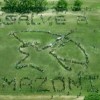
WORLD SOCIAL FORUM: “Wake Up, World!” – SOS from the Amazon
A human banner made up of more than 1,000 people, seen and photographed from the air, sent the message "SOS Amazon" to the world, in the first action taken by indigenous people hours before the opening in northern Brazil on Tuesday of the 2009 World Social Forum (WSF).
Q&A: Bolivia Limits Size of Estates in Land Reform Struggle
Voters in Bolivia, one of the countries with the highest concentration of land in the world, decided in Sunday’s referendum to limit the size of large landed estates, or "latifundia", to 5,000 hectares.
RIGHTS-MALAYSIA: Malaysian, Thai Officials Trafficking Burmese Migrants?
A scandalous trade in Burmese migrant labour involving Malaysian and Thai officials and international human traffickers is now coming to light.ECUADOR: Indigenous Groups Protest Government Policies
Since the start of his term in January 2007, Ecuadorean President Rafael Correa has had touchy relations with the indigenous peoples' movement, in spite of the fact that it backed his election. But passage of a mining law has deepened the rift between them and triggered protests.WORLD SOCIAL FORUM: Crisis as Opportunity for “Another World”
A World Social Forum (WSF) revitalised by a global crisis that has awakened new interest in the proposition that "another world is possible" - now perceived as either less utopian or more urgently needed - will take place from Jan. 27 to Feb. 1 in Belém, in northern Brazil.THAILAND: Burmese Refugees Set Adrift, Hundreds Feared Dead
Hundreds of Rohingya (Burmese Muslim) refugees are feared dead after being pushed back into the sea by Thai authorities, according to human rights activists based in Thailand.BOLIVIA: Christian Groups Stir Up Debate over New Constitution
"Did you know they want to throw God out of Bolivia?" asks a television spot frequently broadcast by opponents of leftwing Bolivian President Evo Morales ahead of the Jan. 25 referendum on constitutional reform.BOLIVIA: Mothers Teaching Mothers to Combat Malnutrition
One of every two children under the age of five in the southwestern Bolivian highlands municipality of Betanzos suffers the effects of chronic malnutrition.MEXICO: Films on Indigenous People – But Who Will See Them?
Half a century of films about indigenous peoples have been removed from forgotten corners of store rooms, recorded on compact discs and launched on the Mexican market, in order to bring to light views and realities that are seldom shown on commercial television and in movies.
PERU: A Mining Town’s Woes
A four-hour drive from the Peruvian capital, the town of Morococha ("coloured lake" in the Quechua language) is a living example of what the mining industry has brought to many poor rural villages and towns in this country.
PERU: Open-Pit Mine Continues to Swallow City
An immense open-pit mine located 4380 metres above sea level is swallowing up the centre of the city of Cerro de Pasco in Peru’s central highlands, while the damages, in the form of toxic waste, spread to nearby villages.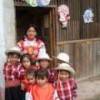
PERU: Coffee Growers Cultivate Education
"Without coffee there is no future," say coffee growers in the Selva Alta, in the central Peruvian region of Junín, where they are setting up schools near their farms so that their children don't abandon their studies.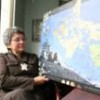
CLIMATE CHANGE: Arctic Peoples Claim Their Right to Cold Temperatures
"Terrifying" is the word that best describes the situation of a hunter who is lost on shifting ice, or of the homeowner whose house splits in two when its foundation sinks, says Canadian indigenous leader Mary Simon when asked about the effects of global warming on the Inuit people.CLIMATE CHANGE: African Proposal Yet to Gain Foothold
Africa's bid to expand carbon-trading mechanisms and create rewards for sustainable farming practices on the continent made little headway at the recently concluded climate change conference in Poznań, Poland.PARAGUAY: Indigenous Minister – First Casualty of Lugo Cabinet
The first indigenous person to hold a ministerial post in Paraguay became the first casualty of the cabinet of President Fernando Lugo.RIGHTS-PHILIPPINES: Stalled Talks With Muslim Rebels Hard on Civilians
With the government insisting that the Moro Islamic Liberation Front (MILF) in conflict-ridden Mindanao disarm prior to resumption of peace talks - and the rebels refusing to do so - prospects for quick resettlement of some 300,000 internally displaced people (IDP) seem bleak.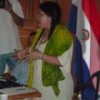
Q&A: Paraguayan Indigenous Minister Calls for Patience
Margarita Mbyvângi, the first indigenous woman to hold a ministerial post in Paraguay, is facing charges of ineffectiveness from among her own ranks. But she is asking for time to achieve her goal: that no one will suffer the slavery and rootlessness that she experienced for nearly 20 years.
BOLIVIA: Aymara Traders Mix Tradition and Modern-Day Savvy
Quietly and inconspicuously, Aymara indigenous traders are combining pre-Columbian traditions and modern-day survival skills to find unique ways of creating wealth and sustenance beyond the confines of textbook economic theory.Q&A: Killing of Native Leader’s Husband “Was a Planned Operation”
At 5.30 AM the fog was just starting to lift in the freezing cold mountains of eastern Cauca, in southwest Colombia, when indigenous leader Darío Tote came across the red pickup truck riddled with bullet holes. At the wheel was Edwin Legarda, who was critically wounded.
COLOMBIA: "There Was No Checkpoint" Where Army Shooting Took Place
Colombian soldiers killed the husband of a leading indigenous activist Tuesday when they opened fire on the pickup truck he was driving.ARGENTINA: Bringing Films and Filmmaking to Indigenous Communities
With the assistance of experts from Bolivia, indigenous communities in the northeastern Argentine province of Chaco are learning how to make films, as a means of helping the rest of the world understand their way of life and the problems they face.« Previous Page — Next Page »


The planet's roughly 350 million indigenous peoples took notable steps on the international stage in the last decade. They got the world's governments to agree to create a body to represent them at the United Nations, the Permanent Forum on Indigenous Issues, and to appoint a special rapporteur responsible for their human rights. In 2007 a Universal Declaration on the Rights of Indigenous Peoples was approved by the UN. Yet the living conditions of most "tribal", "aboriginal", "native" or "first" peoples remain precarious. IPS, with its network of contributors at the UN and linked to indigenous communities worldwide, is committed to tracking the world community's efforts to do justice to the rights and aspirations of these peoples, with a special current focus on Latin America's 40 million rural indigenous peoples.

The Week with IPS

Tracking global progress towards a sustainable world
