Languages
Tuesday, September 15, 2026



News and Views from the Global South
Latin America & the Caribbean

Chile, an Oasis for Haitians that Has Begun to Run Dry
A wave of Haitian migrants has arrived in Chile in recent years, changing the face of low-income neighbourhoods. But this oasis has begun to dry up, thanks to measures adopted by decree by the new government against the first massive immigration of people of African descent in this South American country.
Child Slavery Refuses to Disappear in Latin America
Child labour has been substantially reduced in Latin America, but 5.7 million children below the legal minimum age are still working and a large proportion of them work in precarious, high-risk conditions or are unpaid, which constitute new forms of slave labour.
Protests Fuel Harassment Faced by Media in Nicaragua
Assaults on journalists, persecution of press workers' unions, direct censorship and smear campaigns are a high cost that freedom of expression has paid in Nicaragua since demonstrations against the government of Daniel Ortega began in April.
Optimal Use of Water Works Miracles in Brazil’s Semi-Arid Region
Cattle ranching has been severely affected by drought in Brazi's Northeast region, but it has not only survived but has made a comeback in the Jacuípe river basin thanks to an optimal use of water.
From the Syrian War to Argentina – Or How to Start a New Life
Fares al Badwan moved to Buenos Aires alone, from Syria, in 2011. He was 17 years old then and the armed conflict in his country had just broken out. Since then he has managed to bring over his whole family and today he cannot imagine living outside of Argentina. "I like the people here. No one makes you feel like a foreigner," he said.
Central Americans Demand to be Consulted About Mining Projects
Rosa Dávila is busy cooking ears of corn, to be eaten by the men and women who have set up a checkpoint on the side of the road to block the passage of supplies sent to a mining company that operates in the area.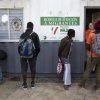
Mexico’s Solidarity Towards Haitians Only Goes So Far
In the airport of this Mexican city, on the border with the United States, customs agents warn that they will carry out a "random" inspection. But it's not so random. The only people who are stopped and checked have dark skin and kinky hair, and virtually do not speak a word of Spanish.
Occupational Safety Improves in Latin America, Except Among Young People
Despite progress achieved in occupational safety in Latin America, the rates of work-related accidents and diseases are still worrying, especially among young people, more vulnerable in a context of labour flexibility and unemployment.
Women Farmers in Peru Bring Healthy Meals to Local Schools
Getting children and adolescents to replace junk food with nutritious local organic foods is the aim of a group of women farmers in a rural area of Piura, on Peru’s north coast, as they struggle to overcome the impact of the El Niño climate phenomenon.
From Mega to Micro, a Transition that Will Democratise Energy in Brazil
An energy transition is spreading around the globe. But in Brazil it will be characterised by sharp contrasts, with large hydroelectric plants being replaced by solar microgenerators and government decisions being replaced by family and community decision-making.
Argentina Aims for a Delicate Climate Balance in the G20
As president this year of the Group of 20 (G20) developed and emerging nations, Argentina has now formally begun the task of trying to rebuild a consensus around climate change. It will be an uphill climb, since the position taken by the United States in 2017 led to a noisy failure in the group with regard to the issue.
Latin America Faces Uphill Energy Transition
Latin America is facing challenges in energy efficiency, transportation and power generation to move towards a low carbon economy and thus accelerate that transition, which is essential to cut emissions in order to reduce global warming before it reaches a critical level.
New GCF Project Signals Paradigm Shift for Water-Scarce Barbados
At the start of 2017, the Caribbean Drought and Precipitation Monitoring Network (CDPN) warned eastern Caribbean countries that they were facing “abnormal climate conditions” and possibly another full-blown drought.
After More Than a Decade, Rights of Indigenous Peoples Not Fully Realized
First, I want to talk about how we got here. It was nearly 100 years ago, when indigenous peoples first asserted their rights, on the international stage. But, they did not see much progress. At least until 1982 - when the first Working Group on Indigenous Populations was established.
Pre-election Tension Threatens Free Speech in Brazil
Gunshots, eggs and stones thrown, blocked roads and other forms of aggression against politicians and journalists in recent weeks generated fears that the violence will increase the uncertainty over the October elections in Brazil.
Tunneling Through the Andes to Connect Argentina and Chile
Visionaries imagined it more than 80 years ago, as a way to strengthen the integration between Argentina and Chile. Today it is considered a regional need to boost trade flows between the two oceans. Work on a binational tunnel, a giant engineering project in the Andes, is about to begin.
Caribbean Eyes Untapped Potential of World’s Largest Climate Fund
The Caribbean Community Climate Change Centre (CCCCC) also known as the 5Cs, is looking for ways to boost the region’s access to the Green Climate Fund (GCF).
International Community Ramps Up Action on Venezuela Crisis
One year into the most recent series of protests and a humanitarian crisis with no end in sight, international groups have called for action to help protect Venezuelans. A complex political and economic crisis in Venezuela has left millions without access to basic services and resources, prompting UN agencies and human rights groups like Human Rights Watch to speak up and urge action.
Trump Begins to Reverberate in Mexico’s Presidential Elections
Statements by U.S. President Donald Trump against Mexico have begun to permeate the presidential election campaign in this Latin American country, forcing the candidates to pronounce themselves on the matter.
Castro’s Successor to Inherit Long-standing Conflict Between Cuba and the United States
Cuba's tense relations with the United States under the administration of Donald Trump reflect a scenario of conflict that is not alien to the generation that will take over the country on Apr. 19, when President Raúl Castro is set to step down.
Bridging the Humanitarian Needs with Long-term Resilience in Dominica
Six months ago, on 18 September 2017, Category 5 Hurricane Maria struck Dominica wreaking unimaginable disaster. Thirty-one people died, thirty-three more remain missing. Roads, bridges, schools, hospitals and over 40 percent of homes were destroyed or severely damaged.« Previous Page — Next Page » *#*


The Week with IPS

NEXT STOP - SDGs
Tracking global progress towards a sustainable world
Tracking global progress towards a sustainable world

