Languages
Tuesday, November 17, 2026



News and Views from the Global South
Natural Resources
SIERRA LEONE: Local Communities Divided Over Mining in Rainforest
Sierra Leone’s Gola Rainforest remains a centre of contention as the local community here plan to take their chief to court next week over a controversial 50-year land lease to a mining company.
Green Tech Drives Search for Rare Earths in Argentina
Argentina could meet part of the rising world demand for "rare earth" metals, required for a variety of green technologies, advanced electronic devices and medical diagnostic equipment. The challenge lies in mining them in a sustainable fashion.CASPIAN BASIN: As Energy Prices Head North, Democratisation Goes South
Quiz: Over the next three months, three former Soviet republics will hold elections – Kazakhstan, Turkmenistan and Russia. Whose official outcome will most closely resemble the truth?West Papuan Conflict Begs Political Solution
The Indonesian government’s offer of development for West Papua, following the crackdown by security forces on a pro-independence meeting in Jayapura in October, is unlikely to succeed in the absence of political dialogue and calls for self-determination are expected to continue.PERU: Humala Surrounds Himself with Uniforms
Peruvian President Ollanta Humala is taking an increasingly hard-line stance against protests, and is losing important allies less than five months into his term.Op-Ed: Facing Peak Oil and Peak Gas: In Search of the Lesser Evil
The U.S. oil geologist Marion King Hubbert predicted, already in 1956, that the global production of oil will reach its all-time high roughly when we have used one half of the world's oil reserves. This is because geologists tend to find the biggest fields first, and because oil wells become tired during the production phase. The more is taken out, the more difficult it gets to bring the remaining oil to the surface.
SOUTH SUDAN: Refugees Reluctant to Move to Safety as War Looms
In the sprawling settlement of Yida, just south of the Sudan border, more than 20,000 people have gathered after fleeing battles in the country's Southern Kordofan state. But they now find themselves caught up in a new conflict, as recent clashes along the frontier have some warning of the possibility of war.
PERU: Protest Against Mine Continues Despite State of Emergency
Local residents and authorities in the northern Peruvian region of Cajamarca say they will continue to protest the Conga gold mine, despite the state of emergency declared by President Ollanta Humala.
“Fracking” for Shale Gas: Neither Clean nor Green
Hydraulic fracturing or "fracking" is being used to tap the last remaining natural gas deposits across large areas of the United States and western Canada, fueling continued dependence on hydrocarbons instead of a shift to genuinely clean energy sources to cool the planet.Shale Gas May Be a Mexican Mirage
In spite of mounting scientific evidence about its negative aspects, Mexico is getting ready to intensify exploration for shale gas, natural gas found trapped in shale, a sedimentary rock.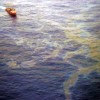
BRAZIL: “Flying Blind” in Pre-Salt Oil Fields
Nearly a month after the start of the offshore oil spill, authorities in Brazil have not yet been able to determine the causes of the accident, how much oil was leaked at a Chevron platform, the size of the oil slick, or the extent of the environmental damage.
PERU: Government Expands Scope of Military Activity
The armed forces in Peru, which already have an active role in fighting drug trafficking, are being given greater responsibility for maintaining public order under the government of President Ollanta Humala. They will now also be expected to crack down on illegal mining, and to intervene in social protests.
Sweden Runs Into South Sudanese Oilgate
Civil society leaders in South Sudan are closely watching a legal battle unfolding in Sweden, as prosecutors investigate an oil company accused of involvement in massive human rights abuses here.CLIMATE CHANGE: Shale Gas Emerges as a Burning Issue
The issue seems rather similar to that of unconventional oil and has already sparked a major controversy in the West. But its implications for the debate on climate change are hardly known in countries of the Global South.
The Rush for Oil in West Africa – The New Wild West?
There is a new oil rush off the coast of West Africa. But there are fears that the sector is not sufficiently regulated, and watchdog groups are raising concerns about transparency and governance in the region.US-IRAN: Key Senator Pushes “Nuclear Option” Against Central Bank
Amid simmering tensions surrounding Iran's nuclear programme, a key pro-Israel U.S. senator has tabled legislation that would effectively ban international financial companies that do business with the Central Bank of Iran (CBI) from participating in the U.S. economy.
Angolan Spring – Protests Shaking Up Authorities
Adolfo Andre knows what he wants for his country and says he will fight on until he gets it.
Toxins Rob More Than a Decade of Life from Millions
Toxic pollution affects the health of more than 100 million people, shortening their productive life spans by an astonishing 12.7 years on average.
Time to Derail Fossil Fuel Train, Energy Agency Warns
Countries have chained themselves to a fossil fuel train that is headed straight off a cliff, warns the International Energy Agency (IEA).Strike Prolonged in Controversial Papuan Mine
Union workers at Freeport Indonesia's Grasberg copper mine said they could extend their strike by another month, which would make it the longest mining stoppage in the country's history.
CANADA: Harper Government Guts Environment Programmes
Canada's Stephen Harper government is spending more than 60 billion dollars on new military jets and warships while slashing more than 200 million dollars in funding for research and monitoring of the environment.« Previous Page — Next Page »


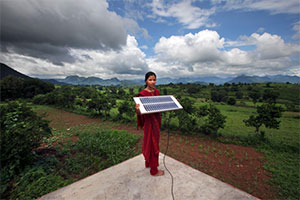 Bringing clean energy to rural India. Credit: Abbie Trayler-Smith / Panos Pictures / Department for International Development
Large reserves of oil, gas and minerals in developing countries generate opulent revenues. They could be used to stimulate economic growth and reduce poverty, but often result in environmental destruction and conflict, benefiting large companies and corrupt governments. Furthermore, competition over natural resources often manifests through geopolitical conflict. For example, before the US-Iraq war, Iraq’s domestic oil industry was nationalized. With US aggression came weakened Iraqi institutions and foreign intervention, thus eventually leading to the privatization of Iraqi oil, leaving the industry now largely dominated by Western companies. As another example, China’s rising investments within the lithium sector in South America are increasing the US-China rivalry across the Western Hemisphere. Notably, Bolivia has the largest reserves of lithium in the world, and the nation’s state-owned lithium extraction firm recently signed a contract with China’s CBC Consortium, while rejecting the entry of Western firms into the nation. In Bolivia’s case, rising Chinese investment in the nation’s lithium sector also raises concerns about environmental sustainability and the sociopolitical rights of Indigenous communities. More broadly, Sub-Saharan Africa holds nearly 30% of global reserves of critical minerals required for low-carbon technologies. Despite this, the region attracts less than 10% of global exploration investment, depicting a critical barrier to both the clean energy transitions and Sub-Saharan Africa’s economic development. Furthermore, resource wealth continues to fuel conflict like Sudan’s civil war, which has led to 9.1 million internally displaced people and is intensely connected to competition over gold, water, and agricultural land. IPS covers news about major oil, gas, and mining projects, their effects on the environment and local communities, and the ideas and actions of the interest groups involved.

The Week with IPS

NEXT STOP - SDGs
Tracking global progress towards a sustainable world
Tracking global progress towards a sustainable world
