Languages
Wednesday, November 18, 2026



News and Views from the Global South
Natural Resources
CLIMATE CHANGE: Juggling Carbon Consumption and Social Gains
The economies of Latin America are caught on the horns of a dilemma: how to reduce their carbon consumption without sacrificing economic and social development. Subsidies for the development of renewable energies and for learning new technologies need to be increased urgently, experts say.
CLIMATE CHANGE: Cancun Summit Gives Fossil Fuels a Free Pass
The main cause of climate change is the burning of fossil fuels, so why are billions of dollars being invested to find and produce more oil, coal and natural gas?INDIA: Brakes Applied to SUVs – ‘Socially Useless Vehicles’
Indian owners of sports utility vehicles (SUVs) and luxury cars, who have been benefiting from subsidies on diesel meant to help farmers, may soon have to pay real prices for their fuel.U.S.-WEST AFRICA: Report Urges Enhanced Maritime Security
The United States and its allies should give much more attention - and resources - to ensuring that weak West African governments along the oil- and gas-rich Gulf of Guinea can protect their territory and coastal regions from terrorists, drug and human traffickers, and other threats, according to new report by an influential think tank released here this week.In the End, U.S. Gets (Partial) Offshore Drilling Ban
As negotiators meet in Cancún to discuss how to mitigate the worst effects of climate change, the impacts of the oil spill disaster that unfolded earlier this year on the other side of the Gulf of Mexico are still rippling through Washington.ECUADOR: Oil Shake-Up Means Flat Fees for Foreign Companies
As the dust settles following contract negotiations with foreign oil companies, Ecuador is looking at a new map for its petroleum industry and trying to determine what it will mean in economic terms for this OPEC-member nation.Brazil Keeps a Grip on Bolivia’s Natural Gas Industry
Brazil's state-owned oil company Petrobrás maintains a solid and vigorous presence in natural gas production within Bolivian territory, even with the nationalisation of petroleum and gas in 2006 led by Bolivia's left-wing President Evo Morales.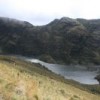
PERU: Mineral-Rich Highlands Lack Legal Protection
More than 11 percent of Peruvian territory is distributed among mining concessions. Those mining blocks can include moors, river sources, and even protected natural areas.
DEVELOPMENT: Economic Boom Worsened De-industrialisation of LDCs
Least developed countries (LDCs) in Africa did not use the commodity export boom of the mid-2000s to diversify their economies from commodity dependence to manufacturing value-added products. Significantly, the agricultural sector has also not benefited, with the result that LDC reliance on imported food has become even worse.
/UPDATE*/: Bypass Under Way At Mozambique Smelter
Aluminium giant BHP Billiton’s Mozal smelter has begun bypassing its fume treatment centres, emitting potentially dangerous fumes into the air without treating them first - despite a pending court case on the matter.
Illness Plagues Gulf Residents in BP’s Aftermath
Increasing numbers of U.S. Gulf Coast residents attribute ongoing sicknesses to BP's oil disaster and use of toxic dispersants.ENVIRONMENT-ECUADOR: Plenty of Promises but Little Cash for Leaving Oil Untapped
The Spanish government is "analysing mechanisms to contribute" one million euros (1.3 million dollars) to the Yasuni-ITT initiative, one of the few definite contributions received by Ecuador for a scheme to leave oil reserves untouched in a highly biodiverse area of the Amazon jungle.PERU: Mining Firms Alarmed at Election of Leftist Governor
The triumph of a left-wing candidate, Gregorio Santos, as governor of the region of Cajamarca, one of Peru's richest mining areas, has raised concern among mining companies operating there in a climate of tension and conflicts with local communities.
ZAMBIA: Debate Over Windfall Tax
The Zambian government has been accused of embracing poverty as the debate over a windfall tax on the mining industry heats up.Canada’s Parliament Buckles under Weight of Mining Industry
The corporate clout of the mining industry trumped political ideology in Canada when members of all political parties helped to narrowly defeat a bill late last month that would have imposed standards on Canadian mining companies operating in developing countries.China Closes In Around its Rare Earth
The western world sees China erecting trade walls. But China sees a throwback to an era of plundering and forceful western politics that followed the Opium wars of the 19th century and precipitated the collapse of the Chinese empire.
TRADE-SOUTHERN AFRICA: EPA Talks Will Miss Latest Deadline
While a trade deal between the European Union and Southern African countries is close it will not be concluded before the end of this year. In the meantime, South Africa remains in pursuit of an ambitious regional integration agenda.
Broad Coalition Rallies for BP Accountability
Gulf coast fishers, conservationists, seafood distributors and oil workers rallied here at Louisiana's capital over the weekend to demand that oil giant BP be held accountable for the "ongoing" use of toxic dispersants in the Gulf of Mexico.PERU: After Toxic Mine Spill, Locals Demand Both Jobs and Cleanup
Four months after Peru's worst toxic spill of mining waste, workers at the Caudalosa mine are demanding that it be reopened, while local communities want more cleanup of the rivers they depend on for water supplies.
Despite Heavy Oil, Louisiana Keeps Fisheries Open
Massive slicks of weathered oil were clearly visible near Louisiana's fragile marshlands in both the East and West Bays of the Mississippi River Delta during an overflight that included an IPS reporter on Oct. 23. The problem is that, despite this, the Louisiana Department of Wildlife and Fisheries has left much of the area open for fishing.
VENEZUELA: Hunger Strike Off as Gov’t Agrees to Talks on Native Demands
An 81-year-old Jesuit missionary in Venezuela ended a week-long hunger strike Monday after the government agreed to high-level talks to negotiate the release of three indigenous prisoners facing murder charges and to discuss land claims by Yukpa communities.« Previous Page — Next Page »


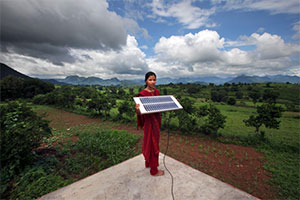 Bringing clean energy to rural India. Credit: Abbie Trayler-Smith / Panos Pictures / Department for International Development
Large reserves of oil, gas and minerals in developing countries generate opulent revenues. They could be used to stimulate economic growth and reduce poverty, but often result in environmental destruction and conflict, benefiting large companies and corrupt governments. Furthermore, competition over natural resources often manifests through geopolitical conflict. For example, before the US-Iraq war, Iraq’s domestic oil industry was nationalized. With US aggression came weakened Iraqi institutions and foreign intervention, thus eventually leading to the privatization of Iraqi oil, leaving the industry now largely dominated by Western companies. As another example, China’s rising investments within the lithium sector in South America are increasing the US-China rivalry across the Western Hemisphere. Notably, Bolivia has the largest reserves of lithium in the world, and the nation’s state-owned lithium extraction firm recently signed a contract with China’s CBC Consortium, while rejecting the entry of Western firms into the nation. In Bolivia’s case, rising Chinese investment in the nation’s lithium sector also raises concerns about environmental sustainability and the sociopolitical rights of Indigenous communities. More broadly, Sub-Saharan Africa holds nearly 30% of global reserves of critical minerals required for low-carbon technologies. Despite this, the region attracts less than 10% of global exploration investment, depicting a critical barrier to both the clean energy transitions and Sub-Saharan Africa’s economic development. Furthermore, resource wealth continues to fuel conflict like Sudan’s civil war, which has led to 9.1 million internally displaced people and is intensely connected to competition over gold, water, and agricultural land. IPS covers news about major oil, gas, and mining projects, their effects on the environment and local communities, and the ideas and actions of the interest groups involved.

The Week with IPS

NEXT STOP - SDGs
Tracking global progress towards a sustainable world
Tracking global progress towards a sustainable world
