Languages
Saturday, November 14, 2026



News and Views from the Global South
Human Rights
What Journalists Should Know About Coronavirus Cellphone Tracking
Governments all over the world have been considering cellphone surveillance to help track and contain the spread of the coronavirus.
Ending the Unthinkable Injustice of Human Chaining
When Akanni’s mother died in early 2018, she stopped eating for three weeks. Her mood became unpredictable; she was often shouting or sulking angrily. Medicine from a local pharmacist didn’t help. At a loss for what to do to handle the trauma, Akanni’s father took her to a church in Abeokuta, Ogun state, in Nigeria. And then he left her there.
The Future of Journalism
All over the world, journalism is going through an era of uncertainty. It is not yet clear what the business model for the news field will be, and this is happening precisely at a time when information is a central issue in every person's life.
Human Rights and Compassion Must Guide Enforcement of COVID-19 Mitigation
Covid-19 infections continue to rise, bringing normal life to a virtualstandstill and causing countries to shut themselves off from the rest of the world.
Latin America Has Weak Defences Against the Pandemic
Health systems in Latin America, already falling short in their capacity to serve the population, especially the poor, are in a weak position and face serious risks when it comes to addressing the COVID-19 pandemic.
U.N. Releases Report on Socio-economic Effects of Coronavirus
As the number of coronavirus cases continues to grow, concerns are simultaneously growing about the current and long-term effects this will have on certain demographics -- specifically, women, the youth, migrant workers, and many employees around the world.
These Migrant Workers Did Not Suddenly Fall From the Sky
Madness engulfs the planet. Hundreds of millions of people are in lockdown in their homes, millions of people who work in essential jobs – or who cannot afford to stay home without state assistance – continue to go to work, thousands of people lie in intensive-care beds taken care of by tens of thousands of medical professionals and caregivers who face shortages of equipment and time. Narrow sections of the human population – the billionaires – believe that they can isolate themselves in their enclaves, but the virus knows no borders. The global pandemic driven by the variants of the SARS-CoV-2 virus holds us in its grip; even as China seems to have bent the curve of infections, the charts for the rest of the world are forbidding: the light at the end of the tunnel is as dim as it has ever been.
Surviving Domestic Violence in times of Covid19
“I come from Baglung District, a part of Dhawalagiri Zone in Nepal. My house overlooks the river. Do you know, our district is known for the suspension bridges?”, her eyes glimmer for a fraction of a second and then she breathes a heavy sigh! Her right hand is still wrapped in a scarf, while with the other she pats her 17-month-old. “If I ever get a chance I will take you to my village, we have a lot of medicinal plants.” She pauses while tears roll down as she continues our Facetime session. “I was 16 when I had my first child and I was 17 when my arm was broken by my mother-in-law.”
Modern Day Slavery Reaches a Far Corner of the World
The deadly, fast-spreading coronavirus which upended three key UN conferences—on the empowerment of women, on nuclear disarmament and on indigenous rights—claimed another casualty last week when a commemorative meeting on the transatlantic slave trade was postponed.
Covid-19 and the Rohingya refugee crisis
All around the world, the numbers are climbing. Each day registers thousands of new cases and lives lost. In Europe, now the epicenter of the pandemic, governments know that the worst is yet to come and are implementing increasingly restrictive measures to enforce social distancing and isolation. In Cox's Bazar, we have been watching the world and holding our breath for the first confirmed case of Covid-19. With reports of the first confirmed case in the local community in Cox's Bazar, it's just a matter of time until the virus reaches the vulnerable population living in cramped conditions in the largest refugee settlement on earth. Thousands of people could die.
Life in the Time of COVID-19: Quo Vadis Homo Sapiens?
The writing is on the wall for all to see from far and wide – there is nowhere to hide from this invisible enemy, a new coronavirus, maybe with the exception of self-isolation, quarantined at home and even then, we are not 100% safe.
Harness Youth to Change World’s Future
Vanessa Nakate of Uganda may have been cropped out of a photograph taken at the World Economic Forum, but she along with Swedish activist Greta Thunberg have made the climate crisis centre stage.
Life in the Times of Corona: Lockdown & Livelihood in the Lurch
The worldwide spread of novel coronavirus disease (COVID-19) is severely affecting the global economy and as per the recent updates almost one-third to half of the global population are now under some form of a lockdown.
A Story of Triumphs and Tribulations: Implementing Services for Autism in Bangladesh
A few days ago, a friend said to me that my focus on autism, although rather successful, had “sucked out all energy from other critical areas of social need in Bangladesh.” My friend wanted to know if I would be interested in expanding my visibility and successful approach to autism, to other issues that have apparently been left by the wayside due to everyone’s eagerness to work on an issue popular with the Prime Minister’s daughter!
Slums, Camps, Terrorism: Experts Worry about Coronavirus Hitting South Asia
As coronavirus makes its way through different continents, countries, and communities around the world having claimed more than 23,000 lives, experts are ringing alarm bells about the implications of the disease as it hits South Asia, which hosts almost 2 billion of the world’s population.
Saluting IPS Journalists and Supporters during Covid19 Pandemic
As the coronavirus pandemic shifts around the world, now stretching even the developed health services of richer nations to breaking point, here at IPS our dedicated journalists in developing countries are standing strong in giving a voice to the Global South.
India’s Trinity of Challenges
The exigencies of combatting the coronavirus pandemic on a war-footing -- Prime Minister Narendra Modi has announced a nationwide stay-at-home lockdown for 21 days to break the chain of transmission -- has certainly deflected attention from equally pressing challenges confronting India. The nation’s capital witnessed horrific communal violence when the US President was visiting India, triggering international outrage, including from the South. The economy also deserves attention as growth has been decelerating since 2016-17. With the virus shock, the pace of expansion will contract as the economy shuts down and slides into recession.
Chinese vs. Western Governance: The case of COVID-19
During January the onslaught in the Western media, notably the US and the UK, against the Chinese government’s handling of the Covid-19 epidemic, was merciless. The Chinese government stood accused of an inhumane attitude towards its people, secrecy, a cover-up, and an overwhelming concern for its own survival above all other considerations.
Far From Home During a Pandemic
Nepali workers in Qatar who have been quarantined in a camp that has been closed off for two weeks say that aside from concerns about jobs and health, they are now also worried about their families back home.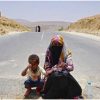
Coronavirus Worsens Yemen’s Long Tale of Woe
In every room in Yemen’s Al-Saba’een hospital, patients in critical condition waited on chairs, and still others laid on the bare ground. I saw women and girls sharing beds in pairs, and children laying close together being treated.
East Asian Lessons for Controlling Covid-19
By the third week of March 2020, the number of Covid-19 deaths in Italy had overtaken the number of deaths in China. Authorities all over the world are restricting the movements of their populations as part of efforts to control the spread of Covid-19.« Previous Page — Next Page »


One world, one humanity, now one court to defend its rights. Another step towards universal human rights, but not remotely a step far enough. The United Nations adopted the Universal Declaration of Human Rights more than half a century ago, but that has done little to stop violations the world over, just as the Geneva Convention has not protected prisoners of war enough. Democracy itself and the freedom it presupposes has not been protective enough. This is the century to move from politicisation of human rights towards humanising political ways. IPS keeps an eye on that difficult path.

The Week with IPS

NEXT STOP - SDGs
Tracking global progress towards a sustainable world
Tracking global progress towards a sustainable world
