Languages
Saturday, November 14, 2026



News and Views from the Global South
Human Rights
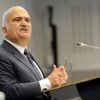
COVID-19 in the Time of Insecurity
Humankind has outlived multiple pandemics in the course of world history. The kingdoms and states of Central and Western Europe abolished the institution of serfdom once it had become clear that medieval rule in the aftermath of devastating pestilence would founder without ending the dependency and servitude that characterized the Dark Ages. The vulnerability of entire nations to the risk of total collapse in the absence of widespread access to the most basic healthcare in the Spanish Flu spurred governments to build the public health systems that have made the progress and development of the last hundred years possible. If the past is prologue, then continuity and survival command that we change.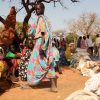
What does U.N. Secretary General’s Call for Ceasefire Mean for Countries in Conflict?
Conflict experts are concerned the the global ceasefire called for by the United Nations amid the coronavirus outbreak may not work and could lead to a rise in violence.
“In the Beginning was the Word”: Why Covid-19 Renders Words even more Powerful
I was able to take office as the secretary general to the largest global interfaith organization – Religions for Peace - with interreligious councils (IRCs) composed of senior-most religious leaders representing their religious institutions, in 90 countries, and 6 regional IRCs, a week before we had to ask all employees to work from home, in compliance with New York State law.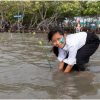
Why Empowering National Human Rights Institutions Helps on the Quest for Healthy Earth?
We are living in a critical time. As we face existential environmental challenges from climate crises to the mass extinction of species, it is difficult sometimes to see solutions and new ideas. This is why we all need to celebrate and give visibility to creative and courageous efforts of people and organizations striving towards a healthy planet for all.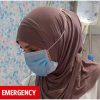
White Supremacists, Yellow Peril & “Chinese Virus” Add to a Volatile Political Mix
When US President Donald Trump repeatedly characterized the fast-spreading COVID-19 as a “Chinese virus” last week, it prompted some white supremacists to resurrect an age old ethnic slur against Chinese and East Asians: the “Yellow Peril” which, in a bygone era, was touted as a xenophobic threat to the Western world.
Fighting Coronavirus: It’s Time to Invest in Universal Public Health
Austerity policies pushed by international financial institutions have weakened public health systems, despite current financial support packages, condemning many people to die.
Women & Climate: Planting a Global Forest in a Connected World
In January of this year, Britain’s Prince Harry and his wife Meghan, the Duke and Duchess of Sussex, shocked much of the world when they announced they would be stepping down from their roles as senior royals.
Harassment of Journalists Jeopardises Keeping Public Safe amid Coronavirus Pandemic
Growing intimidation and repression of journalists reporting on the coronavirus is threatening public health in some countries, press freedom monitors have warned.
Never Give up on Women’s Rights – Edna Ismail
For Dr Edna Adan Ismail maternal health and midwifery is deeply personal. In an interview with Women Deliver Young Leader Musu Bakoto Sawo, Ismail recalls her mother’s devasting experiences which impacted on her own life’s choices.
Could the Coronavirus Be a Biological Weapon in the Not-Too-Distant Future?
The devastating spread of the deadly coronavirus across every continent-- with the exception of Antarctica-- has triggered a conspiracy theory on social media: what if the virus was really a biological weapon?
It’s Disinformation, Stupid!
During his 1992 run, Bill Clinton, then elected US president, made "It's the economy, stupid!” a household phrase. Coined by campaign advisor James Carville, it pointed out economic and health issues as part of the strategy resulting in the accession of this relatively obscure governor of Arkansas into the White House.
Why Nigeria Knows Better How to Fight Corona Than the US
The coronavirus disease, otherwise known as COVID-19, was first reported in Wuhan, China on the last day of December 2019. When it began to spread rapidly, the World Health Organisation (WHO) declared it a public health emergency of international concern on 30 January 2020.
I Am Generation Equality: Storytelling for Equality
When you flip through grade one Bangla school textbooks there is very little written about the progress women have made in Bangladesh since the Beijing Conference for Women in 1995.
Polycephaly* in Afghanistan: Failure of the US or Curse of History
The fourth and last presidential election in Afghanistan on 28 September 2019 was yet another setback to the democratic process. Not only did it take months for the Independent Election Commission to announce the results but they were again marred by allegations of massive fraud that culminated with two candidates declaring themselves as winners.
A Woman Peacebuilder’s Reflections on Beijing+25 & the Generation Equality Forum
Where are the women and youth peacebuilders in the Beijing+25 and the Generation Equality Forum processes? Their absence raises serious questions about the effectivity and coherence of the work of the UN on gender equality since armed conflict is both a cause and a consequence of gender inequality.
Rural Poverty and Disability in Ethiopia
With about 109 million people, Ethiopia is the second most populous nation in Africa after Nigeria, and the fastest growing economy in the region. However, it is also one of the poorest, with a per capita income of $790.
The 2020 NPT Review Conference: From the Sublime to the Ridiculous
This year marks the 50th anniversary of the nuclear Non-Proliferation Treaty (NPT) and coincidentally the tenth quinquennial (five yearly) review conference is scheduled to be held at the United Nations in New York from 27 April to 22 May.
Rural Poverty, Employment and Disability
About 15% of the world's population lives with some form of disability, of whom 2-4% experience significant difficulties in functioning. Disability is part of the human condition, and almost everyone will be temporarily or permanently impaired at some point in life, and those who survive into old age will experience increasing difficulties in functioning. Here the focus is on empirical validation of whether disabilities are associated with economic hardships through loss of employment and consequently impoverishment in rural India. The motivation stems from continuing neglect of health in the budgetary allocations –including the allocations for 2020-21.
US and France Significantly Increase Arms Exports
There has been a significant increase in arms exports from the United States and France, according to a new report. The flow of arms to the Middle East has increased, with Saudi Arabia being the world’s largest importer.
UN Reaches 90:90 Gender Parity in Senior Leadership Transforming Organizational Culture
The United Nations claims it has reached one of its primary goals relating to women’s rights in the world body: gender parity at senior levels of management and in the highest echelons of the Organization.
Current Laws Cannot Protect Zimbabwe’s Women from Sex Trafficking
Similo Ntuli* looks like a ordinary, fashion-savvy woman in her twenties. As a hairdresser and beauty therapist in Bulawayo, Zimbabwe's second-largest city, Ntuli has her finger on the pulse of the latest styles and trends. But she also has, what she admits, are dark secrets.« Previous Page — Next Page »


One world, one humanity, now one court to defend its rights. Another step towards universal human rights, but not remotely a step far enough. The United Nations adopted the Universal Declaration of Human Rights more than half a century ago, but that has done little to stop violations the world over, just as the Geneva Convention has not protected prisoners of war enough. Democracy itself and the freedom it presupposes has not been protective enough. This is the century to move from politicisation of human rights towards humanising political ways. IPS keeps an eye on that difficult path.

The Week with IPS

NEXT STOP - SDGs
Tracking global progress towards a sustainable world
Tracking global progress towards a sustainable world
