Languages
Thursday, September 17, 2026



News and Views from the Global South
Human Rights

DURBAN CONFERENCE, 25 YEARS ON – Paul Divakar Namala: “Solidarity and Resistance Work in the Long Run”
My name is Paul Divakar Namala. I am the Executive Director of The Inclusivity Project and Convenor of the Global Forum of Communities Discriminated on Work and Descent. My work focuses on communities whose social status, occupations and exclusion are inherited across generations through caste, analogous hierarchies and systems rooted in traditional slavery.
Beyond the Death Penalty Debate: Human Dignity and Justice in Japan
A symposium examining Japan’s death penalty through the lens of human dignity was held on September 5 at Joseph Hall of St. Ignatius Church in Yotsuya, Tokyo.
Trump’s “Comprehensive” Gaza Peace Plan a Cover for Genocide
It is nearly a year since the UN Security Council (UNSC) adopted Resolution 2803 on 17 November, 2025, endorsing President Trump’s 20-point framework ostensibly designed to end the war in Gaza and create a roadmap for long-term stability. It is not clear what progress has been made. In August 2026 The Jerusalem Post reported “the IDF continues almost daily strikes in Gaza”, killing more than 1,200 Palestinians since the US-brokered ceasefire deal came into effect, seizing more territory, and continuing to restrict the movement of people and goods into and out of Gaza. Nickolay Mladenov, the UN High Representative on the Board of Peace, wrote in early August 2026 that “two days of strikes across Gaza have killed civilians and destroyed medical supplies that people depend on”. Ironically, this genocidal strike happened only a few days after a US-brokered Hamas disarmament deal, which Trump called, “a monumental step” towards peace and security.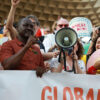
UNGA 81: A United Nations at a Turning Point
The 81st session of the UN General Assembly (UNGA81) opens tomorrow at a particularly important moment for multilateralism. The UN80 reform initiative has entered what the Secretary-General describes as a decisive phase. Member States are selecting the next Secretary-General. The 2030 Agenda is entering its final four years, while conversations about what should follow it are beginning.
LIECHTENSTEIN: ‘We Have One of the Strictest Abortion Bans in Europe’
CIVICUS discusses struggles for abortion rights in Liechtenstein with Gabriella Alvarez-Hummel, a journalist and reproductive rights activist who works with Fristenlösung für Liechtenstein, an organisation that campaigns for the introduction of a legal time-limit abortion model.
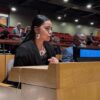
Nuclear Victims’ Experiences Must Be at the Heart of Global Efforts for Assistance and Remediation
More and more, global disarmament discussions are encompassing the humanitarian and environmental impacts of the testing and use of nuclear weapons, as it becomes clear that the legacy of nuclear weapons leaves its mark on multiple generations.
UNICEF Report Underscores Rising Rates of Tech-Facilitated Sexual Abuse Targeting Children
A new report from UNICEF finds that approximately 1 in 5 of all children surveyed reported facing tech-facilitated sexual abuse or exploitation in a single year.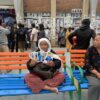
Families in Desperate Search for Victims of the ‘Himalayan Tsunami’ in Nepal
On Sunday afternoon, Mingma Tamang, 29, rushed into the TU Teaching Hospital’s emergency ward, where a rescue team had just brought in an injured person in the Rasuwa flash flood – but she soon left grim-faced.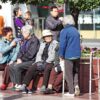
Population Age Structures of Countries
The age structures of populations vary considerably across countries. Some countries have relatively young populations, with large proportions consisting of children and adolescents. Other countries have much older age structures, with a substantial proportion of people aged 65 years or older.
‘I am one who dies for life, not one who lives for death’ – Kurdish Political Prisoner Pakhshan Azizi
In 2024, Kurdish social worker Pakhshan Azizi was sentenced to death. She remains incarcerated in Evin Prison, Tehran, Iran. This is her story ...
Pakhshan Azizi’s Letter from Evin Prison
Writing from the women's ward of Evin Prison on 10 June 2026, Kurdish political prisoner Pakhshan Azizi, who remains under a death sentence, reflects on her legal case, political principles, humanitarian work, and the broader historical and political dynamics shaping the Middle East.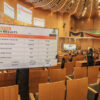
Zambia: An Uneven Contest, an Easy Win
On 24 August, police sealed off access to Zambia’s courts, closed the day before the deadline for petitions to challenge the results of the 13 August presidential election. The judiciary’s top official cited security reasons, but the timing left little doubt that authorities meant to block the defeated candidate’s legal challenge.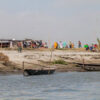
Beyond Resilience: Climate Change and the Rights of Char Dwellers in Bangladesh
Bangladesh’s riverine and coastal chars have always been landscapes of movement, but climate change is making that movement more violent, frequent, and unequal. The shifting islands of the Jamuna, Brahmaputra, Padma, and other rivers now reveal how climate stress multiplies deprivation, weakens citizenship, and forces char dwellers to absorb the costs of a crisis they did little to create.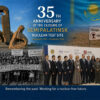
35 Years After Semipalatinsk, Kazakhstan’s Nuclear Choice Still Challenges the World
Across the vast steppe of northeastern Kazakhstan, the scars of the Cold War remain visible. At the Semipalatinsk Nuclear Test Site, the Soviet Union conducted 456 nuclear tests between 1949 and 1989, exposing nearby communities to radiation and leaving health and environmental consequences that have endured across generations.
Uganda Announces End of Ebola Outbreak, Yet Regional Risks Remain
Following 42 consecutive days without a new confirmed case, The Africa Centres for Disease Control and Prevention (Africa CDC) and the World Health Organization (WHO) have announced the end of the Ebola outbreak in Uganda.
SWEDEN: ‘The New Migration Laws Are so Vague That People Don’t Know What Might Be Used Against Them’
CIVICUS discusses Sweden’s new migration laws with John Stauffer, legal director and deputy executive director of Civil Rights Defenders, a Swedish civil society organisation that acts as a civil rights watchdog at home and supports human rights defenders in repressive contexts worldwide.
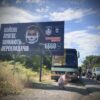
Internally Displaced in Ukraine: Between Hell and a Future That Does Not Exist
It is impossible to ignore. Loudspeakers across the city broadcast a recorded voice announcing a minute’s silence for those who have fallen in the war. After 60 ticks of the second hand, it is time for the national anthem: “Ukraine has not yet perished.”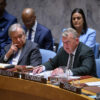
Consequences of Inaction: UN Security Council Pressed to Act Before Hunger Becomes Famine
Across the board, UN officials and humanitarian organizations urged the Security Council to act before the consequences of food insecurity and famines hit, during a high-level open debate on Tuesday, August 25. More than 80 representatives took part in Tuesday’s conversation on conflict-related food insecurity under the theme “Food under fire: the Security Council’s role in mitigating global and local food crises”.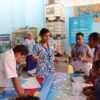
Beyond the Horizon: Raising a Generation to Protect the Blue Pacific
For generations, Pacific children have grown up with the ocean as part of everyday life. It is where families fish, where stories are passed down, where livelihoods begin and where cultures are rooted.
Grand Planetary Challenges Need a Grand Coalition to Solve Them
Several coalitions exist today to defend the territories in which people live and work. Global leaders have long understood the importance of shared responsibility for collective security and have invested significant time in establishing networks, partnerships and alliances. In 2025, global spending on defense reached a record $2.9 trillion.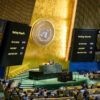
A Divided Vote for the UN’s Human Rights Chief
On 24 July, the United Nations (UN) General Assembly reappointed Volker Türk as High Commissioner for Human Rights for a further four years. Only 10 states – among them Israel, Russia and the USA – opposed the decision.« Previous Page — Next Page »


One world, one humanity, now one court to defend its rights. Another step towards universal human rights, but not remotely a step far enough. The United Nations adopted the Universal Declaration of Human Rights more than half a century ago, but that has done little to stop violations the world over, just as the Geneva Convention has not protected prisoners of war enough. Democracy itself and the freedom it presupposes has not been protective enough. This is the century to move from politicisation of human rights towards humanising political ways. IPS keeps an eye on that difficult path.

The Week with IPS

NEXT STOP - SDGs
Tracking global progress towards a sustainable world
Tracking global progress towards a sustainable world
