Languages
Thursday, November 19, 2026



News and Views from the Global South
Human Rights

Chance for Kenya to Make Amends for Post-Election Sexual Violence
I had already heard many disturbing stories of violence by the time I interviewed Mercy Maina, whose name I have changed to protect her privacy. Even so, what Mercy told me was truly disturbing. She said she was raped during the post-election violence in August alongside her sister by two men wearing uniforms and helmets, and carrying guns and walkie-talkies.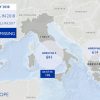
Mediterranean Migrant Arrivals Reach 1,916 in 2018; Deaths Reach 194
IOM, the UN Migration Agency, reports that 1,916 migrants and refugees entered Europe by sea through 14 January. This compares with 3,046 coming ashore during a similar period in 2017.
Pakistan, Facing Military Aid Cuts, One Step Ahead of US
When the United States abruptly cuts off military supplies to its allies for political or other reasons, the reaction has been predictable: it drive these countries into the arms of the Chinese, the Russians and Western European weapons suppliers.
Fate of the Rohingyas – Part Two
With discussions underway between Bangladesh and Myanmar about the repatriation of more than a half a million Rohingya refugees, many critical questions remain, including how many people would be allowed back, who would monitor their safety, and whether the refugees even want to return to violence-scorched Rakhine state.
Pardon of Former Peruvian President Fujimori Deals Blow to Fight Against Gender Violence
The political crisis triggered in Peru by the presidential pardon of former president Alberto Fujimori granted on Christmas Eve casts a shadow of doubt over what actions will be taken to curb violence against women in this country, where 116 femicides were registered in 2017, and which ranks eighth with respect to gender-related murders in Latin America and the Caribbean.
Thousands Still Dying at Sea En Route to Europe
Amid concerns that 160 people may have drowned while attempting to cross the Mediterranean this week alone, the UN refugee agency have urged countries to offer more resettlement places.
Fate of the Rohingyas – Part One
The repatriation of Rohingya refugees driven from their villages through violence and terror appears uncertain, with critics saying the agreement legalising the process of their return is both controversial and impractical.
UN Chief Calls for Collective Global Response to Migration
I am very pleased to present this report, “Making Migration Work For All”, which serves as my principal input to the zero draft of the “Global Compact for Safe, Orderly and Regular Migration.”
The Reality of North Korea as a Nuclear Power
With a track record of six underground nuclear tests between 2006 and 2017, North Korea is desperately yearning to be recognized as the world’s ninth nuclear power – trailing behind the US, UK, France, China, Russia, India, Pakistan and Israel.
Philippines Most Dangerous Country in Southeast Asia for Journalists
It’s not just suspected drug users and dealers at risk of targeted killing in the Philippines. The International Federation of Journalists (IFJ) reported last week that the Philippines is the most dangerous country in Southeast Asia for journalists. Globally, the island nation came sixth on the list of most murderous countries.UN Urges Comprehensive Approach to Sexuality Education
Close to 10 years after its first edition, a fully updated International Technical Guidance on Sexuality Education published today by UNESCO advocates quality comprehensive sexuality education to promote health and well-being, respect for human rights and gender equality, and empowers children and young people to lead healthy, safe and productive lives.
Posing as Liberators
A lot was done in the name of Muslim women in the waning weeks of 2017. Saudi Arabia gave permission for women to enter the previously forbidden sports stadiums and allowed female contestants participating in an international chess tournament in Saudi Arabia to forego the abaya and hijab. In future months, the kingdom benevolently promised, women would be permitted to drive trucks and motorcycles in addition to driving cars.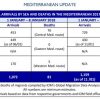
Mediterranean Migrant Arrivals Reach 1072 in first week of 2018; Deaths Reach 81
IOM, the UN Migration Agency, reports that 1,072 migrants and refugees entered Europe by sea during the first week of 2018, with around 450 each landing in Italy and Greece and the remainder in Spain. This compares with almost an identical number – 1,159 – coming ashore during a similar period in 2017.
The Data Revolution Should Not Leave Women and Girls Behind
If there is one political principle that has been constant throughout the history of human civilization it is the fact that land is power. This is something that is particularly true, and often painfully so, for women who farm in Africa.
“The smuggler destroyed our passports and dropped us in the mountains”
While the world’s attention is drawn to the plight of migrants and refugees and Asia and Africa, a small but significant number of irregular migrants continue to arrive in central European counties like Bosnia and Herzegovina, placing huge strains on local authorities.
Why the #MeToo Movement Disrupts the Creeping Commodification of Feminism
As the 62nd Session of the Commission on the Status of Women (CSW) at the United Nations in New York draws near, women from every corner of the world will convene to deliberate on the theme of CSW 2018: Challenges and Opportunities in achieving gender equality and the empowerment of rural women and girls. This year, the theme of empowerment has added significance. The #MeToo movement has shocked our collective conscience and made it impossible to ignore that empowerment goes far beyond economic agency.
2017 Was a Year of Record-Breaking Climate Events
Parts of the United States are experiencing blizzard and record low temperatures, with sharks freezing in the Atlantic and cold-snapped iguanas falling from trees in Florida.
2018 Brings No End to Violence Against Rohingya as Refugees Continue to Flee to Bangladesh
This week, Rohingya refugees were still arriving in Cox's Bazar, Bangladesh – the New Year bringing no end to the reports of violence and fears, which forced them to flee their homes in Myanmar.
‘Red Alert’ 2018 – Global Unity, Media & Humanitarian Action
“Unity is the path. Our future depends on it,” said UN Secretary-General Antonio Guterres, as he issued an unequivocal global ‘Red Alert’ in his New Year message on December 31, 2017.
Disasters Bring Upheaval to Sri Lanka’s Rural Economy
Last year was an annus horribilis for 52-year-old Newton Gunathileka. A paddy smallholder from Sri Lanka’s northwestern Puttalam District, 2017 saw Gunathileka abandon his two acres of paddy for the first time in over three and half decades, leaving his family almost destitute.
Authenticity, Fighting Back and the Fall of Social Media False Idols
Too much of anything can be harmful, and something good that happens too soon may be short-lived. There is a term for this. It is called hubris.« Previous Page — Next Page »


One world, one humanity, now one court to defend its rights. Another step towards universal human rights, but not remotely a step far enough. The United Nations adopted the Universal Declaration of Human Rights more than half a century ago, but that has done little to stop violations the world over, just as the Geneva Convention has not protected prisoners of war enough. Democracy itself and the freedom it presupposes has not been protective enough. This is the century to move from politicisation of human rights towards humanising political ways. IPS keeps an eye on that difficult path.

The Week with IPS

NEXT STOP - SDGs
Tracking global progress towards a sustainable world
Tracking global progress towards a sustainable world
