Languages
Friday, November 20, 2026



News and Views from the Global South
Human Rights

The World Is Burning
Record high temperatures are gripping much of the globe and more hot weather are to come. This implies more drought, more food insecurity, more famine and more massive human displacements.
UN Response Teams Underfunded as Costs Hit Staggering $23.5 Billion
UN response teams that help the most vulnerable people in the world are still largely underfunded, a new status report has revealed. The funding available to the teams is no match for the record number of people—141 million—who need assistance today.
“Big Reflection” Needed on Opioid Crisis
Opioids are among the most devastating drugs and are creating a crisis of epidemic proportions, said the UN drug agency.
No Wall for Ethiopia, Rather an Open Door—Even for Its Enemy
It’s one thing to read about the exodus of souls flowing out of Eritrea, it’s quite another to look into the tired eyes, surrounded by dust and grime, of a 14-year-old Eritrean girl who’s just arrived on the Ethiopian side of the shared border.
Refugee Protection an Obligation Under International Law
It is impossible to be ten years as High Commissioner for Refugees, doing my best to try to help the most vulnerable of the vulnerable, without changing your life. And, indeed, not only witnessing the suffering of people but also learning [about] the extraordinary courage, resilience and capacity to permanently generate hope of refugees is something that has changed my perspective of the world and, to a large extent, changed my life.
Sexual Violence Fuels Vicious Recruitment Cycle in Congolese Militia
In the Democratic Republic of Congo (DRC), the active recruitment of young girls by armed militias has produced disastrous effects—facing social stigma when they’re freed, many girls find their way back to these violent groups and rejoin them.
Half of World’s Civilian War Deaths Occurred in Syria, Iraq and Yemen
Between 2010 and 2015, nearly half of all civilian war deaths worldwide occurred in Syria, Iraq and Yemen, a major independent, neutral organisation ensuring humanitarian protection and assistance for victims of war and armed violence informs.
VIDEO: Yusra Mardini, A Young Refugee, Finds Safety in Her New Home
 The United Nations Department of Public Information has launched a new animated video on the dramatic story of Yusra Mardini, a young refugee from conflict-torn Syria who achieved her dream to compete in the Olympics last year. Yusra Mardini was appointed as a Goodwill Ambassador for the United Nations High Commissioner for Refugees, the UN Refugee Agency (UNHCR) on 27 April 2017. The video was produced by the Education Outreach Section in support of the Together Initiative to mark World Refugee day on 20 June and highlight the advent of the International Day of Peace on 21 September.

Children Now More Than Half of the 65 Million Displaced
Around 20 people are newly displaced every minute of the day, according to a new report. In its annual Global Trends report, the UN’s refugee agency UNHCR has recorded unprecedented and concerning levels of displacement around the world.
The World Society Needs to Express Greater Solidarity for Refugees Worldwide
The world is heading into troubled waters as we are witnessing an unprecedented movement of people – refugees, migrants and internally displaced persons (IDPs) alike – fleeing from misery, poverty and conflicts. The refugee crisis that has swept across Europe and the Middle East is becoming the 21st century’s most protracted crisis with no immediate solution in sight. The world has not witnessed a more complex movement of people since the end of the Second World War; thousands of human beings undertake perilous and treacherous journeys in hope for a better and a safer future. Many of them perish during these hazardous journeys.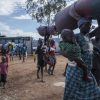
New Inhumane Record: One Person Displaced Every Three Second
Nearly 66 million people were forcibly displaced from their homes last year, the United Nation refugee agency has reported.
Achieving Universal Health Coverage (UHC) in Kenya through Innovative Financing
Every year, one million Kenyans are driven below the poverty line by healthcare-related expenditures. Poverty predisposes them to disease and slows all aspects of growth in the economy.
Africa: Drought and Jobless, Hopeless Youth, Fertile Grounds for Extremism
Ignoring the plight of jobless young people in sub-Saharan Africa is a recipe for political instability and global insecurity, warned a high-level symposium of Africa’s interior, environment and foreign affairs ministers in Ouagadougou, Burkina Faso.
Housing Refugees of the Middle East Conflicts: Where Will They Go?
Prolonged conflicts in the Middle East have led to a deadly humanitarian crisis, with as many as 17.5 million people displaced in Syria, Iraq and Yemen.
IFAD’s President Houngbo Calls for Investment in Climate-Smart Agriculture for Poverty-Free Future
Implementing climate-smart agriculture is critical to reduce hunger and poverty, according to International Fund for Agricultural Development’s (IFAD) new president Gilbert Houngbo.
Men Who Commit Femicide Lose Rights Over Their Children in Argentina
In January 2008, Rosana Galliano was shot to death in Exaltación de la Cruz, a rural municipality 80 km from Argentina’s capital, Buenos Aires. Her ex-husband, José Arce, who was sentenced to life in prison, had hired hitmen to kill her.
Women, Still Major Victims of Sharp Disparities at Workplaces
Reducing gender disparities at workplaces by 25 per cent by 2025 could inject nearly 5.8 trillion dollars into the global economy and boost tax revenues, according to a United Nations report, ahead of the UN Labour Organization’s Summit on "A better future for women at work" on June 15.
Negotiations in Miami Must not Treat Central American Asylum Seekers as Bargaining Chips
Today in Miami, the governments of US and Mexico are putting aside their well-publicized tensions of recent months and co-hosting a conference on security and governance in Central America´s Northern Triangle of El Salvador, Guatemala and Honduras, from where thousands of people flee extreme violence to seek asylum in the US and Mexico.
Migrant Workers Pour Trillions into World Economy
A new report by the International Fund for Agricultural Development (IFAD) says the flow of money from migrants—commonly located in developed countries—to their families in lower income countries has doubled over the last decade.
Our Land. Our Home. Our Future
We all have dreams. For most of us, those dreams are often quite simple. They are common to individuals and communities all around the world. People just want a place to settle down and to plan for a future where their families don’t just survive but thrive. For far too many people in far too many places, such simple dreams are disappearing into thin air.
New Alert: Refugee Numbers Outpace Resettlement Spots
Against the backdrop of increasing refugee numbers around the globe, fuelled by crisis and insecurity, and an ever-widening gap in places to resettle them, the top United Nations official dealing with refugee issues has called on governments to “step up” and deliver places for refugees in line with the commitments they have made.« Previous Page — Next Page »


One world, one humanity, now one court to defend its rights. Another step towards universal human rights, but not remotely a step far enough. The United Nations adopted the Universal Declaration of Human Rights more than half a century ago, but that has done little to stop violations the world over, just as the Geneva Convention has not protected prisoners of war enough. Democracy itself and the freedom it presupposes has not been protective enough. This is the century to move from politicisation of human rights towards humanising political ways. IPS keeps an eye on that difficult path.

The Week with IPS

NEXT STOP - SDGs
Tracking global progress towards a sustainable world
Tracking global progress towards a sustainable world
