Languages
Saturday, October 17, 2026



News and Views from the Global South
Human Rights

Who are the Ultimate Winners in the World’s Ongoing Military Conflicts?
If and when the devastating military conflicts in Ukraine and Gaza come to an end, the ultimate winners will not be the Russians, the Americans or the Israelis but the world’s arms manufacturers—contemptuously described as “merchants of death”. And so will be the winners in a rash of conflicts and civil wars in Syria, Myanmar, Lebanon, Yemen, Sudan and Afghanistan.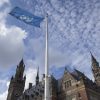
Youth-Led Landmark Climate Change Case Starts in The Hague
The intersection of law, diplomacy, and science will come under the spotlight at the International Court of Justice hearings starting today (Monday, December 2, 2024) in The Hague as the court starts its deliberations into the obligations under international law of UN member states to protect people and ecosystems from climate change.
Famine and Violence Raise Death Toll in Sudan
The humanitarian crisis in Sudan continues to deepen as a result of the ongoing Sudanese Civil War. Intensified conflict between the Sudanese Armed Forces (SAF) and the Rapid Support Forces (RSF) has led to widespread food insecurity, with many humanitarian organizations expressing concern that starvation is being used as a method of warfare. Additionally, heightened violence has caused considerable civilian casualties.
Maya Train is Yet to Deliver Promised Benefits
Indigenous craftsperson Alicia Pech doesn’t know about the Maya Train (TM), the Mexican government's most emblematic megaproject that runs through five states in the country’s south and southeast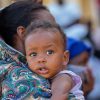
Sudanese Women & Human Rights Defenders Call for Solidarity to Stop the Bloodshed
On 15 April 2023, the outbreak of war between the Sudanese army and the Rapid Support Forces (RSF) drastically altered the face of Sudanese society. The fighting left thousands of dead, wounded, displaced people and refugees.
US Envoy-in-Waiting Blasts UN as Corrupt – & Threatens Funding Cuts
John Bolton a former US ambassador to the United Nations (2005-2006) once infamously declared that if the 39-storeyed UN Secretariat building in New York “lost 10 stories, it wouldn’t make a bit of difference.” That statement triggered a sarcastic response from a New York Times columnist who said Bolton would have done better as an urban planner than a US diplomat --while another newspaper described him as “a human wrecking ball”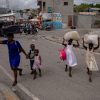
Humanitarian Situation in Haiti Deteriorates as Gender-Based Violence Soars
As gangs continuously seize more territory in the Haitian capital, Port-Au-Prince, the humanitarian crisis deepens. Gang violence in Haiti has considerably escalated following the deployment of the Multinational Security Support (MSS) mission and the appointment of the new Prime Minister, Alix Didier Fils-Aimé. Attacks on civilians continue to increase in brutality as the severely underfunded MSS mission and lackluster police efforts do little to combat gang activity. Girls and women have been disproportionately affected by rampant gender-based violence.
U.S.-Backed Israel-Hezbollah Ceasefire Comes Into Effect
A ceasefire between Israel and Hezbollah comes into effect early on Wednesday morning (November 27). It is hoped that this will mark an end to a 13-month-long period of hostilities between the two parties in Lebanon. News of the ceasefire came from United States President Joe Biden, who made a televised announcement on Tuesday afternoon that an agreement had been reached between the Israeli and Lebanese governments. Biden remarked that the ceasefire was expected to be a “permanent cessation of hostilities” from both sides of the conflict.
Blockages of Aid in Gaza Threatens Survival for 2.2 Million
Following the International Criminal Court’s (ICC) indictment of Israeli Prime Minister Benjamin Netanyahu for deliberate war crimes committed on the people of Gaza, there has been a considerable surge in hostilities, mostly concentrated in the enclave’s northern regions. The humanitarian crisis is expected to deteriorate as the availability of essential resources, such as water, food, fuel, and electricity has significantly dwindled over the past few weeks due to sustained blockages by Israeli authorities. Additionally, levels of civilian casualties and displacements have reached new peaks.
Now it’s Officially the Israeli-American Genocide in Gaza
As of last week, in the wake of the Nov. 21 issuance by the International Criminal Court (ICC) of arrest warrants for Israeli Prime Minister Benjamin Netanyahu and former IDF Defense chief Yoav Gallant, all eyes turned to Washington to see the what the response of Israel’s main backer would be.
Human Rights Protection Crucial to Meeting the 2030 AIDS Public Health Goals
Gaps in realising human rights could stop AIDS being ended as a public health threat by 2030, UNAIDS has warned in a report to mark World AIDS Day.
Expand choices for Women, Prevent New HIV Infections in Africa
In Uganda, women and girls are more affected by HIV. Out of 1.4 million people living with the disease, 860 000 are women and girls. According to UNAIDS, every week, 4,000 adolescent girls and young women aged 15–24 years became infected with HIV globally in 2023, with 3,100 of these infections occurring in sub-Saharan Africa.
Mayan Farmers Improve Their Livelihoods and Polyculture of Milpa in Mexico
María Bacab, a Native Maya, considers herself the “guardian of seeds” as she cares for the milpa - an ancestral Mesoamerican polyculture that mixes maize, beans, squash and other vegetables - and promotes its practice and use in Mexico.
UNiTE: Violence Against Women—A Plight That Spares No Country Across All Continents
Despite the 1,583 legislative measures in 193 countries around the world, violence against women has not been eradicated or even abated.
60 Percent of Femicides Are at the Hands of a Partner or Family
Every 10 minutes, one woman or girl is killed at the hands of their partner or other family member. This is only scratching the surface on how femicide, one of the most extreme forms of violence against women, persists at high levels around the world. UN-Women and the UN Office of Drugs and Crime (UNODC) released a joint report, Femicides in 2023: Global Estimates of Intimate Partner/Family Member Femicides, on November 25, the International Day for the Elimination of Violence against Women.
Sudan Ravaged By Disease, Famine, and War
As living conditions in Sudan deteriorate as a result of the Sudanese Civil War, levels of famine and violations of international humanitarian law continue to accelerate among the roughly 11.5 million displaced persons. Conflict between the Rapid Support Forces (RSF) and the Sudanese Armed Forces (SAF) have severely hampered aid efforts, leaving millions of civilians to deal with widespread disease and an overall lack of essential resources.
Ensuring Violence-Free Homes for Sri Lankan Women
A woman’s right to live free from violence is upheld by international agreements like the 1979 Convention on the Elimination of All Forms of Discrimination against Women and the 1993 UN Declaration on the Elimination of Violence against Women.
It’s About our Entire Planet: The Pandemic of Violence Against Women
The 16 Days of Activism to end gender-based violence, started with seeking to eliminate violence against women (VAW). This year’s theme highlights the reality that violence against women and girls is of pandemic proportions. The figures are galling.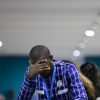
Can Pay, Won’t Pay—COP29 Outcome Far from Promised Historic Deal of a Lifetime
They say it is taboo to talk about money. But this is exactly what developing countries came for: to haggle and push for the climate finance deal of a lifetime, as the climate crisis is, for them, a matter of life and death. Wealthy nations also came for their own deal of a lifetime—to hoist the climate finance burden on the private sector as they take the bare minimum financial responsibility.
Insights From Negotiator into How COPs Move Needle Towards Healthy, Liveable Planet
Every year, the Conference of the Parties creates a global milestone for the climate movement, setting new standards and advancing action towards a net-zero planet to sustain all life on earth. COPs provide a platform for the global community to agree on what it would take to restore planet Earth and the contributions that all signatories to the Paris Agreement should make.
‘AI-powered Weapons Depersonalise the Violence, Making It Easier for the Military to Approve More Destruction’
CIVICUS discusses the dangers arising from military uses of artificial intelligence (AI) with Sophia Goodfriend, Post-Doctoral Fellow at Harvard Kennedy School’s Middle East Initiative.
« Previous Page — Next Page »





One world, one humanity, now one court to defend its rights. Another step towards universal human rights, but not remotely a step far enough. The United Nations adopted the Universal Declaration of Human Rights more than half a century ago, but that has done little to stop violations the world over, just as the Geneva Convention has not protected prisoners of war enough. Democracy itself and the freedom it presupposes has not been protective enough. This is the century to move from politicisation of human rights towards humanising political ways. IPS keeps an eye on that difficult path.

The Week with IPS

NEXT STOP - SDGs
Tracking global progress towards a sustainable world
Tracking global progress towards a sustainable world
