Languages
Sunday, November 1, 2026



News and Views from the Global South
Human Rights

Children in Gaza Threatened by Polio and School Closures
It has been nearly one year since the commencement of Israeli occupation in the Gaza Strip and living conditions for millions of children continue to grow more dire. The rampant spread of disease among children as well as the stagnant state of Gaza’s schooling system have been greatly aggravated by continued hostilities.
How Much Damage Can Be Done by a Few? The Tragedy in Gaza, Part 2
Hungarian-Swedish microbiologist George Klein, who in 1944 escaped from a train destined to Auschwitz, once wrote that his father jokingly used to say that he had caused World War I. While working as a medical doctor in Bosnia he had cured a young boy called Gavrilo Princip from a deadly disease. As an adult Gavrilo shot and killed Archduke Franz Ferdinand, presumptive heir to the throne of Austria-Hungary, whose death became the immediate cause of World War I. Can a single person, knowingly or unknowingly, change the course of history? We talk about “Putin’s war” and “Trump’s USA”. Are individuals so important? Lev Tolstoy wrote in War and Peace that it was absurd to attribute historical events to acts of individuals. The French revolution could quite easily have produced another person like Napoleon. He insisted that the French emperor knew as little of what was happening in the battle of Borodino as the meanest soldier serving under him.
60 Years After Lyndon Johnson’s “Daisy Ad,” the Silence on Nuclear War Is Dangerous
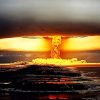
One evening in early September 1964, a frightening commercial jolted 50 million Americans who were partway through watching “Monday Night at the Movies” on NBC. The ad began with an adorable three-year-old girl counting petals as she pulled them from a daisy. Then came a man’s somber voiceover, counting down from ten to zero. Then an ominous roar and a mushroom cloud from a nuclear bomb explosion.
Small Glacial Lakes’ Mass Destruction in the Himalayan Community
Small glacial lakes can cause destruction, which may impact the livelihoods of entire communities. Now this is the harsh reality that the community of Thame village in the Mt. Everest region of Nepal now faces as they rebuild after the August 16 disaster.
El Niño-Induced Water Crisis Drubbing Villagers in Zimbabwe
Side-by-side with fellow male villagers, Enia Tambo uses a white 25-liter plastic bucket to dig out mounds of sand in the Vhombozi River, in Mudzi district located in Zimbabwe’s Mashonaland East Province. The woman, in her late 50s, is digging to reach the water that is lying deep beneath the soil.
Armed Conflict and Climate Crisis Threatens the Lives of Millions in Yemen
Yemen is currently in the midst of a severe humanitarian crisis that has been exacerbated by a litany of environmental issues. Years of armed conflict, constant windstorms, flooding, mass displacement, cholera outbreaks, and acute food insecurity have all compounded into a severe issue for millions of Yemeni people. Currently, it is estimated by the International Committee of the Red Cross (ICRC) that approximately 70 percent of Yemen’s population depends on humanitarian aid to survive.
Africa’s Strong Case for Reforms of UN Security Council Led by Sierra Leone Presidency
At most international forums, including the annual UN General Assembly high-level debate, Sierra Leonean President Julius Maada Bio consistently highlights the injustices of the global system, particularly Africa’s absence in the permanent category and underrepresentation in the non-permanent category of the United Nations Security Council (UNSC).
Knowledge is Power. Gaza War Supporters Don’t Want Students to Have Both
With nearly 18 million students on U.S. college campuses this fall, defenders of the war on Gaza don’t want to hear any backtalk. Silence is complicity, and that’s the way Israel’s allies like it.
Rural Survival: Guardians of Mother Earth Saving Mau, Revitalizing Native Lands
The Great Rift Valley is part of an intra-continental ridge system that runs through Kenya from north to south. A breathtaking, diverse mix of natural beauty that includes dramatic escarpments, highland mountains, cliffs and gorges, lakes and savannas. It is also home to one of Africa’s greatest wildlife reserves—the Maasai Mara National Reserve.
INDIA: ‘Civil Society Organisations Are at the Forefront of the Fight Against Gender-based Violence’
CIVICUS discusses the recent wave of protests against gender-based violence (GBV) in India with Dr Kavitha Ravi, a member of the Indian Medical Association (IMA).
The Time to End Nuclear Tests is Now
Today, the General Assembly convenes – for the fifteenth consecutive occasion – to observe the International Day Against Nuclear Tests, which is commemorated annually on 29 August.
Recovering stolen assets: No weakening of resolve
The White Paper on the state of Bangladesh’s economy will include a review of “smuggled money”, according to the head of the committee, Debapriya Bhattacharya, entrusted to prepare the White Paper.
Latin American Rulers Embrace Harsh Prisons
Invoking the fight against terrorists and sending those who can be charged with this crime to new maximum security prisons are increasingly emerging in the toolbox of Latin American leaders who want to show an iron fist against criminals and opponents.
Lack of Accountability for War Crimes in Libya Raises Instability
The situation in Libya continues to grow more dire every year since the emergence of the al-Kaniyat militant group. From 2013 to 2022, al-Kaniyat had been responsible for a multitude of human rights violations, including mass killings, kidnappings, forced displacements, torture, and sexual violence. The lack of accountability for these injustices has spurred renewed conflict, which threatens to destabilize Libya years later.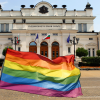
New Bulgarian LGBT+ Law Marginalizes Communities, Rights Groups Warn
A law banning the portrayal of LGBT+ identities in Bulgarian educational institutions is just the latest piece of repressive legislation in a wider assault on minorities and marginalized communities across parts of Europe and Central Asia, rights groups have warned.
New Zealand: Māori Rights in the Firing Line
A New Zealand bill that would roll back Indigenous rights is unlikely to pass – but it’s emblematic of a growing climate of hostility from governing politicians. A recent survey shows that almost half of New Zealanders believe racial tensions have worsened under the right-wing government in power since December 2023.
Kenya’s Unanswered Questions About Enforced Disappearances
As the world marked International Day of the Disappeared, Kenya grapples with a shadowy and persistent crisis—enforced disappearances. This harrowing violation of human rights has left countless families in anguish, searching for their loved ones while battling a wall of government denial and indifference.
A Sustainable Future within Reach: The Promise of Digital Transformation
The development paradigm has shifted to ‘digital by default’ as a norm, reshaping societies and economies. As a hub for digitally driven innovations, Asia and the Pacific is well positioned to leverage the transformative potential of digital technologies to accelerate progress towards the Sustainable Development Goals.
In Tonga the UN Secretary-General Declares a Global Climate Emergency
Three months ahead of the COP29 United Nations (UN) Climate Change Conference, the United Nations Secretary-General, António Guterres, has called for an emergency response from the international community as new data from the World Meteorological Organization (WMO) reveals a critical deterioration in the state of the climate.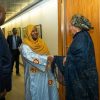
Humanitarian Crisis As Floods, Prolonged Heavy Rains Impact Chad
Since June of this year, Chad has been facing an extended period of heavy rainfall. Major flooding has triggered the onset of a significant humanitarian crisis, as all aspects of Chadian life, including health, food production, and community, have been negatively impacted. Additionally, response plans are severely compromised due to high levels of hostility taking place in neighboring nations.
Enough is Enough: End Nuclear Testing Once and For All
In 2009 the United Nations General Assembly proclaimed 29 August the International Day Against Nuclear Tests. This date recalled the official closing of the Semipalatinsk nuclear weapons testing site in today’s Kazakhstan on 29 August 1991; that one site alone having seen 456 nuclear test explosions between 1949 and 1989.« Previous Page — Next Page »





One world, one humanity, now one court to defend its rights. Another step towards universal human rights, but not remotely a step far enough. The United Nations adopted the Universal Declaration of Human Rights more than half a century ago, but that has done little to stop violations the world over, just as the Geneva Convention has not protected prisoners of war enough. Democracy itself and the freedom it presupposes has not been protective enough. This is the century to move from politicisation of human rights towards humanising political ways. IPS keeps an eye on that difficult path.

The Week with IPS

NEXT STOP - SDGs
Tracking global progress towards a sustainable world
Tracking global progress towards a sustainable world
