Languages
Saturday, November 7, 2026



News and Views from the Global South
Human Rights

World Press Freedom Day 2024

Journalism is in crisis - again. The challenges to press freedom are enormous and multi-faceted.

Gaza Journalist Describes 33 Harrowing Days in Israeli Custody
Diaa Al-Kahlout, the veteran Gaza bureau chief for the Qatari-funded London-based newspaper Al-Araby Al-Jadeed, had been covering the Israel-Gaza war for two months when he became part of the news.
The Tragic Death of Palestinian Journalists
It is only fitting, against the backdrop of World Press Freedom Day, to recount the horror being inflicted on journalists and reporters around the world, which is increasing day by day. To tell the story of the mounting death of journalists in Gaza, it is essential to put into perspective the plight of journalists around the world.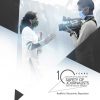
The Deadliest Days for Journalists in War Zones
The seven- month-long war in Gaza is perhaps the only military conflict in contemporary history which has claimed the lives of over 100 journalists, including targeted killings.
‘I Couldn’t Remain Silent’: Son Fights for Uyghur Journalist’s Release from Chinese Prison
The last time Bahram Sintash saw his journalist father was in 2017. Qurban Mamut, an influential Uyghur editor had come to the United States for a visit but upon his return to Xinjiang in northwest China, he disappeared.
Transgender Health Rights Boosted by Hospitals’ ‘Separate Room’ Policy
Transgender people and civil society organizations have welcomed the decision of the chief minister in Khyber Pakhtunkhwa, Pakistan, to allocate separate rooms in hospitals for the transgender community so they can avail themselves of uninterrupted healthcare. “We demand that all provinces follow suit and announce facilities for more than 500,000 transgender people in the country,” Farzana Shah, president of the Khyber Pakhtunkhwa (KP) Transgender Association, told IPS.
Education Cannot Wait Interviews Amy Clarke, Co-Founder and Chief Impact Officer for Tribe Impact Capital LLP
Amy Clarke is Co-Founder and Chief Impact Officer of the multi award-winning Tribe Impact Capital, a dedicated impact wealth manager and B Corps, based in London. She has over 29 years of experience in sustainability, both leading in-house teams (Microsoft and Bank of America) and as a management consultant specialising in climate and sustainability (PwC and EY). Amy serves as a Trustee to B Lab UK and is also an Advisor to fellow B Corps, Greenheart Consulting and Black Seed Ventures. She sits on the Global Steering Group of the Global Ethical Finance Initiative (GEFI) and the Investment Committee of The Blue Cross (having previously served as a Trustee). Amy has both BSc and MSc degrees in environmental studies. In her spare time, she serves as Head of Catering and Entertainment for her three-legged rescue Staffordshire Bull Terrier.

Latin America’s Shifting Demographics Could Undercut Growth
Latin America’s workforce grew by nearly 50 percent in the two decades before the pandemic, helping boost economic growth. Now demographic trends are turning, and likely to weigh on growth in the coming years.
Climate Crisis in Mountains: Borderless Struggle for Frontline Communities
For the last three years, Sambhunath Guragain has been waking up every morning to a view he doesn't want to see: discarded agricultural land where he and his family used to grow food, including rice, but the flood in 2021 changed everything. “We don’t have any crops now, but we are farmers,” Guragain said in November 2021, while looking towards a quietly flowing Melamchi river. This was six months after the massive flash flood in Helambu-Melamchi in Sindhupalchowk district in Nepal. After three years, the situation hasn’t changed.
Niger’s Military Coup Triggers Child Marriages, Sex Work in Neighboring Countries
A group of young girls aged between 15 and 17 sit tight, following attentively a lesson being taught by a Mualim (Islamic teacher) in a makeshift madrassah (Qur’anic school) located in one of the impoverished townships of Benin’s economic capital, Cotonou. They arrived in Benin recently, fleeing poverty, hunger, climate change, and rising insecurity in their home country, Niger, in the aftermath of the military coup that toppled democratically-elected president Mohamed Bazoum.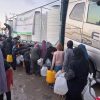
Gaza Teetering on the Brink of Mass Starvation
As we pass 200 days of war, the population of northern Gaza is teetering on the brink of mass starvation. Oxfam analysis found that the 300,000 people in northern Gaza had been forced to survive on an average of 245 calories per day from January to March—less than a single can of beans, and well below the recommended daily intake of 2,100 calories.
Harnessing Science-Policy Collaboration: The Vital Role of IPBES Stakeholders in Achieving Global Nature Targets
In December 2022, the fifteenth meeting of the Conference of the Parties to the Convention on Biological Diversity (CBD) saw governments worldwide unite behind a set of ambitious targets aimed at addressing biodiversity loss and restoring natural ecosystems, through the Global Biodiversity Framework – known now as the Biodiversity Plan.
Conditions Worsen for Belarus Migrants Stuck in ‘Death Zone’ on EU Border
As the refugee crisis on the Belarus/EU borders approaches its fourth year, a crackdown on activism in Belarus is worsening the situation for migrants stuck in a “death zone” as they attempt to leave the country. Groups working with refugees say the repression of NGOs in Belarus has led to many organizations stopping their aid work for migrants, leaving them with limited or no humanitarian help.
Another Climate Victory in Europe… and Counting
A group of senior Swiss women recently won a powerful victory offering renewed hope for tackling climate change. Earlier this month, the European Court of Human Rights ruled that the government of Switzerland is violating human rights because it isn’t doing enough to cut greenhouse gas emissions.
Attacks on UNRWA Not About Its Neutrality, Says UNRWA Chief
The UN Palestinian refugee agency welcomed the recommendations made in the report from the independent investigation led by Catherine Colonna and warned of new and continuing concerns that threaten the agency’s operations.
US Foreign Policy in Middle East Still Governed by Israeli Priorities
The vote and the American veto at the United Nations Security Council on April 18 was predictable. Though European countries are increasingly supportive of a Palestinian state, the US is not yet ready for that eventuality, for these reasons:
Seeking Justice for the Civilian Victims of the Syrian Civil War
When the Syrian Army launched its offensive against the stronghold of rebel FSA (Free Syrian Army) in Homs in February 2012, the safety of civilians was not a factor.
Will a Two-State Solution include Palestine as a UN Member State?
The Biden administration, once again displayed its political hypocrisy by denying UN membership to Palestine, while continuing to advocate a “two-state’ solution” to the crisis in the Middle East. But one lingering question remains: will the two-state solution include-- or exclude-- Palestine as a full-fledged UN member state?
Afghan Women’s Voices Stifled as Taliban Tightens Media Controls
Since the Taliban regained control of Afghanistan in 2021, the space for women in the public sphere has significantly narrowed, with successive orders further restricting their presence in various sectors, including the media.
Making the Global Financial Architecture Work for Emerging Markets and Developing Countries (EMDEs)
The world is facing multiple crises that must be tackled quickly, with innovative approaches and brave decisions. The global financial architecture is an area that needs reform and thinking outside the box. The system created 80 years ago is not able to deal with today’s problems that range from climate change to pandemics, to increasing inequality, to conflict and fragility, to food insecurity and poverty.
The Summit of the Future Is a Rare Chance to Fix a Broken System: Civil Society Must Be Included
Today, the spectre of a major regional conflict, and even a possible nuclear conflagration, looms large in the Middle East. Despite stark warnings issued by the UN Secretary-General, António Guterres, the multilateral system is struggling to resolve the very challenges it was supposed to address: conflict, impoverishment and oppression. In a deeply divided world, this September’s Summit of the Future offers a rare chance to fix international cooperation and make good on gaps in global governance.« Previous Page — Next Page »





One world, one humanity, now one court to defend its rights. Another step towards universal human rights, but not remotely a step far enough. The United Nations adopted the Universal Declaration of Human Rights more than half a century ago, but that has done little to stop violations the world over, just as the Geneva Convention has not protected prisoners of war enough. Democracy itself and the freedom it presupposes has not been protective enough. This is the century to move from politicisation of human rights towards humanising political ways. IPS keeps an eye on that difficult path.

The Week with IPS

NEXT STOP - SDGs
Tracking global progress towards a sustainable world
Tracking global progress towards a sustainable world
