Languages
Monday, October 19, 2026



News and Views from the Global South
Peace

World Slightly More Peaceful, Despite U.S. Militarisation
Countering a two-year trend, the world overall became slightly more peaceful over the past year, according to an annual report released here on Tuesday.
Tension Around Possible Islamic State in Northern Mali
Tuareg and Islamist rebel groups which seized control of northern Mali in March are trying to find common ground for the joint administration of the territory. Residents of the region fear that individual and collective freedoms will not be respected if such an alliance sets up an Islamic state.U.S.-Pakistan Talks on NATO Supply Lines Stopped
Six weeks of talks between Pakistan and the United States have been halted, a Defence Department official stated here on Monday.
SYRIA: Conscience Is Their Only Armour
With the international community vowing to ratchet up pressure on the Syrian government, non-violent activists say they remain undeterred even as the situation seems to be deteriorate daily.U.S.: Obama Resists Growing Pressure to Intervene in Syria
While reports of two mass killings in Syria by pro-regime forces in the past week have increased pressure on President Barack Obama to intervene more directly in support of the opposition, his administration appears determined to avoid any military involvement.U.S. Rejected 2005 Iranian Offer Ensuring No Nuclear Weapons
France and Germany were prepared in spring 2005 to negotiate on an Iranian proposal to convert all of its enriched uranium to fuel rods, making it impossible to use it for nuclear weapons, but Britain vetoed the deal at the insistence of the United States, according to a new account by a former top Iranian nuclear negotiator.Attacking Iran Likely Counter-Productive, Think Tank Warns
While a nuclear-armed Iran would pose significant new challenges to the United States and Israel, a military attack by either country to prevent Tehran from developing a weapon could well prove counter-productive, according to a major new report released here Wednesday by a think tank close to the administration of President Barack Obama.Fewer but Newer Nuclear Arms Deemed Future Threat
"The best way to eliminate the nuclear threat anywhere is by eliminating nuclear weapons everywhere," says Secretary-General Ban Ki-moon, who is increasingly viewed as one of the strongest opponents of nuclear arms.
Taliban Seek Support ‘in Rushdie’s Name’
Taliban members have resorted to invoking fictitious links of academics with writer Salman Rushdie in a bid to boost their popularity.
Syria Simmers Amid U.N. Security Council Deadlock
The United States and its Western allies appear increasingly inclined to push for regime change in Syria, although the latest round of diplomatic talks at the U.N. Security Council Wednesday suggest that it remains a distant possibility.Calls Mount for U.S. Intervention in Mali
The ambassador of Niger to the United States, Maman Sidikou, on Thursday called on the U.S. to step up military collaboration with African countries to support a potential intervention in Mali.Annan: ‘Bold Steps’ Needed for Syria Peace
Kofi Annan, the U.N.-Arab League envoy to Syria, has called on the country's government to take bold steps to prove its commitment to restoring peace during a visit to Damascus.Colombia and Venezuela – Joining Forces
When 12 Colombian soldiers were killed by FARC insurgents a stone's throw away from the northern border with Venezuela, the consequences included military cooperation that reinforces the political, diplomatic and trade-related links that have developed over the past two years between Colombian President Juan Manuel Santos and Venezuelan President Hugo Chávez.U.S. Hard Line in Failed Iran Talks Driven by Israel
Negotiations between Iran and the United States and other members of the P5+1 group in Baghdad ended in fundamental disagreement Thursday over the position of the P5+1 offering no relief from sanctions against Iran.Israel, Not Iran, Feels Isolated
As a result of the diplomatic momentum geared to disarm international suspicions over the explosive issue of Iran’s nuclear programme, the one country not directly party to the two-track negotiation process feels more isolated than Iran.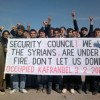
Security Council ‘Unfit for Purpose’, Says Amnesty International
Amnesty International delivered a scathing condemnation of global and national leadership in its 2012 global human rights report on Tuesday, conveying profound disappointment in such leadership for its failure to match the determination and resilience of ordinary civilians in their resistance to repressive regimes.The Globalisation of U.S. Special Operations Forces
It was recently reported that U.S. Special Operations Command (SOCOM) commander Adm. Bill McRaven and Deputy Director of Operations Brig. Gen. Sean Mulholland want to establish a worldwide network linking special operations forces (SOF) of allied and partner nations to combat terrorism.U.S. Neo-Conservatives Assail Possible Compromise on Iran Talks
As at least two days of talks on the future of Iran's nuclear programme got underway in Baghdad Wednesday, neo-conservatives and other hawks escalated their campaign against any compromise agreement, particularly one that would permit Tehran to continue enriching uranium on its territory.IAEA Reports Progress in Iran Nuclear Talks
The head of the U.N. nuclear watchdog has said he expects to sign a deal with Iran soon on investigating suspected weapons activities connected to the country's nuclear programme.Calls for Angola to Investigate Abuse of Congolese Migrants
The Angolan government is being urged to carry out a thorough and independent investigation into allegations of sexual and physical abuse by its security forces against Congolese migrants.
Helping Victims of Post-Election Crisis Obtain Justice in Côte d’Ivoire
Thousands of people suffered rape, torture and other violence during the post- electoral crisis in Côte d'Ivoire beginning in December 2010. But many survivors of rights violations have been afraid to seek justice for fear of reprisals by the perpetrators. An initiative by the International Federation of Human Rights aims to support 75 such victims as they bring their cases to court.« Previous Page — Next Page »





The Week with IPS

NEXT STOP - SDGs
Tracking global progress towards a sustainable world
Tracking global progress towards a sustainable world
