Languages
Friday, October 23, 2026



News and Views from the Global South
Peace
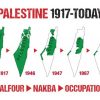
US Mideast Peace Plan: Israelis Offered the Cheese & Palestinians the Holes
The Israeli human rights organization B’Tselem has described the much-ballyhooed US Middle East peace plan as “more like Swiss cheese-- with the cheese being offered to the Israelis and the holes to the Palestinians”.
At the International Summit on Balanced & Inclusive Education: A Call to Transform Globally
In an increasingly unequal and divided world, what role can education play to achieve sustainable development globally?
Experts laud International Court of Justice Order on Myanmar to Halt all Genocidal Conduct
In a groundbreaking and much anticipated ruling delivered on Thursday, the International Court of Justice demanded that Myanmar halt all measures that contribute to the genocide of the Rohingya community.
Is Iraq Now a Virtual “US-Occupied Territory”?
Pat Buchanan, a senior advisor to three US Presidents and twice candidate for the Republican presidential nomination, once infamously described the United States Congress as “Israeli-occupied territory” -– apparently because of its unrelentingly blind support for the Jewish state.
U.S. Might Pull Troops from West Africa, but Who Will it Affect?
While the United States is busy with foreign operations such as killing Qasem Soleimani, a key figure in Middle East Politics, behind the scenes it is reportedly considering a change that experts worry might be of grave concern: a potential withdrawal of troops from West Africa.
The United Nations Reforms-From Ideas to Actions
One of the highlight activities as the United Nations commemorates its 75th anniversary this year will be the launch of an “annual temperature check” on Sustainable Development Goals (SDGs), progress. With only ten years left to the final whistle for the Goals, this activity that will take place each September will provide a snapshot of what’s working, and where countries need more action.
Iran Announces New Nuclear Deal Breach
Iran announced its fifth breach of the 2015 nuclear deal Jan. 5, stating that it “discards the last key component of its operational limitations” put in place by agreement.
‘Unprecedented Terrorist Violence’ in West Africa, Sahel Region
The top UN official in West Africa and the Sahel updated the Security Council on Wednesday, describing an “unprecedented" rise in terrorist violence across the region.
2020 Is the Decade of Action & It Has to Be a Sprint
Happy New Year, Kenya. 2020 marks a decade of action towards the realization of the Sustainable Development Goals by 2030. Peace and development are inextricably linked, with each making the achievement of the other far more likely. This puts the conflict-prevention and development work of the UN at the heart of the agenda in East Africa, but in a multi-agency and programme environment, making meaningful progress is challenging.
UN Chief Warns of Rising Misogyny, Xenophobia, Discrimination, Racism & Hate Speech
As we prepare to bid farewell to 2019, we must take a clearsighted look at the global situation and the new challenges we face. Our world is undergoing a shift. It is no longer bipolar or unipolar. But it is not yet truly multipolar. Balances of power are changing, creating new and dangerous risks.
Education for Constructive Change
We saw a hugely diverse selection of world leaders - from civil society, politics and business - seeking positive change at the UN General Assembly in New York in September. But the global reality is a political and economic environment that is increasingly divided. Boycotts. Protests. Narratives of hate.
The Ignoble Fall of a Nobel Peace Prize Winner
Appearing before 17 judges of the International Court of Justice (ICJ) in The Hague, Aung San Suu Kyi, the de facto civilian leader of Myanmar, became a public apologist for the military government of Myanmar which has long been accused of genocide and forcing over 730,000 Rohingya Muslims to flee to neighboring Bangladesh since a 2017 crackdown.
Nuclear False Warnings & the Risk of Catastrophe
Forty years ago, on Nov. 9, the U.S. Defense Department detected an imminent nuclear attack against the United States through the early-warning system of the North American Aerospace Defense Command (NORAD). U.S. bomber and missile forces went on full alert, and the emergency command post, known as the “doomsday plane,” took to the air.
IEDs: Tackling Terrorists’ Weapon of War
Some of the most memorable images of the late Diana, Princess of Wales, show her wearing a protective suit while touring a minefield in Angola in 1997 to raise awareness of the devastating effects of land mines.
Despite Halting Progress, UN Continues its Push for a Nuclear-Weapons-Free Zone in the Middle East
A longstanding proposal for a regional nuclear-weapons-free zone (NWFZ) in the Middle East – one of the world’s most conflict-ridden regions – has been kicked around the corridors of UN committee rooms since 1974.
U.N. Group Launched to put Afghan Women at Centre of Peace Initiatives
Afghanistan’s first female ambassador to the United Nations this week launched a U.N. group that aims to put women at the centre of peace initiatives in Afghanistan.
Achieving the Possible: “Weapons of Mass Destruction Free Zone in the Middle East”
A historic conference on the Middle East opened at the United Nations in New York on 18th November and will continue until 22nd November. The Conference on the Establishment of a Middle East Zone Free of Nuclear Weapons and Other Weapons of Mass Destruction is presided over by Ambassador Sima Bahous of Jordan.
With the UN Security Council in Paralysis, Are there New Hopes for Rohingya Muslims?
The 15-member UN Security Council (UNSC) stands virtually paralyzed in the face of genocide charges against the government of Myanmar where over 730,000 to one million Rohingya Muslims have been forced to flee to neighboring Bangladesh since a 2016 crackdown by Myanmar’s military.
The Slippery Slope to Autonomous Killing Machines
Would you trust an algorithm with your life? If that thought makes you uncomfortable, then you should be concerned about the artificial intelligence (AI) arms race that is secretly taking off, fueled by the arms industry.
World’s Spreading Humanitarian Crises Leave Millions of Children Without Schools or Education
As massive protests escalated worldwide last month, millions of children walked out of schools to demonstrate against the lackadaisical response – primarily from world leaders --to the ongoing climate emergency resulting in floods, droughts, typhoons, heat waves and wildfires devastating human lives.
Fearless Young Women and Insensitive Men
On October 11, the Norwegian Nobel Prize Committee announced that this year´s Peace Prize is awarded to Ethiopia´s prime minister Abiy Ahmed: “For his efforts to achieve peace and international cooperation, and in particular for his decisive initiative to resolve the border conflict with neighbouring Eritrea.”1 Let us hope that Abiy remains a worthy Peace Prize winner and that warfare and human suffering on the Horn of Africa will finally come to an end.« Previous Page — Next Page »





The Week with IPS

NEXT STOP - SDGs
Tracking global progress towards a sustainable world
Tracking global progress towards a sustainable world
