Languages
Tuesday, November 17, 2026



News and Views from the Global South
Population
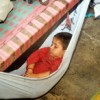
PAKISTAN: Floods Bring Out Another Crisis – Maternal Risks
The floods that have submerged one-fifth of Pakistan have begun to recede, but the crisis has brought to light one of the country’s hidden miseries: the plight of mothers, who are dying in tens of thousands each year.Summit Failure on Water, Sanitation Would Be Recipe for Disaster
A weeklong international conference here has transmitted a strong political message to next week's U.N. summit meeting of world leaders: what good is the fight against poverty, hunger, maternal mortality and child deaths if water and sanitation are not given the high priority they deserve?Living on the Edge of Caravans
Broken bicycles and old suitcases mark the entrance to the makeshift camp. Ankle-deep in mud that is newly wet from a rain-shower, the visitor is taken by the hand by lively children to meet their parents.CAMBODIA: Gov’t Heats Up Anti-Smoking Campaign
For anti-smoking advocate Mom Kong, the ubiquitous flashy cigarette advertisements he sees throughout Cambodia’s capital city are a major barrier to reducing smoking.
EUROPE: Roma Conference Decries Government-Led Discrimination
Over the centuries, racism in the Americas has targeted indigenous peoples, African slaves and their descendants, while in Europe, secular racism has long centred on its once-enslaved gypsies, as their recent persecution in France and Italy confirms.MIGRATION: Ecuador’s Open Door Begins to Close for Some
The Ecuadorean government's policy of "universal citizenship," which did away with visas or other requirements for foreigners entering the country, has clashed with the reality that Ecuador is being used for human trafficking -- so now there are some exceptions.Africa’s Water Security Hinges on Better Infrastructure
As Africa continues its seemingly endless struggle for water security, why is the beleaguered continent lagging behind Asia and Latin America - despite commitments and declarations by political leaders?NEPAL: Adoption Suspension Leaves Children in Limbo
A big question marks looms over the future of many Nepali children in various child homes in the country in the wake of the suspension by 11 countries of their child adoption programmes for this Himalayan nation.Scarce Water Diverted by Greased Palms
The battle to resolve the global water crisis is being grossly undermined by bad governance: bribery, extortion, embezzlement and high-level corruption.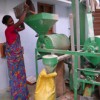
INDIA: Buoyed by Growing Market, More Farmers Go Organic
He had decided to grow watermelons this summer on his one-acre (.405 hectare) plot, and so Veera Narayana went about preparing the arid red earth by first ploughing it and then lighting fires in the furrows.
Fighting Dirty Water Is World’s New Ecological Battle
A primary topic of discussion at a weeklong international water conference here can best be summed up in two words: "dirty water".Slammed For Its Roma Expulsions, France Shifts Rhetoric
Faced with mounting criticism because of its expulsions of Roma, or Gypsies, the French government is trying to gain allies in what it calls the "battle" against undocumented immigration and people-trafficking networks.HEALTH: H1N1 Pandemic Is Over, But Vigilance Needed – WHO
The World Health Organisation (WHO) is urging countries in Asia to remain vigilant about the spread of the H1N1 influenza virus, which the international body declared was no longer a pandemic a month ago.
SOUTHERN AFRICA: Adapt or Perish
A changing climate will prompt changes in behaviour across Southern Africa. And when it comes to adaptation, Swazi farmer Bongani Phakathi is a frustrated man a few steps ahead of his neighbours.
ANGOLA: More Mothers Survive Childbirth
As darkness falls on a cool evening in Luanda, a group of women sit huddled under threadbare blankets outside one of the city’s few maternity hospitals. "I have to be here," Paula Silva, 45, said, shivering slightly.
PAKISTAN: Floods Leave Afghan Refugees Down and Out
When they are not looking forlornly over what used to be their homes or trying to find help for relatives who have fallen ill, many Afghan refugees chase after vehicles that pass through the Great Trunk Road connecting Peshawar to Islamabad, the Pakistani capital.BAHRAIN: No Change Seen in Ban on Entry of People with HIV
Bahrain may be dependent on expatriate labour, but that has not stopped it from deporting migrant workers who are found to be HIV-positive.
Time Running Out Faster Than Water, Experts Warn
A major weeklong international water conference opened in the Swedish capital Monday with an ominous warning: time is running out faster than fresh water.EUROPE: New Expulsions Hit People Without a Place
Roma gypsies are routinely described as Europe's largest ethnic minority. Numbering between 10 and 16 million, their combined population exceeds that of many European Union countries. Yet their numerical strength offers no compensation for the poverty, persecution and scapegoating that the Roma have to endure -- or for how their welfare is accorded a low priority by the EU's institutions.INDIA: Fears of Privacy Loss Pursue Ambitious ID Project
Fears about loss of privacy are being voiced as India gears up to launch an ambitious scheme to biometrically identify and number each of its 1.2 billion inhabitants.BOLIVIA: UN Calls for Broad Pact on Children’s Needs
A national pact to focus on the rights of children was proposed by United Nations representative in Bolivia Yoriko Yasukawa on the 20th anniversary of the Convention on the Rights of the Child.« Previous Page — Next Page »


 One Thousand Internally Displaced Persons (IDPs) Relocated from Tomping Camp in South Sudan. Credit: UN Photo/Isaac Billy
It took hundreds of thousands of years for the world’s human population to cross one billion in 1804. Approximately 200 years later, the population has multiplied sevenfold. In 2023, the global population crossed 8 billion, and is expected to reach 9 billion before 2050. With the planet more crowded than ever, it is essential to keep track of population trends, urbanization, migration, and reproduction across the world.
Life expectancy has seen significant strides in the past century, largely due to economic development and increased standards of living. On the contrary, trends in global fertility are shifting, with certain regions in Africa and Asia reporting higher rates, while parts of Europe and North America report stagnant or lower rates. This is in part due to differences in sexual and reproductive healthcare, as well as societal and economic conditions around the world. For example, child marriage is prevalent in certain societies, where childbearing is also considered a familial duty. Meanwhile, stagnating economies frequently experience lower marriage and childbearing rates.
The increase in migration and urban development around the world is also linked to global population trends. By 2050, it is expected that approximately 66 percent of all people will live in cities. Furthermore, global crises such as warfare and natural disasters also prompt transnational migration. Transnational migration is linked to a variety of socioeconomic issues in both host and receiving countries: migrants often leave developing countries with less access to educational and economic opportunities and arrive in developed countries where they are frequently the targets of ethnic, racial, and cultural discrimination, and economic exploitation. Recent crises in Europe and the United States demonstrate the importance of advocating for migrants worldwide. As migrants from the Global South are increasingly stripped of their legal and civic rights in unlawful deportations, or targeted in acts of identity-based violence, it is essential to keep track of population trends and protect the human rights of migrant populations. Climate-related disasters are now a major driver of displacement, with nearly half of all new internal displacements in 2025 being disaster-related.
IPS is devoted to covering issues surrounding population trends, migration, and reproduction through its compelling articles, which use both statistics and human stories to provide readers with robust and informative viewpoints.

The Week with IPS

NEXT STOP - SDGs
Tracking global progress towards a sustainable world
Tracking global progress towards a sustainable world
