
Saturday, September 19, 2026



News and Views from the Global South
Press Freedom

Not Guilty Verdict in Kuciak Killing – a Chilling Message for Journalists
A Slovak businessman with alleged links to organised crime has been found not guilty of ordering the murder of journalist Jan Kuciak in a ruling that has left press freedom campaigners and politicians shocked.
Will There Also Be a Post-Journalism?
Every era brings its own buzzwords or catchphrases along with it. The term du jour is ‘pandemic’, namely ‘coronavirus’ and ‘COVID-19’; but alongside these words, speculation and forecasts over the post-pandemic world are flourishing. There is a proliferation of pieces and commentary on what our daily lives or the economy will be like once the epidemic is under control, that is, how we will live in the aftermath of the pandemic.
Sierra Leone – Why Everyone is Not Celebrating the New Media Law
Last week, Sierra Leone’s parliament voted to repeal the country’s 55-year-old libel law, which criminalised the publication of information that was deemed defamatory or seditious, and which had been used by successive governments to target and imprison media practitioners and silence dissenting views. But not everyone is convinced it was in the best interest of media freedom.
US, UK, Interpol Give Ghana Phone Hacking Tools, Raising Journalist Concerns on Safety & Confidentiality
In May 2019, senior members of Ghana’s law enforcement posed for photos with the U.S. ambassador to their country at a ceremony in the capital, Accra. Between them they held boxes and bags, gifts from the U.S. government to Ghana which, according to one of the recipients, contained Israeli phone hacking technology.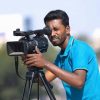
Press Freedom Under COVID-19 Lockdown in Asia
Governments have made the media “a scapegoat” across Asia, targeting journalists who are simply reporting on the failures or shortcomings of their leadership during the coronavirus pandemic, press freedom experts have warned.
Press Freedom and Tackling Disinformation in the COVID-19 context
On the occasion of World Press Freedom Day 2020, join UNESCO for a dynamic online discussion on the importance of press freedom and independent journalism to provide reliable, life-saving information during the COVID-19 pandemic. Topics to be covered include:- • Fighting disinformation and rumours
• Journalists on the front lines: ensuring their health and safety
• The role of governments: protecting press freedom and independent journalism
• The role of social media and technology: supporting journalism and fighting disinformation
Blocking media access during Covid-19
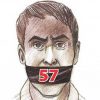
Press freedom in Bangladesh has been in decline long before the coronavirus came to our shores. Over the last decade, thanks to increasingly repressive media laws and highhanded measures adopted by the authorities, the health of journalism has been deteriorating in such a way that even the stalwarts of the fourth estate began to worry if the damage could ever be reversed. Yet, an outcome few would have expected during the Covid-19 crisis—which was expected to unite the people and their leaders against humanity's most dreaded enemy in decades—is the tightening of the noose around free flow of information, which holds the key to this unity. It's a self-defeating strategy that hurts not only the general people and the media, but those tightening the noose as well.
Freedom of the Press as a Guarantee for Human Dignity and Well-Being
United Nations has designated at least 170 specific days of the year as occasions to mark particular events or topics to promote the objectives of the Organization. 2 This might be considered as yet another sign of a supersaturation caused by the internet revolution. However, it cannot be denied that certain issues need to be globally recognized and amended. UNESCO has declared that the 3rd of May will be a day to remind us that media are in several parts of the world under attack, their independence are denied, critical thinking is considered as a threat and journalists seeking the truth are harassed, threatened, roughed up, or even killed. I would like to add that it is also an opportunity to acknowledge that communication, critical thinking, and imagination are essential parts of human existence and culture, if this is suppressed the entire humanity will suffer.
Journalism is Not a Crime…and Fake News on Social Media is Not Journalism
This year’s World Press Freedom Day on 3 May falls during COVID-19 lockdowns in many of our countries. Restriction on movement means journalists all over the world are facing obstacles in getting interviews and data, and verifying stories before publishing.
Protect Journalists’ Rights so We can Stop the COVID-19 Disinfodemic
Andrew Sam Raja Pandian, a digital journalist and founder of a news portal in the southern state of Tamil Nadu, was arrested for running two news articles related to COVID-19.
Press Freedom Needs Protection from Pandemic too
Wearing an orange jacket and face mask, Li Zehua, a Chinese freelance journalist, can be seen filming himself in a car. He is sure that state security agents have been pursuing him since he began documenting events in Hubei’s capital Wuhan, the first epicentre of the COVID-19 pandemic. A second YouTube video, circulating widely since he launched his appeal, ends abruptly when two men knock at his apartment. He has just reappeared online after two months, saying police interrogated him and put him in quarantine and that he was well looked after during this period.
World Press Freedom Day: The Assault on Media Freedom in Asia Worsens During COVID-19 Pandemic
May 3rd marks World Press Freedom Day around the world. During this COVID-19 pandemic, a robust media environment is critical: access to life-saving information is key in the fight against the virus. As governments impose a range of restrictions in attempts to curb the pandemic, journalists help hold authorities to account by providing analysis, engaging in debate about government actions, and creating a space for dialogue about the future we all hope to see.
WORLD PRESS FREEDOM DAY: Journalism Without Fear or Favour
 MEDIA WORLDWIDE is facing crises on multiple fronts, exacerbated by the COVID19 pandemic. Reporters without Borders released its 2020 World Press Freedom Index on April 21st, noting that the Coronavirus is being used by authoritarian governments to implement “shock doctrine” measures that would be impossible in normal times.
As Coronavirus Spreads, No Journalist Should be Sidelined in Prison
In 2014 my husband and I were arrested in my native country, Iran, for the crime of working as journalists. I spent 72 days in Tehran’s notorious Evin prison, all of them in solitary confinement.
On World Press Freedom Day, the EU Must Rescue Media Independence in Hungary Before It’s Too Late
Censorship, smear campaigns and harassment. These are just some of the daily struggles that media professionals are facing in Hungary. And now the threat of jail time may be looming. In the context of World Press Freedom Day, there is little to celebrate in the Eastern Bloc region.
Killer of Slovak Journalist Sentenced as Rights Groups Await further Convictions
Journalists and rights activists have welcomed the jailing of a man for the murders of Slovak investigative reporter Jan Kuciak and his fiancée Martina Kusnirova, but say others involved in the killings must be convicted too if justice is to be fully served.
What Journalists Should Know About Coronavirus Cellphone Tracking
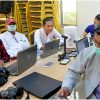
Governments all over the world have been considering cellphone surveillance to help track and contain the spread of the coronavirus.
The Future of Journalism
All over the world, journalism is going through an era of uncertainty. It is not yet clear what the business model for the news field will be, and this is happening precisely at a time when information is a central issue in every person's life.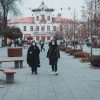
Harassment of Journalists Jeopardises Keeping Public Safe amid Coronavirus Pandemic
Growing intimidation and repression of journalists reporting on the coronavirus is threatening public health in some countries, press freedom monitors have warned.
It’s Disinformation, Stupid!
During his 1992 run, Bill Clinton, then elected US president, made "It's the economy, stupid!” a household phrase. Coined by campaign advisor James Carville, it pointed out economic and health issues as part of the strategy resulting in the accession of this relatively obscure governor of Arkansas into the White House.
Journalists Tell Slovakia’s PM-elect: ‘Thanks, but No Thanks’
Plans announced by Slovakia’s prime minister-elect to fund investigative journalists to act as corruption watchdogs on government and state bodies have been dismissed as “a road to hell” by local journalists.« Previous Page — Next Page »


Journalism is dangerous work. Dozens of reporters and other media workers are killed in the line of duty each year. Hundreds more face threats, intimidation, and harassment as they risk their lives to let us know what is going on in war zones and as they root out corruption. In the Information Age, the Internet provides us with new ways to disseminate the news even as it poses new threats to press freedoms.


IPS Director General Farhana Haque Rahman was invited by UNESCO as a panelist at the World Press Freedom Day 2017 gathering in Jakarta, in the Plenary Session: Quality journalism: a public good for just, peaceful and inclusive societies.

The Week with IPS

Tracking global progress towards a sustainable world
