
Wednesday, September 16, 2026



News and Views from the Global South
Press Freedom
Lebanon: A Lion Pit for Journalism
Our deadliest nightmare is back: Political assassinations in Lebanon is back with the horrific murder of Luqman Slim, a vocal critic of Hezbollah. Slim’s assassination is the first killing of a high-profile activist and outspoken journalist in years. What do the political assassinations in Lebanon tell us about the history of this country?
Myanmar: Heroes and Villains
Myanmar’s State Counsellor was recently deposed and arrested along with other leaders of her ruling party – National League for Democracy (NLD). The Leader of Tatmadaw, the Military, Min Aung Hlaing, announced that elections in November last year had been fraudulent and in an “effort to save democracy” the military would now rule the nation for at least one year, until new elections could be organised. Counsellor Aung San Suu Kyi is accused of “importing ten or more walkie-talkies” and of violating the nation’s “Natural Disaster Law”. Some might agree that Suu Kyi deserves to be locked up. As an admired role model and Nobel Peace Prize winner, she was globally depicted as an almost saintlike being, canonized in movies like Luc Bessons’s The Lady. U.S. Secretary of State, Hillary Clinton, watched the movie before she in 2011 visited Suu Kyi, who by then had spent altogether fifteen years in house imprisonment, deprived of the company of an ailing and eventually dying husband and two sons. In spite of her forced isolation she became an eloquent representative for her compatriots’ resistance and perseverance under almost fifty years of military dictatorship.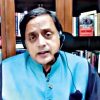
Majority Rule Giving Way to Majoritarianism
Celebrated Indian writer, Member of Parliament and former diplomat Shashi Tharoor in a conversation with The Daily Star Editor and Publisher Mahfuz Anam on the occasion of the newspaper's 30th anniversary yesterday spoke eloquently on media freedom, regional politics and democracy on a virtual platform.Bangladesh Charges 3 Journalists under Digital Security Act
In response to Bangladesh authorities’ recent filing of charges under the Digital Security Act against photographer Shafiqul Islam Kajol, writer Mushtaq Ahmed, and cartoonist and Kabir Kishore, the Committee to Protect Journalists issued the following statement:
Is Turkey a Proof that Religion and Democracy Cannot Coexist?
Over the years, Turkey has survived three Coup d'état in which its military forces took power, in 1960, 1971 and 1980. The coup in 1997, was carried out in a “post-modern way”, where generals sat down with the then prime minister, Necmettin Erbakan and forced him to resign. However the turning point in Turkey has been the failed coup attempt in July 2016, which has till date been one of the bloodiest coup attempts in its political history, leaving 241 people killed, and 2,194 others injured.
Incitement to Violence Is Rarely Explicit – Here Are Some Techniques People Use to Breed Hate
As senators plan for an impeachment trial in which former President Donald Trump is accused of inciting his supporters to mount a deadly insurrection at the Capitol, global concern is growing about threats of violent unrest in multiple countries, including the U.S. The United Nations reports the proliferation of dangerous speech online represents a “new era” in conflict.
“Saving Journalism: A Vision for the Post-Covid World”
In the midst of the COVID-19 pandemic, journalists everywhere are feeling the consequences; job cuts, layoffs and closures have swept the world.
“In Zimbabwe there is Freedom of Speech, but no Freedom After the Speech”
A long-running gag says “in Zimbabwe there is freedom of speech, but no freedom after the speech”. But for journalists and activists who have been forced to endure nights in the country’s overcrowded and filthy holding cells, this is no laughing matter as prison inmates have no personal protective equipment to guard against COVID-19.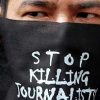
Targeting Journalists Takes a Toll on ‘societies as a Whole’ – UN Chief
When journalists are targeted, “societies as a whole pay a price”, the UN chief said on November 2, 2020, the International Day to End Impunity for Crimes against Journalists.
Twitter, Donald Trump, and Incitement to Violence
Over the last four years, United States President Donald Trump has had in Twitter his main political communication tool. On this technological platform, he spread messages that were not entirely true, insulted and disqualified people, fired, or mocked his collaborators. Twitter was a stage for his sort of presidential reality show.
Stand Tall, UN Humanitarians
Most people around the world were glad to see the back of 2020: From the devastating bushfires in Australia to the plagues of locusts through East Africa stretching across Arabia to Pakistan, extreme weather, melting ice sheets at the poles, and Covid-19 that still engulfs the globe.
A Decade after the Arab Spring, Tunisia Fails to Keep up with the Process of Democratisation
Ten years ago a young street vendor, Mohamed Bouazizi set himself afire in the central Tunisian provincial town of Sidi Bouzid to protest against police harassment. Bouazizi’s sacrificial act served as a catalyst and inspired the Tunisian people to take over the streets that led to the Jasmine Revolution in the country. On January 4, 2011 Mohamed Bouazizi died, and ten days later the country's authoritarian President Zine El Abidine Ben Ali’s rule ended when he fled to Saudi Arabia.
Online Violence, Fueled by Disinformation and Political Attacks, Deeply Harms Women Journalists
An alarmingly high number of women journalists are now targets of online attacks associated with orchestrated digital disinformation campaigns. The impacts include self-censorship, retreat from visibility, an increased risk of physical injury, and a serious mental health toll. The main perpetrators? Anonymous trolls and political actors.
If Your Civic Space is Closed, your Human Rights Dissolve
On Human Rights Day, civil society calls for the protection of civic space as a fundamental freedom, as more than 80% of the world’s population live in countries where civic space is closed, repressed or obstructed.
Journalists covering conflict, essential workers for a ‘durable peace’ says Guterres
Reporters and other media workers in warzones across the world, are reliable witnesses who contribute to forging peace, and must be better-protected under international humanitarian law, said the UN chief on Wednesday.
Venezuela, Twitter, and Crimes Against Humanity
In mid-September, the United Nations Human Rights Council approved the renewal, for another two years, of the mandate of the Fact-Finding Mission to determine and document the existence of crimes against humanity in Venezuela, under the government of Nicolás Maduro.
UNESCO sounds the alarm on global surge in attacks against journalists covering protests
A new UNESCO report highlights a sharp increase in the global number of protests during which the police and security forces violated media freedom in the first half of 2020. Between January and June this year, 21 protests around the world were marred by violations of press freedom, including protests in which journalists were attacked, arrested and even killed.
TikTok, Trump and the Need for a Digital Non-Aligned Movement
Recent weeks have seen a dramatic escalation in the U.S.’ stance towards tech companies from the People's Republic of China (PRC). After hounding the telecommunications company Huawei for years, the social networking app TikTok is the latest Chinese company to enter the firing line.
COVID-19: Presidents, the Press, and the Pandemic
The presidents of the Americas, beyond their ideological differences, seem to agree in questioning the role of journalists and the media in the coverage of the COVID-19 pandemic. On the other hand, human rights organizations remind us of the fundamental role of information, especially in times of crisis and uncertainty like the one we are experiencing in this 2020.
Mozambique Reels from Repeated Attacks on Press Freedom
While Mozambique was recently rattled by an arson attack on a local media organisation, experts say that it’s only a part of a worrying pattern of continuous attacks on the media in the country.

Not Guilty Verdict in Kuciak Killing – a Chilling Message for Journalists
A Slovak businessman with alleged links to organised crime has been found not guilty of ordering the murder of journalist Jan Kuciak in a ruling that has left press freedom campaigners and politicians shocked.« Previous Page — Next Page »


Journalism is dangerous work. Dozens of reporters and other media workers are killed in the line of duty each year. Hundreds more face threats, intimidation, and harassment as they risk their lives to let us know what is going on in war zones and as they root out corruption. In the Information Age, the Internet provides us with new ways to disseminate the news even as it poses new threats to press freedoms.


IPS Director General Farhana Haque Rahman was invited by UNESCO as a panelist at the World Press Freedom Day 2017 gathering in Jakarta, in the Plenary Session: Quality journalism: a public good for just, peaceful and inclusive societies.

The Week with IPS

Tracking global progress towards a sustainable world
