Languages
Tuesday, October 13, 2026



News and Views from the Global South
Press Freedom

Small Win for NGOs as UN Members Try to Exclude Critical Voices
An UN Committee responsible for giving non-government organisations (NGOs) UN accreditation has had one of its decisions overturned by other UN member states as it seems to be restricting NGOs which are perceived to be critical of governments.Kashmir on Fire
Kashmir is bleeding once again. Many innocent civilians have been brutally killed and many more injured by the Indian security forces. Surprisingly, there is a deafening silence in the local media. No views, no comments whatsoever have appeared. Strangely, the media, which is otherwise very active and springs into action on the slightest violation of human rights, kept mum as if Kashmiris are not human, their blood carries no importance and is cheaper than water. Many nowadays are voicing serious concerns about the rights of drug addicts killed by the police but not a single word for Kashmiris.
Civil Society Organizations Worried About Declining Involvement
Less than a year after the adoption of the global Sustainable Development Goals (SDGs), non-government organizations (NGOs) are concerned about declining possibilities for participation, both at the UN and in national politics.
Journalists Face Unprecedented Violence
There has never been a time more dangerous to be a journalist than today. On an average week, one journalist gets killed, according to UNESCO, and the pace of these attacks keeps increasing.
From Somalia to Afghanistan: The Dangers Local Journalists Face
On Sunday, June 5, three reporters were killed: Somali broadcast journalist Sagal Salad Osman, Aghan journalist Zabihullah Tamanna, and American photojournalist David Gilkey.
Of GPA 5 and Journalistic Ethics
We can all agree that in recent years, there has been a tremendous increase in the number of Bangladeshi students who achieved GPA 5 in both the secondary and higher secondary school level. It is no doubt heartening to see that our young people are doing so well in their studies, but it also raises a pertinent question as to the standard of education that is being imparted in our schools and colleges. The question that has been frequently asked is “Do so many deserve GPA 5 or is it being handed out to them?” This issue undoubtedly requires serious reflection.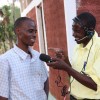
Deteriorating Protection of Journalists’ Sources a Global Problem
The freedom of the press is a universally cherished democratic right, but what may have been overlooked as the World Day Freedom of Information was celebrated on Wednesday is that the ability of journalists to protect their source is increasingly coming under attack by authorities.
Models of Press Freedom
1760s ushered in a new dawn of freedom of the press. Anders Chydenius, an enlightened thinker and politician of the Kingdom of Sweden, had struggled against secret and unaccountable government power, as he urged for the freedom of press and information and right of access to public records law.World Celebrates 250 Years Since First Freedom of Information Act
Press freedom is not just a beautiful idea but a very concrete thing, included in the UN's Sustainable Development agenda which is meant to lead the humankind to sustainable development, UNESCO's director general, Irina Bokova, said at the opening of the World Press Freedom Day here Tuesday.
On World Press Freedom Day, A View From Asia
Travel in many parts of Asia, as I do, and you are likely to find everyone looking at their smartphones – even in remote areas - hungry for information wherever they can find it.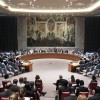
Could the UN be Doing More to Protect Journalists?
As the world commemorates World Press Freedom Day, a coalition of some 35 press freedom groups is calling on the 193-member General Assembly to appoint a Special Representative of the Secretary General to monitor and oversee the safety of journalists worldwide.
Analysis: The Role of the Free Press in Sustainable Development
This year’s World Press Freedom Day marks the 250th anniversary of the first-ever freedom of information law, enacted in what are now Sweden and Finland. 3 May, 2016 is more than just an important anniversary, however; this is the first celebration of World Press Freedom Day since the adoption of the United Nations’ Sustainable Development Goals. Securing a free press is essential for progress towards achieving these ambitious goals for people and planet by the year 2030.Odd Situation in the “Paradise” of Press Freedom
A strange situation has emerged in Finland where some people feel that the press freedom is currently jeopardised. The small Nordic country is a press freedom celebrity leading the index kept by Reporters Without Borders since 2009 and hosting the UNESCO World Press Freedom Day on May 3.
Free Press a Casualty of Pakistan’s Terror War
Pakistan’s Federally Administered Tribal Areas (FATA) is widely viewed as one of the world's most dangerous places to be a journalist, with at least 14 killed since 2005 and a dozen of those cases still unsolved, according to local and international groups.
Grilled for a Retweet: Press Freedom in Kenya
In early January, Judith Akolo, a journalist with the Kenya Broadcasting Corporation, found herself in unfamiliar territory when she was summoned and grilled by the Directorate of Criminal Investigations for retweeting a Twitter message.
Media Freedom in Africa Remains Under Attack
Imagine a world without the media, where we have no verified information about what’s going on around us. Where everything is hearsay and gossip, where there are no trusted sources of information. It would be hard to operate in a world like that: to make decisions about what to do about the things that affect our lives.Media Ethics
When young Bisma died in a traffic jam en route to Civil Hospital in Karachi last December, there was a media frenzy. To onlookers it looked like frenzy, devoid of principles – a burgeoning show of power by the media, the right to information overshadowing all other rights. Lately, media debate on similar issues often cross the same boundaries. The gap between what a decent society expects from their media, and what media is able to provide, appears to be widening under the myriad pressures of business and political interests.
Violence Against Women Journalists Threatens Media Freedom
For women journalists, violence and intimidation don't just happen in conflict zones, they are every day experiences.
How We Can Keep Press Freedom from Withering Away?
Media freedoms appear increasingly under siege around the world, with concerning signs that achieving middle-income status is no guarantee for an independent political watchdog in the form of the press.
Times of Violence and Resistance for Latin American Journalists
Mexico is the most dangerous country in Latin America for journalists. In 2015 it accounted for one-third of all murders of reporters in the region, and four more journalists have been added to the list so far this year.
When Only Men Make the News
On the onset, it seems women are everywhere in the media. You switch on the TV, there is inevitably an attractive woman luring you into buying a product. On the radio, there is the 'young new thing' vivaciously flirting with her male co-host while shuffling through songs; and in print, the entertainment pages would simply not sell without a titillating image of a female celebrity and a scoop on her latest rendezvous. But take a closer look, beyond the objectified and stereotypical images of women, being manufactured and mass consumed ad nauseam, and where are the women, really? Take a look at the news media, for instance. Where are the women in the newsrooms, in the bylines on the front and back pages, in the column spaces of our opinion pages, in the talk shows, not simply as hosts, but as commentators on so-called hard issues such as politics and foreign affairs? Where are the women in our news (discounting the PM and her alter-ego), except as wailing victims of violence, natural disasters and such and as muses of our male photographers during cultural festivals?« Previous Page — Next Page »





Journalism is dangerous work. Dozens of reporters and other media workers are killed in the line of duty each year. Hundreds more face threats, intimidation, and harassment as they risk their lives to let us know what is going on in war zones and as they root out corruption. In the Information Age, the Internet provides us with new ways to disseminate the news even as it poses new threats to press freedoms.


IPS Director General Farhana Haque Rahman was invited by UNESCO as a panelist at the World Press Freedom Day 2017 gathering in Jakarta, in the Plenary Session: Quality journalism: a public good for just, peaceful and inclusive societies.

The Week with IPS

NEXT STOP - SDGs
Tracking global progress towards a sustainable world
Tracking global progress towards a sustainable world
