Languages
Saturday, October 17, 2026



News and Views from the Global South
Press Freedom

When Only Men Make the News
On the onset, it seems women are everywhere in the media. You switch on the TV, there is inevitably an attractive woman luring you into buying a product. On the radio, there is the 'young new thing' vivaciously flirting with her male co-host while shuffling through songs; and in print, the entertainment pages would simply not sell without a titillating image of a female celebrity and a scoop on her latest rendezvous. But take a closer look, beyond the objectified and stereotypical images of women, being manufactured and mass consumed ad nauseam, and where are the women, really? Take a look at the news media, for instance. Where are the women in the newsrooms, in the bylines on the front and back pages, in the column spaces of our opinion pages, in the talk shows, not simply as hosts, but as commentators on so-called hard issues such as politics and foreign affairs? Where are the women in our news (discounting the PM and her alter-ego), except as wailing victims of violence, natural disasters and such and as muses of our male photographers during cultural festivals?Historic Victory for Investigative Journalism
The world was shaken up this week with the leaks of the ‘Panama Papers’ exposing the financial shenanigans of world leaders, past and present. They showed how such leaders of men, women and nations and their business side-kicks hid their embezzled wealth in tax havens around the world and thereby avoided paying taxes in their respective countries. They enjoyed the good life with their monies stacked in offshore banks, some using shell companies with front-men as the account holders, while their fellow countrymen and women were asked to pay their taxes.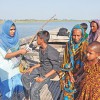
Stepping Out of the Cocoon
To encourage more young women into community media and journalism, and to work for the development of rural communities, in 2013, Bangladesh NGO's Network for Radio and Communication (BNNRC), in partnership with Free Press Unlimited (FPU), launched a three month fellowship programme entitled “Youth women in Media and Journalism”. In the programme, an experienced mentor trains the attendees how to produce news, reports, features, case study and human profiles.Historic Victory for Investigative Journalism
The world was shaken up this week with the leaks of the ‘Panama Papers’ exposing the financial shenanigans of world leaders, past and present. They showed how such leaders of men, women and nations and their business side-kicks hid their embezzled wealth in tax havens around the world and thereby avoided paying taxes in their respective countries. They enjoyed the good life with their monies stacked in offshore banks, some using shell companies with front-men as the account holders, while their fellow countrymen and women were asked to pay their taxes.
Press Freedom in Peril
A single phone call from an irate security official is enough to shutdown a newspaper in Sudan. Security agents sometimes employ unorthodox methods: they storm the premises of a newspaper or a printing press and confiscate print runs in full view of employees. No reasons are provided. And there is no legal recourse.
Every Day Is a Good Day to Hear More Women in the Media
On International Women’s Day newspapers and radio shows are filled with women’s voices. Yet too often the media’s attention is fleeting. These are the best of times, but without a doubt also the worst of times, for journalism and journalists – especially women in the media.
Free Speech and Free Media: Help or Hindrance to Development? / Part 2
The second part: the relevance of free speech and free media to development. Freedom is the central object of development, says Amartya Sen. He argues that development cannot simply be seen as GNP or industrialization or social modernization.
Free Speech and Free Media: Help or Hindrance to Development? / Part 1
The greatness of a newspaper is not measured by the size of its readership but by its influence and credibility. That is why the New York Times or the Guardian are better known and more respected than the tabloids in their respective countries with ten times their circulation. Like those broadsheets, The Daily Star too strives for quality over circulation, influence over income and credibility over sensationalism.Will We One Day Reunite as ‘Akhand Bharat’?
INDIA'S ruling BJP's General Secretary, Mr. Ram Madhav, recently said in an interview to Al Jazeera that the RSS, his core organisation, still believes that one day Bangladesh, India and Pakistan, “which have for historical reasons separated only 60 years ago, will again, through popular goodwill, come together and 'Akhand Bharat' will be created". The idea of Akhand Bharat is a dream of the RSS, and of the BJP, which is a right-wing party with close ideological and organisational links to the former, and of other Hindutvadi organisations and their adherents. I am not going to speak for Pakistan. But, whether future generations of Bangladeshis will reunite their country with India will depend fully on those generations that are probably yet to be born.
EP worried over rights situation
A European Parliament (EP) delegation has expressed concern over the human rights situation in Bangladesh, and called for an impartial investigation into all the cases of blogger killings.
Extremism Threatens Press Freedom
Pakistan continues to remain one of the most dangerous countries for journalists, where frequent attempts to restrict press freedom are commonplace and challenges to expanding media diversity and access to information abound.
Press Crackdown Is Likely to Worsen
On October 2015, the day that Ugandan journalist Enoch Matovu, 25, was allegedly shot by the police for simply “doing my job”, the police had “run out of tear gas”, he claimed.
Media Come Together to Discuss Safety of Journalists, Fight Against Impunity
Amid continuing attacks on journalists, media representatives from around the world will meet in the French capital this week to discuss how to reinforce the safety of those working in the sector. Organized and hosted by the United Nations cultural agency, UNESCO, this “unprecedented” meeting between media executives and the agency’s members states on Feb. 5 is an attempt to “improve the safety of journalists and tackle impunity for crimes against media professionals”, UNESCO said.
The Fearful World of Network News in 2015
If your view of world events outside the U.S. was shaped in substantial part by watching the evening news shows on the three major U.S. networks last year, you’d probably want to stay home.
Time to Repeal Anti-Terrorism Law in Ethiopia
With the African Union celebrating the African Year of Human Rights at its 26th summit, at its headquarters in Addis, Ethiopia, the venue raises serious concerns about commitment to human rights.Despite its History and Reputation, Finland Has to Guard Press Freedom
The year 2015 was a sad one for journalists around the world, with approximately 60 journalists killed, more than 200 imprisoned and more than 400 exiled.
Caribbean Journalists Prepare to Report on Climate Change
Environmentally committed journalists in the Caribbean point to a major challenge for media workers: communicating and raising awareness about the crucial climate change agreement that emerged from the 21st Conference of the Parties (COP21) in Paris.
CPJ: Two Thirds of 2015 Journalist Deaths were Acts of Reprisal
Of the 69 journalists who died on the job in 2015, 40 per cent were killed by Islamic militant groups like Al-Qaeda and Islamic State. Startlingly more than two-thirds were targeted for murder, according to a special report by the Committee to Protect Journalists.
The Power of the Pen
“How would you like it if you were just expressing your feelings and someone just put you in jail?” This is how an eight-year-old American schoolchild asked King Salman of Saudi Arabia not to flog imprisoned blogger Raif Badawi.Human Rights in Turkey: Is Turkish Press Freedom in Danger?
The last week of November marked another phase of an ongoing shift in the Turkish Government´s approach to human rights issues – Two important events highlighted the ongoing attack freedom of press is suffering in Turkey. First two prominent Turkish journalists were arrested after publishing a story claiming that members of the state intelligence agency had provided weapons to Syrian rebels; second, lawyer and leading human rights defender and Tahir Elçi, President of the Diyarbakir Bar Association in south eastern Turkey, was killed in crossfire while making a press statement on Saturday 28th of November.
“Nothing Will Be the Same” for Turkish Press After Recent Elections
Days after the 1 November general elections in Turkey, Beyza Kural, a reporter with the independent press agency Bianet, rushed to Istanbul University to cover a stand-off between protesting students and the police.« Previous Page — Next Page »





Journalism is dangerous work. Dozens of reporters and other media workers are killed in the line of duty each year. Hundreds more face threats, intimidation, and harassment as they risk their lives to let us know what is going on in war zones and as they root out corruption. In the Information Age, the Internet provides us with new ways to disseminate the news even as it poses new threats to press freedoms.


IPS Director General Farhana Haque Rahman was invited by UNESCO as a panelist at the World Press Freedom Day 2017 gathering in Jakarta, in the Plenary Session: Quality journalism: a public good for just, peaceful and inclusive societies.

The Week with IPS

NEXT STOP - SDGs
Tracking global progress towards a sustainable world
Tracking global progress towards a sustainable world
