Languages
Sunday, October 18, 2026



News and Views from the Global South
Religion

Pakistani Sikhs Back in the ‘Dark Ages’ of Religious Persecution
Balwan Singh, an 84-year-old shopkeeper living in Pakistan’s northern Khyber Pakhtunkhwa province, is well past retirement age, but any illusions he may have had about living out his golden years in peace and security have long since been dashed.
Ebola and ISIS: A Learning Exchange Between U.N. and Faith-based Organisations
The simultaneity presented by the outbreak of the deadly Ebola virus on one hand and militant barbarism ostensibly in the name of Islam on the other present the international development community - particularly the United Nations and international NGOs – with challenges, as well as opportunities.
Disciples of John the Baptist also flee ISIS
"Going back home? That would be suicide. The Islamists would cut our throats straight away," says Khalil Hafif Ismam. The fear of this Mandaean refugee sums up that of one of the oldest yet most decimated communities in Mesopotamia.
Choosing Between Death and Death in Pakistan
Residents of the Khyber Agency, one of seven administrative districts that comprise northern Pakistan’s Federally Administered Tribal Areas (FATA), are in the worst possible predicament: either course of action they choose now, they say, could result in death.OPINION: For Azerbaijan, Time to Address the Potential Salafi Danger
Earlier in October, Azerbaijani news media reported the death of a professional Azerbaijani wrestler, Rashad Bakhshaliyev, who was killed in Syria while fighting for the Islamic State. The news, which came as a surprise to many in Azerbaijan, underscores an emerging security threat for Azerbaijan.
OPINION: Rivalry Between Sunnis and Shiites Has Deep Roots
When the Islamic State of Iraq and Syria (ISIS) suddenly emerged in Iraq, it declared as one of its first targets the Shiites and what it called the Safavids. The Safavid dynasty (1501-1736) was one of the most powerful Iranian dynasties after the Islamic conquest.
OPINION: The Islamic State’s Ideology Is Grounded in Saudi Education
According to an article published Oct. 21 on Al-Monitor, the Islamic State (ISIS or IS) has issued new regulations for the school systems under its control in Iraq and Syria. The announced purpose of the so-called guidelines, which carried the imprimatur of the group’s “Amir al-Mu’minin,” presumably leader Abu Bakr al-Baghdadi, is to “eradicate ignorance and disseminate Sharia sciences.”
Iraqi Christians Seek Shelter in Jordan after IS Threats
Watching videos and pictures on social media of the advance of the Islamic State (IS) inside Syria made it all seem far from reality to Iraqi Marvin Nafee.
OPINION: The West Prefers Military Order Against History
More senseless bombing of Muslims, more defeats for the United States-West, more ISIS-type movements, more West-Islam polarisation. Any way out?
A Jungle Shrine Awaits its Blessed Moment
Rising out of a thick forest about 17 km from the nearest main road, the Madhu Church is a symbol of spiritual harmony and tranquility. When the wind blows you hear the leaves rustle. Other times a solemn silence hangs in the air. Old-timers say that once, almost an entire generation ago, the grass grew six feet high in the church compound, and elephants wandered through it.
India’s Crusader Against Impunity
As senior Indian journalist Manoj Mitta was testifying before the Tom Lantos Human Rights Commission of the U.S. Congress last month about mass violence and impunity in India, President Barack Obama escorted India’s newly elected Prime Minister Narendra Modi to the Martin Luther King Memorial.
OPINION: Al Baghdadi and the Doctrine Behind the Name
When Ibrahim al-Badri al-Samarrai adopted the name of Abu-Bakr al-Baghdadi al-Husseini al-Quraishi and revealed himself to the world as the Amir al-Mu’minin (the Commander of the Faithful) Caliph Ibrahim of the self-proclaimed Islamic State, the whole world had to sit up and take notice of him.
U.S. Airdrops to Kobani Kurds Mark New Stage in ISIL Conflict
The U.S. air drop Sunday of new weapons and supplies to Kurdish fighters in the besieged border town of Kobani marks an important escalation in Washington’s efforts to “degrade and destroy” the Islamic State of Iraq and the Levant (ISIL).
Pakistan’s Ahmadis Faced with Death or Exile
Two years ago, gunmen shot dead Farooq Kahloun’s newly married son Saad Farooq, 26, in an attack that severely injured Kahloun, his younger son Ummad, and Saad’s father-in-law, Choudhry Nusrat.
OPINION: Iraq’s Minorities Battling for Survival
Through all of Iraqi President Saddam Hussein’s campaigns of ‘Arabization’, they survived. The diverse Iraqi communities inhabiting the Nineveh plains – Yezidis, Turkmen, Assyrians and Shabak, as well as Kurds – held on to their unique identities and most of their historic lands.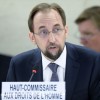
Cash-Strapped Human Rights Office at Breaking Point, Says New Chief
After six weeks in office, the new U.N. High Commissioner for Human Rights (UNHCHR) Zeid Ra'ad al-Hussein of Jordan launched a blistering attack on member states for insufficient funding, thereby forcing operations in his office to the breaking point "in a world that seems to be lurching from crisis to ever-more dangerous crisis."OPINION: The U.S. and a Crumbling Levant
As the international media is mesmerised by the Islamic State’s advance on Kobani or ‘Ayn al-Arab on the Syrian-Turkish border, Arab states and the United States would need to look beyond Kobani’s fate and the Islamic State’s territorial successes and defeats.
Civil Society in Cuba Finds More Space Under the Reforms
Cafés, real estate agencies, taxis and other small privately-owned businesses and cooperatives in Cuba have brought new life to the depressed local economy and have given rise to pockets of prosperity in the country’s towns and cities.
Can China Pacify Its Restive Minorities Peacefully?
The Uighur scholar Ilham Tohti was recently sentenced to life imprisonment on charges of separatism.
In Pakistan’s Tribal Areas, a Nobel Prize Is a ‘Ray of Hope’
For girls living in northern Pakistan’s sprawling tribal regions, the struggle for education began long before that fateful day when members of the Taliban shot a 15-year-old schoolgirl in the head, and will undoubtedly continue for many years to come.U.S. Anti-ISIL Strategy Drawing Growing Scepticism
Hopes that the strategy announced by President Barack Obama a month ago against the Islamic State of Syria and the Levant (ISIL) might yield a relatively quick victory have disappeared amidst growing fears that the U.S.-led air campaign has at most only slowed the radical group’s advance.« Previous Page — Next Page »





Religion plays a big and in some cases growing role in the socio-political dynamics within countries and often is a factor in civil and cross-border conflict, conflict resolution and peace building. From Burmese monks' marches to the role of religious fundamentalism, this dedicated site gathers IPS stories about how religion affects our world, from daily life to geo-politics.

The Week with IPS

NEXT STOP - SDGs
Tracking global progress towards a sustainable world
Tracking global progress towards a sustainable world
