Languages
Friday, October 23, 2026



News and Views from the Global South
Religion
FINANCE: Crisis Pits Vatican Against Offshore Bankers
The financial crisis has the U.S. swirling with charges about the immoral greed of some corporate executives who recklessly bet their companies' futures to line their own pockets. The popular fix for this international calamity stops at the nation's borders: decouple top-line salaries and bonuses from stock prices and institute more transparency and regulation.RELIGION: Liberal and Conservative Anglicans Fall Out – and Apart?
On the brink of a split in the global Anglican Communion that no one is eager to enlarge on, the Province of the Southern Cone of South America has become a temporary refuge for conservative bishops from the United States who refuse to countenance the liberal positions taken by the Church in their country.RIGHTS-PHILIPPINES: Stalled Talks With Muslim Rebels Hard on Civilians
With the government insisting that the Moro Islamic Liberation Front (MILF) in conflict-ridden Mindanao disarm prior to resumption of peace talks - and the rebels refusing to do so - prospects for quick resettlement of some 300,000 internally displaced people (IDP) seem bleak.
There’s no Law that Says People Have to Suffer
Our world today faces unprecedented problems, for a start, the current environmental and financial crises. Without global solidarity and a conscious commitment to peaceful coexistence both within human society and with the systems of life that support us, it is becoming clear that there is no future for us. We have reached a point where we each need to strive in our own unique way to make the greatest possible contribution to the realisation of human rights.BRAZIL: Transformation Through Art and Music
They call it an orchestra, but this atypical all-percussion group is far from featuring the range of musicians found in a conventional ensemble. Which does not mean that the music they make is not rich and varied, as the young amateur musicians produce an amazing array of sounds.SPECIAL SERIES: Iran's Regional Power Rooted in Shi'a Ties
As Barack Obama's national security team assesses the challenge of Iran's role in the Middle East, it confronts a paradox: Iran is seen as having ambitions of regional hegemony, but it lacks the military power normally associated with such a role.POLITICS-US: Conservative Pastor’s Star on the Rise
For a president who had little to do but pardon turkeys on Thanksgiving and throw the switch on the national Christmas tree, little to look forward to but packing his bags and evacuating the White House, and less positive accomplishments to look back on than most presidents, this year's World AIDS Day was clearly a high point. And Pastor Rick Warren was there to share the spotlight with him.RELIGION-VENEZUELA: Santeria Scams?
In a ritual that includes sacrificing goats or fowl, a "babalawo" priest of the Yoruba religion in Venezuela can "mount a saint" (attract blessings from forces of nature) on an initiate willing to pay up to 10,000 dollars, and sometimes even more.EGYPT: Many Oppose Jewish Festival
Jews from around the world come annually to Egypt to celebrate the birth anniversary of Abu Hassira, a 19th century holy man buried in the Nile Delta. But many local people oppose the celebrations, and this year particularly because of Israel's ongoing siege of the Gaza Strip.CHINA: Relations With EU May Suffer Over Dalai Lama Visit
China has attacked the Dalai Lama over his latest diplomatic forays in Europe, calling the exiled Tibetan leader a separatist and a "political hooligan" and has warned that China-EU relations may suffer.INDIA/PAKISTAN: Kashmiri Leaders Aghast at Mumbai Massacre
Political leaders in Jammu and Kashmir, a bone of contention between India and Pakistan for more than 60 years, are aghast at last week's carnage in the Indian port city of Mumbai, carried out by armed men who apparently sailed in from the Pakistani port of Karachi.POLITICS-US: “No Surrender” for Hardline Abortion Foes
While the "March for Life - held annually on Jan. 22, memorialising the United States Supreme Court's 1973 Roe v. Wade decision - has always been one of the high points of the year for anti-abortion organisations and activists, next month's 36th annual gathering may be a much more somber affair.INDIA: Mulling Tough Options Against Pakistan
United States Secretary of State Condoleezza Rice arrives in the Indian capital Wednesday to try and soothe nerves frayed by last week's terrorist attacks in Mumbai, but is likely to face an uphill task in defusing mounting suspicion and tension between India and Pakistan.INDIA/PAKISTAN: Pleas For Sanity as Sabres Rattle Over Mumbai Mayhem
The pattern is all too familiar. Every time India and Pakistan head towards dialogue and detente, something explosive happens that pushes peace to the backburner and drags them back to the familiar old tense relationship, worsened by sabre-rattling war cries from both sides.INDIA: Empathy, Grief in Pakistan at Mumbai Mayhem
The terrorist attacks unleashed in the Indian port city and financial hub of Mumbai continue to reverberate through Pakistan at a personal level and on the media.
RELIGION-INDONESIA: ''My Roommate, the Terrorist''
For one Indonesian journalist, the acts of terror unleashed on the resort island of Bali in October 2002, that killed 202 people, were more than a major story to cover.RIGHTS-PAKISTAN: Helpless Against Honour Killings
By appointing as cabinet ministers two politicians known for their anti-women views, Pakistan President Asif Ali Zardari has stirred up a storm of protests from rights activists and prominent personalities who believed that an elected government would help their country emerge from feudalism.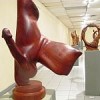
CULTURE-INDONESIA: Anti-Porn Law Reveals Growing Islamist Power
An exhibition of sculpture that opened here this month offers a stark reminder of the importance of the human form in Indonesian art.POLITICS-CHINA: Tibetan Movement May Dump ‘Middle Way’
Eight months after Tibet’s capital of Lhasa was rocked by violent anti-Chinese protests positions have hardened, casting gloom on prospects for progress on the Tibetan stalemate.INDONESIA: Media Turns Bali Bombers Into Martyrs
In a crowded neighbourhood in this sprawling city families sat glued to their television sets late into the night of Nov. 8 watching updates on the execution of three men convicted for the 2002 nightclub bombings on the resort island of Bali, killing 202 people.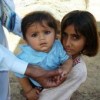
HEALTH: Haj Pilgrims Get Polio Drops in Int'l Eradication Plan
As the first batches of Haj pilgrims from Pakistan arrived at Saudi Arabia’s Jeddah airport for the current pilgrimage season they were, regardless of age, administered oral polio vaccine (OPV).« Previous Page — Next Page »





Religion plays a big and in some cases growing role in the socio-political dynamics within countries and often is a factor in civil and cross-border conflict, conflict resolution and peace building. From Burmese monks' marches to the role of religious fundamentalism, this dedicated site gathers IPS stories about how religion affects our world, from daily life to geo-politics.

The Week with IPS

NEXT STOP - SDGs
Tracking global progress towards a sustainable world
Tracking global progress towards a sustainable world
