Languages
Sunday, November 15, 2026



News and Views from the Global South
Sustainable Development Goals

Global Governance for Achieving the SDGs From Viewpoint of Sociology of Domination
SDGs and global governance Sustainable development is the challenge of how to build a society in which humanity can live with dignity in this global environment. The SDGs set 17 goals and 169 targets to achieve sustainable development. Goals 16 and 17 are aimed precisely at building global governance through the formation of global rules. Goal 16 lists 10 specific targets, while Goal 17 lists 19 targets.
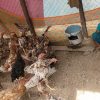
Elevating Farmers’ Income Through Organic Poultry Rearing
Even after toiling hard for an entire year, Shivaji Rao, a 37-year-old farmer, would find it hard to cover the basic expenses of his family. He cultivates maize from his one-and-a-half-acre land in India’s Southern State of Telangana.
ECW’s New Report Shows Successful Education Funding Model for Crises-Impacted Children
In a world set on fire by climate change and brutal conflict, millions of children in emergencies and protracted crises need educational support. Children in 48 out of 49 African countries are at high or extremely high risk of the impacts of climate change, particularly in the Central African Republic, Chad, Nigeria, Guinea, Somalia, and Guinea Bissau.
The UN’s Own Relevance Is at Stake at This Year’s General Assembly
This September, world leaders and public policy advocates from around the world will descend on New York for the UN General Assembly. Alongside conversations on peace and security, global development and climate change, progress – or the lack of it – on the Sustainable Development Goals (SDGs) is expected to take centre-stage. A major SDG Summit will be held on 18 and 19 September. The UN hopes that it will serve as a ‘rallying cry to recharge momentum for world leaders to come together to reflect on where we stand and resolve to do more’. But are the world’s leaders in a mood to uphold the UN’s purpose, and can the UN’s leadership rise to the occasion by resolutely addressing destructive behaviours?
May the Race for Climate Justice Leader Begin
Super-charging efforts and setting a fresh direction for the next phase of climate policymaking is what’s urgently needed and on offer this month during the 78th UN General Assembly in New York, as mass heat waves, devastating wildfires, fatal floods, and withering droughts continue to wreak havoc across continents.
African Startups Mull Home-Grown Solutions to Combat Climate Change
A group of young African startups made their presence known at the Africa Climate Summit in Nairobi, Kenya, hoping to play a big role in promoting home-grown climate-oriented solutions.
Finally, a Real Chance for International Tax Cooperation
After decades of resistance by rich nations, African governments successfully pushed for the United Nations to lead on international tax cooperation. All developing countries and fair-minded governments must rally behind this initiative.
Toothless Global Financial Architecture Fuelling Africa’s Climate Crisis
As thousands convene in Kenya’s capital, Nairobi, for the Africa Climate Summit, the first time the African Union has summoned its leaders to solely discuss climate change under the theme ‘Driving Green Growth and Climate Finance Solutions for Africa and the World’, the backdrop is a country on the frontlines of a climate crisis.
Lawmakers Call on G20 to Prioritise Spending on Youth, Gender, and Human Security
Legislators from around the world, this week, officially submitted to the Sherpa of the G20 meeting set for September in New Delhi a declaration calling on governments to prioritise spending on ageing, youth, gender, human security, and other burning population issues.
Africa’s Potential: Leading Food System Transformation and Climate Resilience
When a continent with 65% of the world’s arable land struggles to feed its 1.4 billion people, we know something is wrong. The African and global food systems need a rethink. The urgent and pressing need to address a more productive, transparent, equitable food system, poverty and the far-reaching effects of climate change requires us to forge alliances among diverse stakeholders and sectors.
El Salvador Is Making Little Effort to Eradicate Illiteracy
El Salvador's efforts to improve the educational level in the country seem to be falling short, with rundown schools, especially in rural areas, and little progress in overcoming illiteracy.
Climate Justice Delayed, Is Justice Denied
The failure to tackle the climate change crisis is an injustice to the millions who have lost lives and livelihoods through floods, extreme weather, and wildfires, pointing to the urgency of adaptation and mitigation finance, experts say.
Alleviating Urban Poverty Through Livelihood Generation
In a bid to tackle the complexities of urban poverty, the Government of Bihar’s Rural Livelihoods Promotion Society (BRLPS) has launched Satat Jeevikoparjan Yojana Shahari (SJY Urban). The program will include a time-bound series of multifaceted interventions addressing food security, social inclusion, and sustainable economic livelihoods to enable participating households to achieve a better standard of living.
From Challenges to Solutions: Unleashing Africa’s Potential for Achieving SDGs
September 2023 marks the halfway point to the deadline for achieving the 2030 Agenda and the Sustainable Development Goals (SDGs). Yet, globally we are still far off-track, and Africa is only halfway towards achieving the SDGs, with nearly 600 million Africans still lacking access to electricity and 431 million people living in extreme poverty.
UN Summits & High-Level Meetings: More Promises, Less Deliveries
The United Nations will host six “high-level” meetings, including two summits of world leaders-- over a short span of five consecutive days, beginning September 18. The back-to-back meetings, described as unprecedented, includes the Sustainable Development Goals (SDG) Summit on September 18-19; a high-level dialogue on Financing for Development (FfD) on September 20; and a ministerial meeting of the Summit of the Future on September 21 (with the summit itself scheduled to take place September 2024).
UN Financing Appeal Last Hope for SDGs and Climate?
The United Nations Secretary-General’s Dialogue on Financing for Development on 20 September may well be the world’s last chance to save the Sustainable Development Goals (SDGs) and curb global warming in time.
Africa Climate Summit: Time for Tangible, Impactful, & Accountable Climate Action
African leaders, public officials, and private-sector executives will converge in Nairobi, September 4-6, at the Africa Climate Summit (ACS) – coinciding with the UN Africa Climate Week (ACW). In recent years, Africa has been the poster child for climate solutions, with carbon credit and offset projects gaining popularity among the public and private sectors alike.
IPBES’ Third Season of Hit Podcast ‘Nature Insights – Speed Dating with the Future’ Takes Listeners Inside Humanity’s Relationship With Nature
If you’ve ever heard that 1 million species are at risk of extinction and wondered what that means for you, your family, and your future – there’s a podcast you won’t want to miss.
Empowering Asia’s Farming Communities through Inclusive Business
When Lisa Huyen first set up her company, Vinasamex, which specializes in certified organic cinnamon and star anise grown in the mountainous and poorer provinces of Viet Nam, she faced daunting challenges including market access and securing financial support from banks.
Biodiversity Credits: Solution or Empty Promise for Latin America?
Located in northwestern Colombia, the Bosque de Niebla is home to 154 species of plants, 120 bird species, 21 species of mammals, 16 water springs and five hectares of wetlands.
Kenya’s Population Growth Decreases as More Women Embrace Modern Family Planning
According to a family planning brief, more than 370 million women in middle and low-income countries were finally embracing modern contraception to help curb unintended pregnancies. This statistic suggests that one in every three women from middle and low-income countries use contraceptives today.« Previous Page — Next Page »


The Week with IPS

NEXT STOP - SDGs
Tracking global progress towards a sustainable world
Tracking global progress towards a sustainable world
